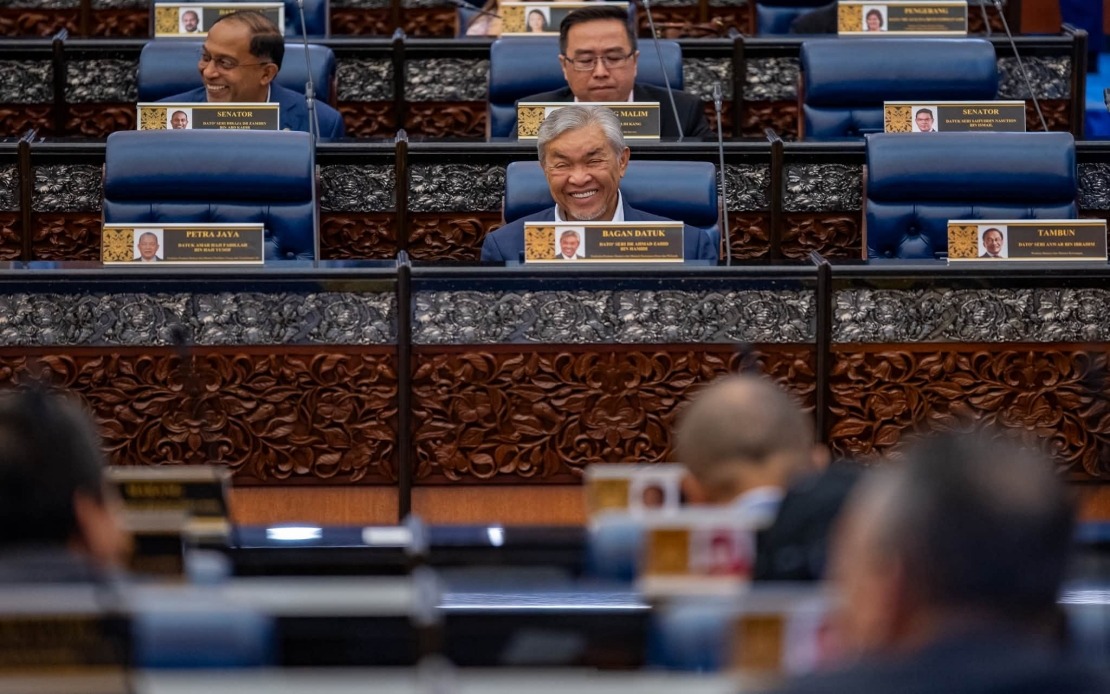
Deputy Prime Minister Datuk Seri Dr Ahmad Zahid Hamidi has emphasised that any constructive feedback directed at Lembaga Tabung Haji must translate into responsible implementation of reforms, warning against unfounded allegations that risk damaging public confidence in the major Islamic institution. Speaking after a special parliamentary session convened to examine the findings of the Royal Commission of Inquiry into TH, Zahid underscored the importance of maintaining the fund's credibility and preventing it from becoming mired in unresolved controversies that erode trust among its members.
The Deputy Prime Minister, who also serves as Rural and Regional Development Minister, highlighted that the August 11 special sitting of the Dewan Rakyat provided lawmakers with a formal platform to thoroughly scrutinise, debate, and address all material questions relating to TH's operations and governance. This parliamentary forum was designed to move beyond preliminary discussion and ensure that concerns were examined with rigour and clarity, creating space for evidence-based discourse rather than speculation. Zahid expressed hope that following this deliberation, political and institutional actors would refrain from making sweeping accusations or promoting narratives unsupported by factual evidence.
The release of the RCI report on July 29 marked a significant transparency initiative, making public the commission's detailed assessment of Tabung Haji's management and operational practices spanning 2014 to 2020. This release preceded the parliamentary debate and enabled MPs to familiarise themselves with the inquiry's comprehensive findings before the special sitting, allowing for an informed legislative discussion. By opening the report for public and parliamentary scrutiny, the government signalled its commitment to accountability and institutional reform within one of Malaysia's most significant religious and financial entities.
The RCI's investigation uncovered multiple governance and operational deficiencies within Tabung Haji during the examined period. The commission articulated 25 specific recommendations aimed at remedying identified weaknesses and strengthening institutional practices moving forward. Of particular note, Tabung Haji had already implemented three-quarters of these recommendations by July 30, demonstrating a proactive institutional response to the inquiry's findings and a willingness to address identified shortcomings. This implementation rate suggests that TH management had begun reform efforts even before the report's public release, indicating recognition of the need for structural and operational improvement.
Zahid's statement carries particular significance given the religious and financial dimensions of Tabung Haji's role in Malaysian society. As the official pilgrimage savings fund, TH manages billions of ringgit in contributions from hundreds of thousands of Malaysian Muslims preparing for their hajj journey to Mecca. The fund's integrity is therefore not merely an institutional concern but touches on matters of deep religious significance and personal financial security for its contributors. When TH becomes embroiled in controversy, the reputational damage extends beyond the fund itself to affect public perception of Malaysia's Islamic governance architecture.
The emphasis on responsible action reflects an understanding that parliamentary debate, while necessary for accountability, risks becoming performative if it is not coupled with tangible institutional reform. Zahid's message appears directed at both government actors and opposition MPs, urging all participants in the legislative discussion to focus on solutions rather than recrimination. This framing suggests that the Deputy Prime Minister views the parliamentary sitting not as an occasion for partisan scoring but as an opportunity to advance genuine reforms that would strengthen public trust in TH.
Zahid also invoked appeals to wisdom and sincerity, framing the resolution of TH issues as a responsibility borne by all stakeholders in the interests of the broader Muslim community and the nation. This religious and communal framing elevates the discussion beyond narrow political calculation, positioning TH reform as an obligation rooted in shared values and collective welfare. The invocation of the 'ummah'—the global community of Muslims—suggests that TH's institutional health carries implications beyond Malaysia's borders, touching on the country's standing within the Islamic world.
The governance issues identified in the RCI report reflect broader challenges facing Malaysian public and semi-public institutions, many of which have grappled with questions of transparency, accountability, and operational efficiency. The examination of TH's management practices during 2014 to 2020 thus offers insights into systemic vulnerabilities that may be present elsewhere within Malaysia's institutional landscape. The fact that three-quarters of recommendations have been implemented suggests that institutional reform is both feasible and actionable when there is sufficient political will and oversight.
For Malaysian citizens and TH contributors, the RCI report and subsequent parliamentary debate represent an important mechanism for institutional accountability. The public disclosure of governance weaknesses, combined with the parliamentary forum for debate and the reported implementation of reform recommendations, demonstrates the functioning of democratic oversight mechanisms. This transparency may help rebuild confidence among the fund's members, many of whom have expressed concerns about TH's financial management in recent years.
Moving forward, the challenge for TH will be sustaining and completing the reform process while maintaining operational effectiveness and member trust. The completion of the remaining 25 per cent of RCI recommendations will require continued institutional commitment and, likely, ongoing parliamentary oversight. Zahid's emphasis on responsible action suggests that government expects both TH management and parliamentary actors to remain engaged with implementation, rather than treating the RCI process as a discrete episode that concludes with the parliamentary sitting.

