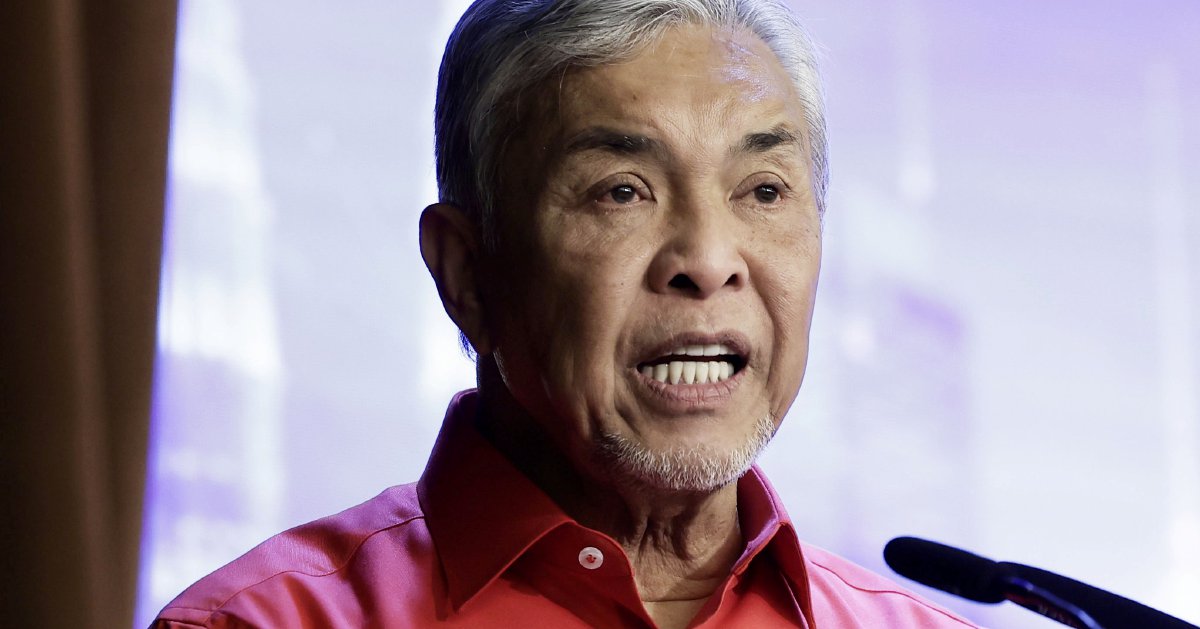
Deputy Prime Minister Datuk Seri Dr Ahmad Zahid Hamidi has pressed for a cessation of unsubstantiated claims and negative perceptions that continue to swirl around Lembaga Tabung Haji (TH), stressing the importance of anchoring public discourse about the pilgrimage savings institution to verifiable facts rather than conjecture or hearsay.
Zahid's statement reflects ongoing concerns about the reputation of Tabung Haji, which has faced scrutiny in recent years over governance, investment performance, and financial management. The institution, which manages savings for Malaysian Muslims intending to perform the hajj pilgrimage, has become a focal point of public and political attention, with various stakeholders questioning its operational practices and transparency. By calling for an end to baseless allegations, Zahid appears to be signalling the government's desire to move beyond narratives that lack substantiation and to encourage a more grounded, evidence-based examination of the organisation's affairs.
The pilgrimage fund holds significant cultural and religious importance for Malaysian Muslims, with hundreds of thousands of contributors relying on it to finance their sacred journey to Mecca. Any perception of mismanagement or impropriety can undermine public confidence in the institution and erode the trust that depositors place in it. This trust is essential not only for the smooth operation of Tabung Haji but also for ensuring that the hajj experience—one of the five pillars of Islam—remains accessible and meaningful for Malaysian pilgrims. When unfounded allegations circulate without proper investigation or verification, they risk damaging the credibility of leadership and complicating efforts to implement necessary reforms or improvements.
The controversy surrounding Tabung Haji has deeper roots in Malaysia's broader discourse around institutional governance and financial accountability. Previous concerns have touched on the fund's investment strategies, the competence of management, and the adequacy of oversight mechanisms. Some allegations have emerged from legitimate questions about transparency and accountability, while others may indeed be speculative or politically motivated. Zahid's call to distinguish between substantiated concerns and baseless claims suggests an attempt to recalibrate the conversation by demanding higher standards of evidence and rigour from all parties making assertions about the institution.
For Malaysian pilgrims and their families, the health of Tabung Haji directly affects their financial security and their ability to fulfil a religious obligation. Contributors depend on the institution to preserve and grow their savings until they are ready to undertake the hajj. Any erosion of public confidence, whether driven by genuine lapses in governance or unfounded rumours, poses a tangible risk to this compact between the institution and its depositors. Zahid's intervention underscores the government's awareness that clarity and factual accountability are necessary to restore and maintain confidence in the system.
The deputy premier's remarks also hint at a shift towards a more professional and structured approach to scrutinising Tabung Haji. Rather than allowing public discourse to be dominated by unverified allegations, the preference appears to be for rigorous, institution-led investigations and transparent reporting that can address legitimate concerns while dismissing spurious claims. This approach aligns with broader international best practices in institutional governance, where transparency and evidence-based accountability form the cornerstone of legitimacy and public trust.
Tabung Haji's role extends beyond individual contributors to encompass Malaysia's broader Islamic economy and social welfare framework. The institution is part of the ecosystem that supports Muslims' religious and financial aspirations, and its stability carries implications for how Malaysia's Muslim majority views government stewardship of community resources. When perceptions—whether accurate or not—gain traction, they can influence political discourse and public policy, potentially leading to reactive measures that may not address the actual issues.
Zahid's call for an end to baseless allegations also reflects the government's need to consolidate institutional credibility across its portfolio of agencies and statutory bodies. Public institutions in Malaysia, like those in many democracies, operate within environments where criticism and scrutiny are inevitable and often necessary. However, when criticism becomes untethered from evidence, it can undermine the ability of these institutions to function effectively and can signal to the public that discourse itself is becoming degraded or politicised. By making this appeal, Zahid is essentially advocating for a return to standards of public accountability that are grounded in facts, verified information, and proper channels of investigation rather than in rumour or speculation.
The challenge moving forward will be ensuring that legitimate questions about Tabung Haji's operations are not conflated with unfounded accusations, and that the institution responds to genuine concerns with transparency and reform where necessary. This requires establishing clear benchmarks for what constitutes a credible allegation versus what amounts to baseless speculation. It also demands that Tabung Haji itself maintains robust governance practices, clear communication with stakeholders, and accessible mechanisms for addressing concerns raised by contributors and the public. Only through such a framework can the institution rebuild and maintain the trust essential to its mission of serving Malaysia's Muslim pilgrims.

