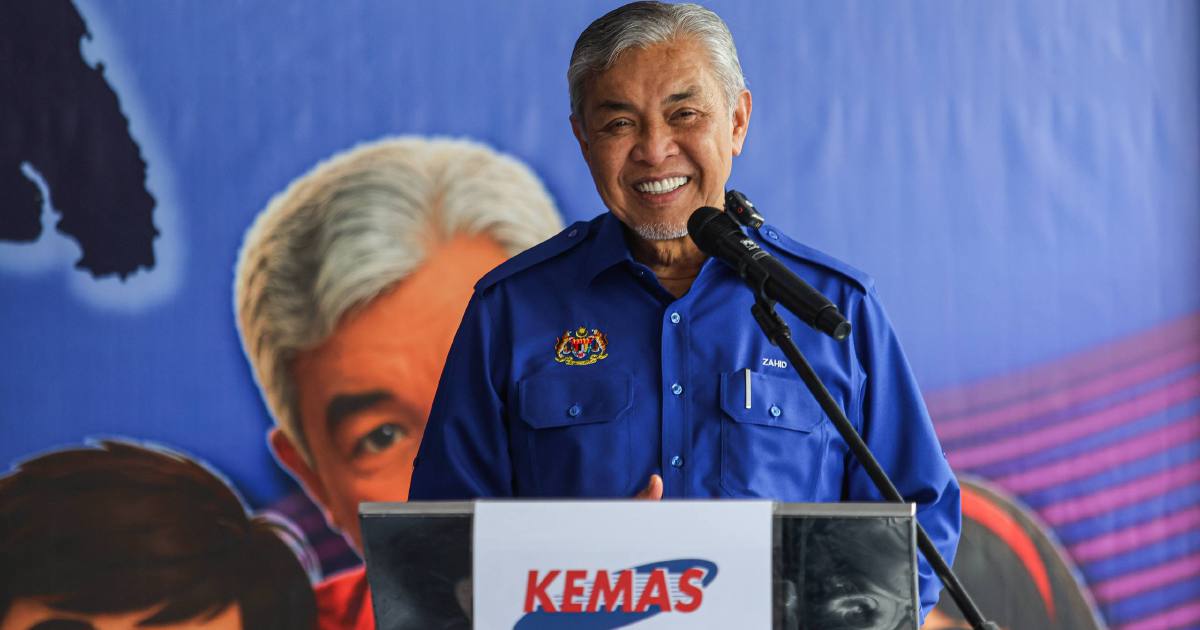
The Barisan Nasional coalition has reaffirmed its commitment to the stability of the federal government partnership with Pakatan Harapan, even as both groupings wage competing campaigns in the Johor state election. Speaking in Kota Tinggi, political leaders underscored that the intensity of campaigning for state-level seats has not undermined the foundational working relationship that sustains Malaysia's current federal administration.
This reassurance comes at a crucial moment in Malaysian politics, when voters in Johor prepare to cast ballots in what has become one of the most closely watched sub-national contests in recent years. The apparent ability of rival coalitions to compartmentalise their state-level competition from federal-level governance represents a significant evolution in Malaysian political culture, where such coordination was once considered implausible. The message signals to investors, civil servants, and ordinary Malaysians that political competition at one level need not destabilize institutions at another.
The separation of state and federal dynamics reflects the practical necessities of Malaysia's federal system, where governance responsibilities are distinctly divided. A breakdown in federal cooperation would create immediate consequences for economic policy, infrastructure development, and public service delivery across all thirteen states and three federal territories. By maintaining this separation, both BN and PH protect the machinery of government from the volatility that can accompany electoral campaigns.
Johor's significance in Malaysian politics cannot be overstated. As the country's second-largest state by population and a crucial economic hub anchoring the southern corridor, electoral outcomes here have long held outsized symbolic weight. The state has traditionally served as a power base for major political figures and remains a testing ground for different governance models and policy approaches. Recent electoral performance in Johor has also proved predictive of broader national sentiment, making the current campaign a closely monitored indicator of political momentum across the federation.
The BN coalition, which has dominated Johor politics for decades, faces renewed competition from PH and other groupings seeking to establish alternative power bases in the state. This competitive pressure has intensified scrutiny of both coalitions' policy platforms, administrative records, and visions for Johor's future development. Voters in the state are increasingly discerning, comparing promises against demonstrated performance and demanding clearer articulation of concrete plans for economic diversification, public transportation, housing affordability, and environmental sustainability.
What distinguishes the current electoral cycle from previous campaigns is the apparent maturity displayed by major political players in recognising that electoral competition and governmental cooperation can coexist. This pragmatism stands in marked contrast to the polarisation that characterised Malaysian politics in earlier periods, when state and federal competitions frequently escalated into institutional crises. The demonstrated ability to maintain functional relationships across electoral divides suggests that Malaysian democracy may be developing mechanisms to insulate core governmental functions from campaign volatility.
The federal government's stability depends substantially on continued cooperation between BN and PH across parliamentary voting, budget allocations, and legislative initiatives. Should either coalition perceive that state-level electoral defeats translate into erosion of federal influence, the incentives for collaboration would deteriorate rapidly. By explicitly affirming the robustness of their working relationship, political leaders effectively reassure their respective party members, coalition partners, and the broader electorate that electoral outcomes in Johor will not trigger cascading consequences at the federal level.
For Southeast Asian observers, Malaysia's approach to managing multiple tiers of electoral competition offers instructive lessons. The region contains numerous federal and quasi-federal systems where centre and periphery must negotiate power-sharing arrangements. The capacity to maintain institutional stability while permitting genuine electoral competition represents an uncommon achievement, and one that carries implications for how neighbouring countries might approach similar governance challenges.
The Johor campaign itself will likely test the boundaries of this compartmentalised approach. As campaign rhetoric intensifies and partisan stakes rise, the ability of political actors to maintain dignified cross-coalition relationships will face genuine pressure. Local candidates, party workers, and grassroots supporters may prove less committed to federal-level restraint than senior leadership, potentially creating friction that senior officials must then manage.
For ordinary Johor residents, the message carries practical significance. A government capable of campaigning vigorously while simultaneously cooperating on essential services suggests that their daily lives—access to water, electricity, healthcare, and education—need not be held hostage to electoral calculations. This separation between campaign competition and service delivery represents a reasonable expectation of modern governance, yet remains far from guaranteed in many political contexts.
The commitment to maintaining strong federal cooperation despite state-level competition ultimately reflects enlightened self-interest by both coalitions. Neither BN nor PH commands overwhelming parliamentary majorities, making interdependence a permanent feature of Malaysian governance. Recognising this structural reality and acting accordingly represents a degree of political maturity that, while not universally praised by partisan supporters who favour more confrontational approaches, enables the machinery of state to function effectively across electoral cycles.
As Johor voters prepare to exercise their franchise, they do so within a political environment where competition and cooperation have found precarious but functional balance. Whether this equilibrium can be sustained through the campaign period and beyond remains an open question, but current signals from leadership suggest serious commitment to that difficult balancing act.

