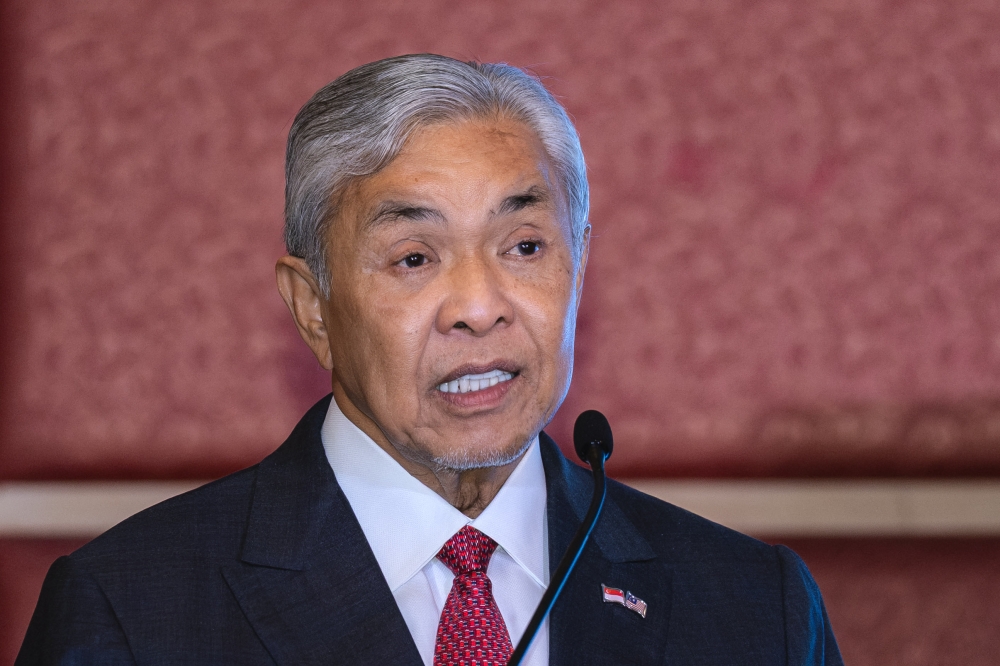
Umno president Datuk Seri Dr Ahmad Zahid Hamidi has moved to quash speculation about a structured partnership with PAS in Negeri Sembilan, declaring emphatically that no binding arrangement exists between the two Islamist-nationalist parties for the state. His declaration reflects the intricate coalition mathematics that continue to define Malaysian electoral politics, where formal pacts and informal understandings frequently blur the lines between collaboration and competition.
Zahid's assertion carries particular weight given ongoing uncertainty surrounding Umno's political direction following the 2022 general election results that fragmented Malaysia's parliamentary landscape. The Negeri Sembilan question assumes significance within the broader context of Malaysia's federal system, where state-level governments operate with considerable autonomy over local development, education implementation, and revenue distribution. The clarification suggests Umno is preserving strategic flexibility rather than locking itself into predetermined political arrangements that could limit its negotiating capacity in future electoral contests.
The warning that "goalposts can change anytime" encapsulates a candid acknowledgement of Malaysian politics' inherent volatility. Coalition arrangements that appear stable today can undergo rapid recalibration based on factors ranging from leadership transitions and internal party dynamics to unexpected electoral outcomes or shifting public sentiment. This fluidity reflects the reality that Malaysian politics operates within a context of multiple competing power centres, with various factions within parties maintaining their own strategic preferences and networks.
Negeri Sembilan occupies a distinctive position within Malaysia's political geography. The state, with a population exceeding one million people, has traditionally been considered a battleground between major coalitions. Its political composition encompasses significant Malay-Muslim and Chinese populations, making it sensitive to both communal and class-based voting patterns. The state's economic profile, centred on manufacturing and commerce, means local government policies directly affect business confidence and employment levels across the region.
Zahid's clarification arrives amid broader reassessments within both Umno and PAS regarding their collaborative framework. The two parties, despite their shared Malay-Muslim constituency, maintain distinct organizational cultures and policy emphases. Umno traditionally emphasizes moderate Islam and multiethnic coalition-building, whilst PAS advocates for a more robust Islamic platform. These differences periodically generate tensions that complicate formal partnership arrangements, particularly when electoral calculations diverge.
The Negeri Sembilan context illuminates how state-level politics often operate independently from federal coalition frameworks. Whilst Putrajaya and Kuala Lumpur may encompass certain parties within governing coalitions, state governments sometimes pursue configurations that reflect local political dynamics rather than replicating federal arrangements. This decentralization of political authority means that claims about formal alliances at the federal level cannot automatically be assumed to extend into state administration.
Zahid's insistence on the absence of formal arrangements simultaneously preserves Umno's capacity to negotiate various political scenarios. Should electoral dynamics shift significantly, Umno could theoretically adjust its Negeri Sembilan strategy without breach of contract claims or accusations of reneging on public commitments. This negotiating space proves valuable in Malaysia's fluid political environment, where demographic shifts, internal party realignments, and unexpected electoral swings can rapidly transform previously settled political arrangements.
The statement also reflects calculations about Umno's electoral performance and public perception. Explicitly committing to permanent arrangements with particular partners can alienate potential supporters who view such partnerships unfavourably. By maintaining ambiguity about the nature and durability of any arrangements, Umno preserves appeal across broader constituencies whilst keeping options open for tactical repositioning.
For PAS, Zahid's declaration presents its own complications. The party has sought to position itself as a major political force capable of leading alternative governance formations. Being characterized as merely one element within larger coalitions potentially undermines such aspirations. Conversely, formal written agreements might constrain PAS's own strategic flexibility, particularly if electoral performance exceeds or falls short of current expectations.
The regional implications of such political uncertainty extend beyond Negeri Sembilan. Southeast Asia's democracies increasingly exhibit fragmented party systems and coalition volatility similar to Malaysia's experience. Thailand, Indonesia, and the Philippines all grapple with comparable challenges around coalition stability and the durability of inter-party arrangements. Malaysian political developments thus offer instructive precedents for how regional democracies manage coalition governance within systems that lack the stabilizing mechanisms of strongly institutionalized two-party competition.
For Malaysian voters and businesses operating in Negeri Sembilan, the implications centre on governance continuity and policy predictability. Fluid coalition arrangements can create uncertainty about which parties will control state administration and therefore which policy agendas will be prioritized. This uncertainty can affect investment decisions, policy implementation timelines, and the stability of state development programmes.
Zahid's remarks ultimately underscore a fundamental reality about contemporary Malaysian politics: formal institutional structures exist alongside informal arrangements and unwritten understandings that frequently prove more influential in determining actual political outcomes. The absence of a stated formal pact does not preclude extensive collaboration between Umno and PAS in Negeri Sembilan; rather, it permits such collaboration to operate flexibly and subject to periodic reassessment based on circumstances. This approach reflects both sophisticated political management and the pragmatic adaptation to Malaysia's uniquely competitive electoral environment.

