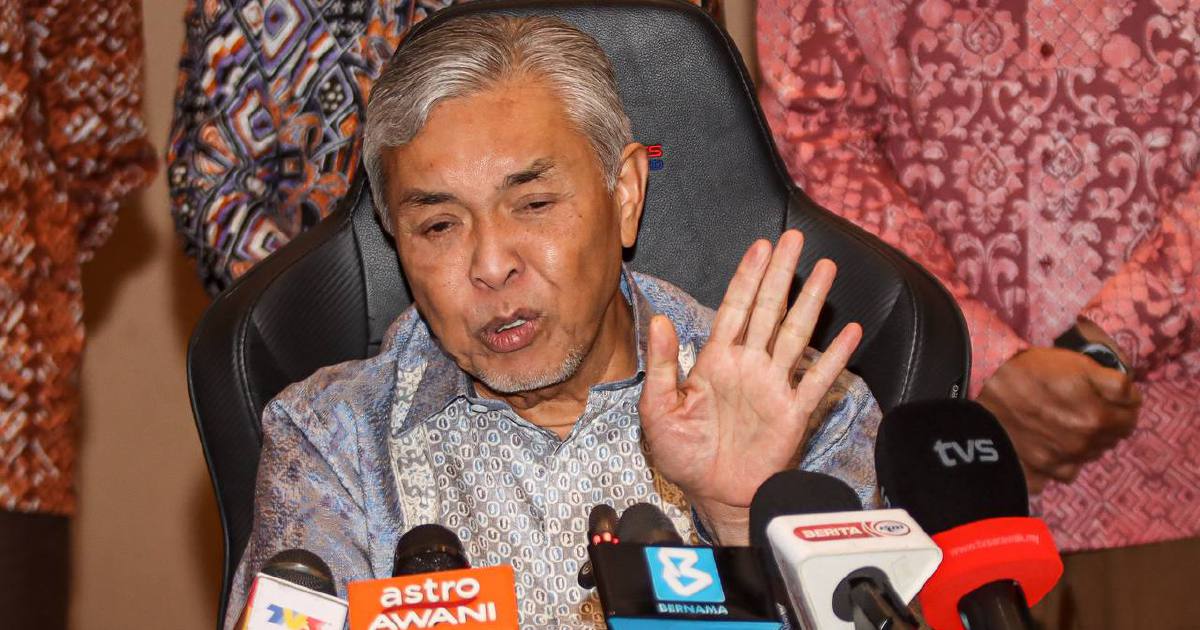
Datuk Seri Dr Ahmad Zahid Hamidi has moved to quash persistent speculation surrounding potential attempts to unseat Prime Minister Datuk Seri Anwar Ibrahim, using remarks in George Town to underline Barisan Nasional's steadfast commitment to the unity government arrangement through the conclusion of the 15th Parliament.
The statement carries particular weight given the fraught political climate that has characterized Malaysia's government formation over the past two years. Since the 2022 general election produced a hung Parliament, successive administrations have grappled with maintaining legislative coalitions across ideological divides. The unity government framework, which brought together Barisan Nasional, Pakatan Harapan, and other blocs around Anwar's premiership, represented a deliberate effort to move away from zero-sum confrontation towards collaborative governance.
Zahid's dismissal of removal speculation suggests that informal discussions or rumours, whether originating from within political circles or circulating in media commentary, have prompted the need for clarification at the highest levels of Barisan Nasional. The timing and emphasis of such statements often reflect anxieties that senior party leaders wish to address pre-emptively, particularly when Malaysia's fractious political environment tends to amplify speculation during periods of perceived instability.
Barisan Nasional's continued partnership in the unity government carries significant implications for the stability of the current administration. As the single largest bloc in Parliament, Barisan Nasional possesses the numerical capacity to destabilise any government should its leadership decide to withdraw support. Zahid's reiteration of commitment therefore functions as a formal reaffirmation that the coalition intends to honour its participation agreement and maintain the institutional architecture upon which Anwar's administration rests.
The broader context of this clarification touches on the delicate equilibrium that sustains contemporary Malaysian governance. The unity government was conceptualized as a circuit-breaker against the confrontational parliamentary dynamics that characterized earlier administrations. By bringing rival coalitions together in collective responsibility for national governance, proponents argue that it has reduced incentives for destabilizing manoeuvres and created space for legislative work on substantive policy matters.
However, maintaining such arrangements requires continuous diplomatic effort and repeated public affirmations of commitment. The fact that Zahid felt compelled to address speculation suggests that questions about the unity government's durability persist among both political observers and the public. Such uncertainty can accumulate over time if left unaddressed, potentially undermining business confidence, investor sentiment, and the predictability that economic actors require for long-term planning.
For regional observers and the international community, Malaysian political stability carries significance extending beyond domestic concerns. As a major Southeast Asian economy and a country with strategic importance in regional trade and security arrangements, Malaysia's internal political coherence influences its capacity to conduct effective foreign policy and maintain regional partnerships. Prolonged uncertainty about government stability can complicate these relationships and diminish Malaysia's diplomatic bandwidth.
The commitment through the end of the 15th Parliament provides a concrete timeframe within which the current government has explicitly pledged to operate. The 15th Parliament's expected duration offers a defined period during which major legislative and policy initiatives can be pursued with reasonable confidence in government continuity. This temporally-bound commitment structure allows stakeholders to plan for potential transitions while ensuring that the current administration maintains sufficient stability to function effectively.
Barisan Nasional's role in the unity government also reflects broader ideological and pragmatic evolution within the coalition. Historically a vehicle for single-party dominance, its participation in a multi-bloc arrangement under Anwar's leadership represents a recalibration of its political strategy following the 2018 and 2022 electoral setbacks. Zahid's repeated affirmations serve to consolidate this repositioning within the party itself and signal to the broader political ecosystem that the coalition has adapted to contemporary parliamentary realities.
Looking forward, the success of the unity government in delivering tangible results on economic management, infrastructure development, and social policy will likely determine whether such arrangements become institutionalized or remain temporary expedients. Public perception of government effectiveness shapes both the willingness of coalition partners to maintain their agreements and the incentive structures that might otherwise encourage political manoeuvring. Zahid's statement therefore functions partly as a reaffirmation to party members that Barisan Nasional views continued cooperation as strategically advantageous rather than merely obligatory.
The dismissal of removal speculation also implicitly addresses intra-party dynamics within both Barisan Nasional and other coalition partners. Ambitious politicians within any coalition invariably explore alternative arrangements, and senior leadership must periodically clarify that such exploration lies beyond the bounds of acceptable behaviour. By publicly stating Barisan Nasional's commitment, Zahid establishes clear parameters for acceptable conduct and signals that attempts to circumvent agreed arrangements would constitute breaches of coalition discipline.
As Malaysia's political system continues to evolve beyond the two-coalition binary that characterized earlier decades, such periodic reaffirmations of commitment become routine elements of contemporary governance. The unity government model, while still novel, is gradually becoming normalized as political actors recognize that hung Parliaments may become more common given Malaysia's demographic and electoral dynamics. Zahid's statement thus represents not merely damage control around temporary speculation, but rather a contribution to establishing new norms of political accountability and coalition management appropriate for Malaysia's emerging political era.

