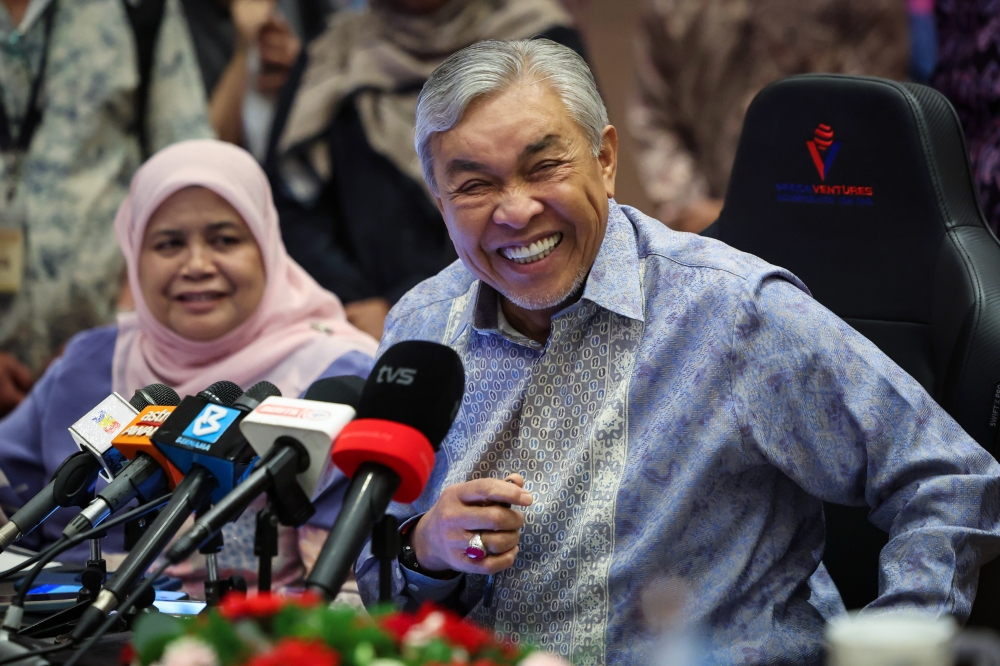
Ahmad Zahid Hamidi, president of Barisan Nasional, has moved decisively to silence mounting speculation about a potential collapse of Malaysia's Unity Government, declaring that the coalition has no plans to break ranks before the current parliamentary term concludes. Speaking in George Town on July 23, Zahid employed blunt language to underscore BN's resolve, stating there would be no sudden shifts in alignment with either Bangkok or Dubai—a colloquial reference to extraterritorial attempts to broker backdoor political deals.
The emphatic reassurance arrives at a moment of considerable political volatility in Malaysia. Since the formation of the Unity Government in November 2022, tensions have periodically surfaced within the three-pronged coalition comprising BN, Pakatan Harapan, and various component parties. These frictions have sparked persistent rumours about backroom negotiations and potential realignments, with observers frequently speculating whether BN might break away to forge alternative configurations with other political blocs. Zahid's unambiguous statement seeks to extinguish such chatter and reassure coalition partners of BN's durability.
The timing of Zahid's remarks carries particular significance given Malaysia's evolving political landscape. The 15th Parliament remains in session with no fixed date for dissolution, meaning the current government structure could theoretically persist for several more years. By publicly committing BN to remain within the framework until Parliament concludes, Zahid is essentially pledging stability through the natural expiration of the current electoral cycle. This commitment matters enormously for Malaysian governance, as political uncertainty can undermine economic confidence, investor sentiment, and the government's ability to implement long-term policy initiatives.
BN itself comprises multiple parties, most prominently UMNO, MCA, and MIC. Any decision to withdraw from the Unity Government would necessarily require consensus among these constituent members, making defection logistically complex and politically fraught. Zahid's assertion of commitment therefore signals not merely his personal stance but represents a broader positioning of Malaysia's largest political coalition. For MCA and MIC—parties that depend upon coalition arrangements to retain ministerial posts and legislative influence—remaining within the Unity Government typically serves their interests better than fractious opposition status.
The Unity Government represents a fundamentally different approach to Malaysian governance than earlier configurations. Rather than winner-take-all adversarial politics, it attempts to incorporate multiple competing blocs within a single cabinet structure. This arrangement has proven both durable and contentious, requiring constant negotiation and compromise among partners with divergent ideological positions and constituency interests. The fact that Zahid feels compelled to repeatedly affirm BN's loyalty suggests that such negotiations remain fragile and subject to frequent testing.
For Southeast Asian observers, Malaysia's political stability carries regional implications. As the second-largest economy in ASEAN and a crucial player in regional security and trade arrangements, Malaysian governmental continuity directly affects broader regional dynamics. Chronic political instability could distract Malaysian leadership from critical regional initiatives, complicate bilateral relations with neighbours, and reduce Malaysian influence on issues ranging from the South China Sea disputes to ASEAN cohesion. Zahid's statement, therefore, speaks not only to domestic audiences but implicitly to Malaysia's regional partners seeking predictability.
The reference to Bangkok and Dubai warrants particular unpacking. These allusions likely point to historical instances where Malaysian political figures have fled the country during legal difficulties or political crises, subsequently engaging in international negotiations or coordination with local political figures. By explicitly renouncing any such manoeuvre, Zahid is signalling that BN leadership remains domestically committed and accountable, rather than seeking exile havens or foreign intermediation. This rhetorical move simultaneously addresses both internal coalition anxieties and international observers concerned about Malaysian political governance.
Speculation about alternative political configurations persists because the arithmetic of Malaysian politics remains delicately balanced. No single coalition commands an overwhelming supermajority, meaning smaller parties and individual MPs exercise disproportionate leverage. The Perikatan Nasional opposition bloc, while substantial, lacks sufficient numbers to form government alone. The Islamic Party (PAS), despite its electoral gains, remains confined to opposition status. Under these circumstances, the Unity Government represents a pragmatic if uncomfortable accommodation rather than an ideological or programmatic alignment. Zahid's statement implicitly acknowledges these structural realities while asserting that BN prefers collaboration within the current arrangement to the uncertainties of alternative scenarios.
Domestically, BN voters encompass substantial conservative and Islamic-oriented constituencies that view PAS's Perikatan alignment with concern. Any BN defection toward Perikatan would generate internal party fissures and electoral consequences, particularly among urban moderate and non-Malay voters. Zahid's reaffirmation of Unity Government commitment thus also constitutes an appeal to BN's electoral coalition, promising continuity and avoiding the destabilizing consequences of dramatic realignment. This internal audience matters considerably for BN's organisational cohesion and future electoral prospects.
The sustainability of Malaysia's Unity Government remains contingent upon multiple factors: economic performance, management of contentious policy issues including religion and constitutional matters, distribution of ministerial patronage, and evolving electoral calculations. Zahid's declaration represents the political leadership's current assessment that continuation serves BN's interests better than dissolution and realignment. However, such commitments in parliamentary democracies remain hostage to changed circumstances. Should economic deterioration accelerate, should profound policy disagreements emerge, or should electoral calculations shift dramatically, such reassurances could evaporate. For now, however, Zahid's statement represents the most significant reaffirmation of Unity Government durability emanating from the coalition's largest component, providing at least provisional reassurance to those seeking governmental stability.

