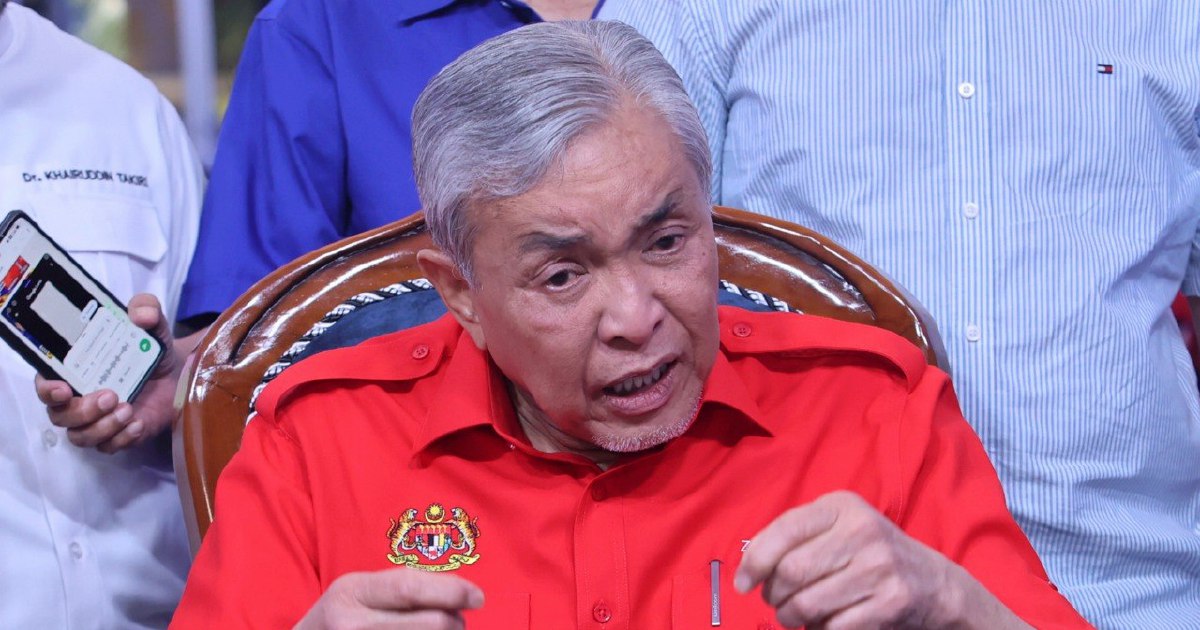
Barisan Nasional's leadership is signalling the need for a more aggressive and coordinated campaign strategy as the coalition gears up for the Negeri Sembilan state election, with chairman Datuk Seri Dr Ahmad Zahid Hamidi cautioning party members not to underestimate the challenge ahead. Speaking in Seremban, the BN leader emphasised that the coalition cannot afford complacency or half-measures if it intends to reclaim ground in the state, pointing to the reality that BN enters the contest as the disadvantaged party rather than the favourite.
The warning from Zahid reflects growing acknowledgement within BN circles that the political landscape in Negeri Sembilan has shifted significantly in recent years. The state has emerged as a competitive battleground where opposition forces have gained traction, and where voter sentiment cannot be taken for granted by any political coalition. By framing BN's position as that of an underdog, Zahid appears to be attempting to galvanise party machinery and grassroots supporters into a more energised posture, countering any sense of entitlement or complacency that might otherwise take hold.
For Malaysian political observers, this acknowledgement carries particular significance. It signals that BN strategists are reading the electoral tea leaves carefully and are prepared to invest serious organisational effort rather than rely on established advantages or incumbency. The coalition's performance in Negeri Sembilan will have wider implications for how BN positions itself nationally and for the broader power dynamics within Malaysian politics as the country moves towards its next general election.
The call to boost campaign momentum also underscores the increasingly competitive nature of state-level politics in Malaysia. Negeri Sembilan is not a peripheral contest but a genuine test of BN's ability to rebuild support and connect with voters on the ground. The state's electorate has demonstrated willingness to shift allegiances in recent election cycles, suggesting that traditional voting patterns cannot be relied upon and that active, sustained campaigning is essential.
Zahid's exhortation to party members to step up their efforts reflects the demanding realities of modern electoral competition. Campaign momentum does not materialise spontaneously but requires coordinated messaging, ground-level engagement, resource allocation, and the sustained commitment of party volunteers and machinery. By publicly emphasising this need, the BN chairman is attempting to instil a sense of urgency within coalition ranks and to ensure that party components—particularly UMNO, MIC, and MCA—align their efforts rather than working in isolation.
The underdog narrative, while potentially demoralising if mishandled, can also serve as a powerful motivator. By acknowledging that BN faces a difficult terrain, Zahid removes any pressure of expectation that might otherwise paralyse party members. Instead, an underdog position can encourage the kind of hunger and intensity of effort that sometimes proves more effective than complacency born of perceived advantage.
For Malaysian voters and political analysts watching from the peninsula, the Negeri Sembilan state election will offer valuable insights into BN's capacity to recover from recent electoral setbacks and to rebuild a competitive political machine. The state election will demonstrate whether BN messaging is resonating with voters, whether the coalition has managed to resolve internal divisions or present a united front, and whether grassroots organisation remains robust or has atrophied.
The timing of Zahid's remarks also matters. With the campaign period underway, there is limited time to reverse negative perceptions or to repair organisational weaknesses. The coalition leadership's push for intensified efforts reflects an understanding that the window for influencing voter sentiment is narrow and that every day of campaign activity counts. This urgency suggests that internal party polling or feedback may have indicated that BN is trailing and that corrective action is both necessary and overdue.
Negeri Sembilan's political significance extends beyond its state assembly seats. The state has historically served as a bellwether for national political trends, and results here often receive disproportionate attention from national media and political observers. A strong performance might provide BN with momentum heading into future contests, while a poor showing could reinforce perceptions that the coalition is in terminal decline. This amplified stakes structure means that Zahid's push for campaign vigour is not merely about winning a single state election but about shaping the narrative around BN's future relevance.
The coalition faces a complex challenge in Negeri Sembilan. It must appeal to traditional BN supporters while simultaneously reaching out to swing voters who may have drifted away. It must do this while maintaining internal party cohesion and ensuring that component parties feel they have adequate voice and representation in campaign strategy. These competing demands require sophisticated campaign management and clear messaging that transcends factional interests.
Zahid's public acknowledgement that BN is the underdog may also represent a calculated communication strategy designed to lower external expectations while raising internal ones. If BN performs better than pessimistic polls suggest, the narrative becomes one of a surprising comeback rather than a restored hegemony. Conversely, accepting underdog status removes some of the stigma from a loss, potentially positioning any defeat as a respectable performance under difficult circumstances. This framing suggests mature political thinking at BN's leadership level.
As the Negeri Sembilan campaign progresses, the extent to which BN's party structures and candidates heed Zahid's call for increased momentum will become apparent. The intensity and sophistication of campaign activity, the calibre of candidates fielded, and the clarity of BN's policy messaging to voters will all determine whether exhortations from party leadership translate into electoral recovery or whether the coalition's difficulties run deeper than campaign scheduling and volunteer energy can address.

