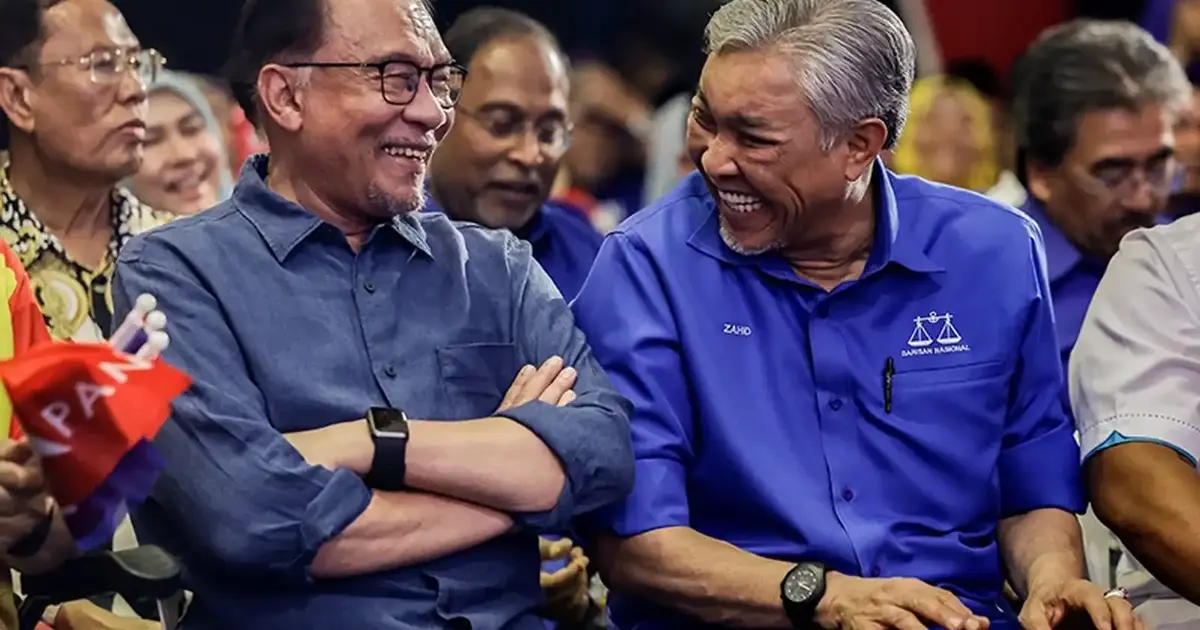
In a remarkable display of literary jousting between senior government figures, Deputy Prime Minister Zahid Hamidah has crafted his own poetic response to Prime Minister Anwar Ibrahim's recent composition, underscoring the creative—if unconventional—dialogue now characterizing Malaysia's political landscape. The exchange, which reflects the more personalised communication style emerging within the unity government framework, highlights how political messaging has evolved beyond traditional speeches and statements in contemporary Malaysian politics.
Zahid, who also chairs Barisan Nasional, deployed his verse as a vehicle to address broader themes while simultaneously engaging in the cultural interplay initiated by Anwar. This poetic exchange, while seemingly lighthearted on the surface, carries deeper significance within the context of Malaysia's complex coalition politics. The use of traditional literary forms by senior ministers represents an attempt to elevate political discourse beyond partisan rhetoric, reaching audiences through a medium that transcends typical political grandstanding.
The deputy prime minister's response carries particular weight given his dual role as both a cabinet heavyweight and guardian of BN interests. Zahid's willingness to engage Anwar through creative expression demonstrates a level of camaraderie that extends beyond formal governmental protocols, suggesting a working relationship that can absorb the pressures and tensions inherent in any coalition arrangement. Such interactions, when publicised, serve to reinforce the human dimension of political leadership to ordinary Malaysians.
Crucially, Zahid accompanied his poetic response with explicit reaffirmation of Barisan Nasional's commitment to maintaining the unity government throughout its designated term. This statement carries significant implications for political stability, as it directly addresses concerns about the durability of the coalition arrangement that has governed Malaysia since the 2022 general election. The explicit nature of this pledge suggests that questions about BN's long-term participation in the unity government may have circulated, necessitating a clear public declaration of intent.
The unity government itself represents a historic configuration in Malaysian politics, bringing together traditionally opposing coalitions in response to political fragmentation following the 2022 elections. Barisan Nasional's role within this arrangement has been crucial, providing parliamentary numbers and legitimacy to an administration that Anwar's Pakatan Harapan coalition could not command independently. The coalition's stability depends significantly on the goodwill and continued cooperation of BN leaders, making Zahid's statement a matter of considerable importance to government longevity.
Zahid's emphasis on seeing the unity government through to the end of its term speaks to broader apprehensions about coalition durability in Malaysian politics. Historical precedent demonstrates that coalition arrangements frequently fracture under the pressure of competing interests and jockeying for position as electoral cycles approach. By publicly anchoring BN to the unity government, Zahid potentially constrains his own party's maneuverability while simultaneously demonstrating statesmanship that transcends narrow partisan advantage. This gambit may prove valuable in negotiations over cabinet positions, resource allocation, and policy directions within the government.
For Malaysian observers, the exchange between these two senior figures illuminates the delicate balancing act required to maintain parliamentary stability when government depends on diverse coalition partners. Each member of the unity government retains distinct policy preferences, electoral bases, and organisational interests that periodically conflict with the imperatives of collective governance. Zahid's public reaffirmation of BN's commitment serves as insurance against speculation that disagreements might prompt early withdrawal.
The poetic dimension of this exchange also deserves attention as a window into the personalities and communication styles of Malaysia's current leadership. That both Anwar and Zahid would engage in versifying suggests individuals comfortable with cultural expression and willing to humanize political engagement through artistic means. This contrasts with the purely transactional style of political communication that dominated earlier periods of Malaysian governance, reflecting generational and stylistic shifts among the current generation of senior leaders.
From a Southeast Asian perspective, Malaysia's unity government represents an interesting experiment in coalition management during a period when populist and polarizing forces have fractured electoral landscapes across the region. The willingness of competing political forces to collaborate, despite historical animosity, demonstrates that pragmatic problem-solving can sometimes override ideological divisions. Zahid's commitment to maintaining this arrangement, expressed through both verse and explicit statement, contributes to this ongoing narrative of regional political evolution.
Looking forward, the stability of the unity government will depend significantly on whether BN, DAP, PKR, and other coalition partners can continue managing their competing interests while maintaining sufficient cohesion to govern effectively. Zahid's vocal endorsement of continued coalition participation suggests that at least one major faction views the benefits of unified government as outweighing the temptations of opposition politics or early electoral calculations. His statement effectively signals that BN intends to remain a stabilising force within the coalition framework, provided that government decisions respect the interests of its constituent parties.

