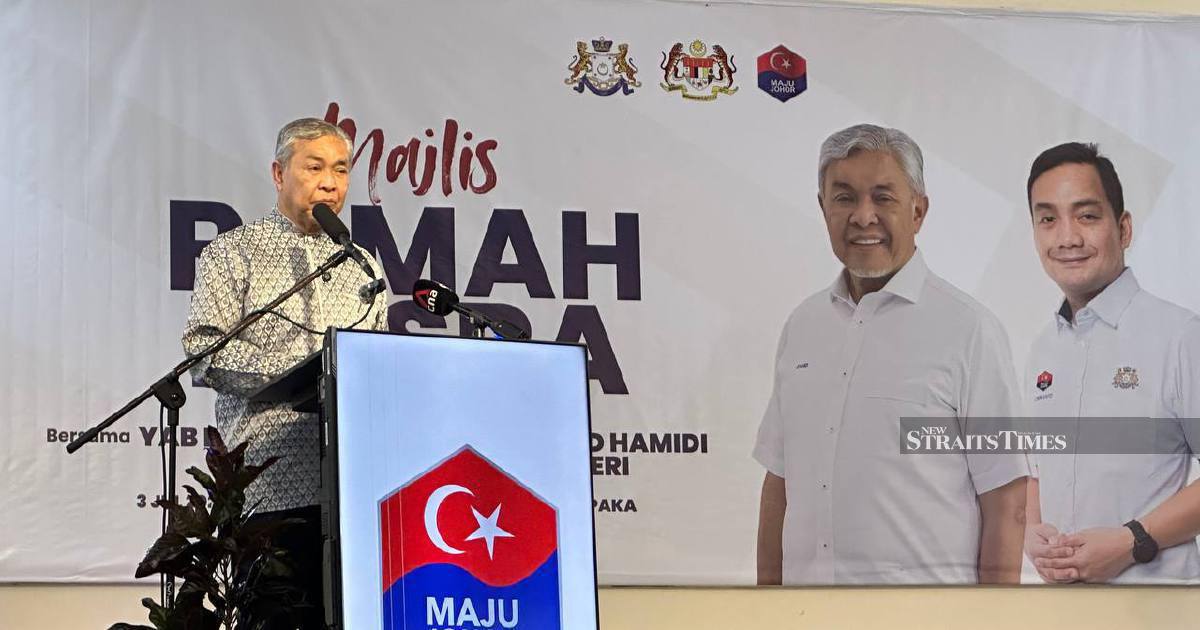
Barisan Nasional chairman Datuk Seri Dr Ahmad Zahid Hamidi has made an explicit appeal to his unity government partners to refrain from dredging up historical disputes that cast Umno or the broader coalition in a negative light during the forthcoming Johor election campaign. The request underscores growing friction between the coalition's constituent parties as campaigning intensifies in Malaysia's southern state, where electoral competition threatens to unearth grievances that have simmered beneath the surface of the broader political alliance.
The timing of Zahid's statement reflects the delicate balance required to maintain cohesion within the unity government framework. Since its formation, the coalition has brought together parties with fundamentally different political histories and opposing narratives about Umno's role in Malaysian politics. For coalition partners, particularly those who spent years in opposition criticising Umno's governance, maintaining this partnership requires carefully navigating rhetoric that could alienate their respective support bases while not alienating their current allies.
Johor holds particular significance in Malaysian politics as Umno's traditional stronghold and a crucial testing ground for the unity government's ability to govern collaboratively. The state election provides an opportunity for coalition partners to demonstrate unity and effectiveness, but it also creates incentives for each party to emphasise their distinct identity and contributions. This tension between collective responsibility and individual party positioning explains why Zahid felt compelled to issue his warning about resurrecting old attacks.
The appeal points to underlying vulnerabilities in the unity government arrangement. While the formal alliance suggests consensus on key governance matters, the broader political base remains divided on fundamental questions about Umno's past performance and accountability. Coalition partners who built their political brands on criticising Umno's previous administrations cannot entirely abandon that narrative without appearing to betray their supporters. Conversely, Umno cannot accept being perpetually cast as the villain within its own coalition without straining the partnership.
For Malaysian voters, particularly those in Johor who have witnessed considerable political realignment in recent years, this dynamic raises important questions about the sustainability of the unity government model. An alliance that requires its members to suppress criticism and avoid discussing substantive policy differences or past governance failures may struggle to articulate a coherent vision for Johor's future development. The electorate increasingly expects transparency about where coalition partners stand on key issues, not strategic silence designed to preserve fragile political arrangements.
The situation also reflects broader challenges facing Malaysian politics as it attempts to transition away from the intensely partisan tribalism that characterised earlier decades. The unity government was conceived partly as a circuit-breaker in this dynamic, bringing former opponents together around shared governance responsibilities. However, asking parties to simply forget historical grievances without addressing underlying accountability questions may prove unsustainable in practice. Voters, particularly younger and more politically aware segments, expect leaders to engage honestly with difficult history rather than compartmentalise it for electoral convenience.
Zahid's intervention suggests that internal discussions within the coalition have already identified campaign rhetoric from one or more partners as potentially damaging to the broader alliance. Rather than allowing a public dispute to escalate, he sought to head off the problem through a direct appeal to party discipline. This approach may succeed in the short term, especially if it comes with explicit agreements about campaign boundaries among senior coalition figures, but it does not address the underlying political tensions that such rhetoric reflects.
The Johor election campaign will test whether these agreements hold or whether the pressure of electoral competition overwhelms commitments to political civility. Coalition partners understand that disappointing performance in Johor could have consequences for their role within the broader alliance, while strong performances could strengthen their bargaining position. These incentives create powerful pressures to differentiate themselves from their partners, potentially through emphasising how their presence in government prevents Umno from repeating past mistakes.
From a Malaysian perspective, the challenge facing the unity government extends beyond Johor. If the coalition cannot manage internal disagreements and campaign rhetoric at the state level, its ability to function effectively at the federal level faces serious questions. Voters across the country will observe how coalition partners conduct themselves in Johor and draw conclusions about whether this alliance represents a genuine political realignment or merely a temporary arrangement of convenience that obscures deeper divisions.
The path forward requires more than Zahid's appeal for restraint. Coalition partners need genuine dialogue about shared values, transparent discussion of their different perspectives on recent Malaysian political history, and honest acknowledgment of where they agree and disagree on governance priorities. Only through such substantive engagement can the unity government move beyond asking members to suppress criticism toward building a partnership rooted in genuine mutual respect and shared commitment to effective governance. Without this foundation, requests to stop attacking each other will remain fragile and temporary measures rather than expressions of authentic political alignment.

