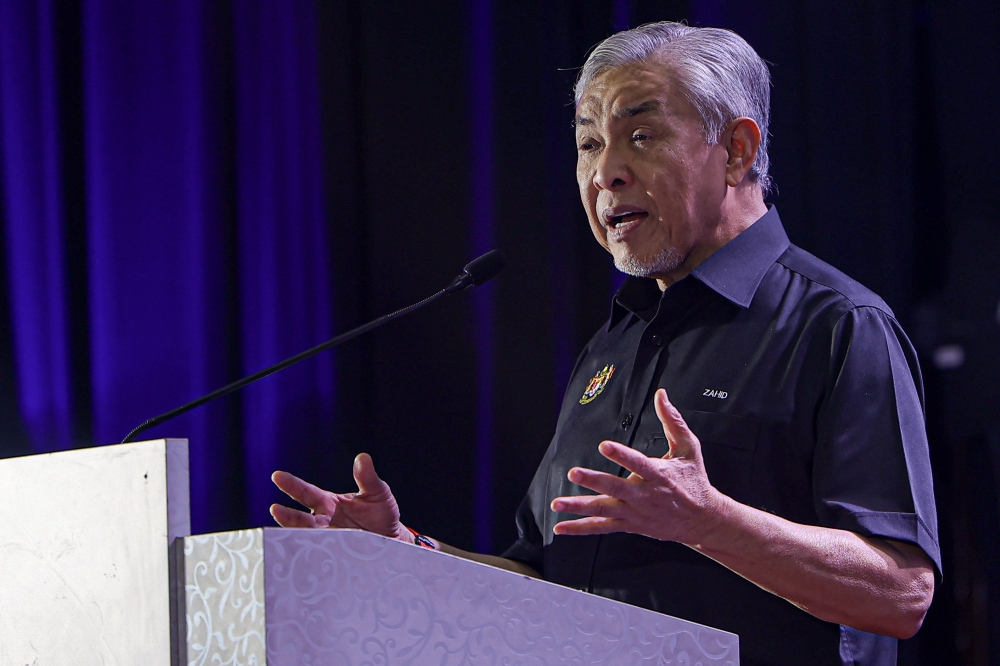
Deputy Prime Minister Datuk Seri Ahmad Zahid Hamidi made allegations on Tuesday that certain ministry personnel encountered pressure to participate in campaign activities connected to Barisan Nasional during the recent state elections, signalling renewed tension around the politicisation of the civil service at a sensitive time for the governing coalition.
The remarks, delivered in Putrajaya, brought into focus an enduring challenge facing Malaysian governance: the tension between maintaining strict political neutrality within the public sector and the practical realities of electoral campaigns where government machinery often plays a supporting role. Zahid's assertion that officials faced such pressure underscores how competing political and institutional pressures can create an uncomfortable environment for those tasked with serving the public impartially, regardless of which party holds power.
The Barisan Nasional coalition has faced intermittent criticism over the years regarding its use of state resources and government personnel during elections, though officials consistently defend such activities as standard practice and within proper boundaries. Zahid's public acknowledgement of coercive pressure, however, suggests the issue extends beyond administrative coordination and into more problematic territory where voluntary participation becomes difficult to distinguish from mandatory political involvement.
For Malaysian observers and governance experts, these allegations carry particular weight given the country's constitutional framework emphasising civil service neutrality. The Federal Constitution and the Civil Service Act contain provisions intended to insulate government employees from partisan political demands, yet enforcement remains inconsistent and complaints about pressure are often handled quietly through internal channels rather than public acknowledgement.
The context of state-level elections makes this situation more acute. These contests tend to generate intense competition and resource mobilisation, creating cascading pressure from political organisers down through administrative hierarchies. Junior civil servants and middle-ranking officers often occupy the most vulnerable position in such scenarios, facing implicit or explicit directives from superiors with explicit political appointments or loyalties.
Zahid's intervention represents an unusual moment of institutional candour. Rather than dismissing concerns, he brought the matter into public view, potentially signalling that Barisan Nasional recognises the reputational damage associated with such practices and wishes to distinguish between legitimate mobilisation and actual coercion. This approach may reflect broader anxiety within the coalition about public perception, particularly among younger voters and urban constituencies that place greater emphasis on institutional integrity and democratic norms.
The allegations also touch on a systemic vulnerability in Malaysia's democratic architecture. Unlike countries with more robust civil service protections and independent oversight mechanisms, the Malaysian system relies substantially on administrative discretion and internal self-regulation. When political pressure increases, formal safeguards often prove insufficient to protect junior officials who fear career consequences from non-compliance.
Regional observers note that Malaysia's experience parallels challenges across Southeast Asia, where governments frequently struggle to maintain bureaucratic neutrality during electoral periods. The difference lies partly in the visibility of such problems and willingness of senior officials to acknowledge them. Zahid's comments, regardless of motivation, at least place the issue on the public record where civil society organisations and anti-corruption bodies can potentially investigate further.
The implications extend beyond individual elections to broader questions about institutional strength and democratic quality. A civil service genuinely insulated from political pressure would presumably report such coercion through formal channels, with results leading to disciplinary action or policy adjustment. The fact that allegations surface primarily through political figures rather than through institutional mechanisms suggests that official complaint systems may themselves be ineffective or compromised.
Moving forward, the statements underscore the need for stronger independent mechanisms to protect civil servants from political pressure, clearer protocols governing government participation in campaigns, and more robust whistleblower protections. Several opposition-governed states have experimented with such measures, though results remain mixed and political reversals mean institutional innovations frequently fall victim to subsequent administrations.
For Barisan Nasional specifically, the acknowledgement of pressure, if genuine, represents either an attempt to address the problem or strategic positioning ahead of potential investigations. Either way, it signals that the coalition recognises electoral legitimacy depends partly on perceptions of institutional fairness. Whether this translates into meaningful systemic change or represents a rhetorical gesture remains to be seen through observable policy adjustments and enforcement actions.

