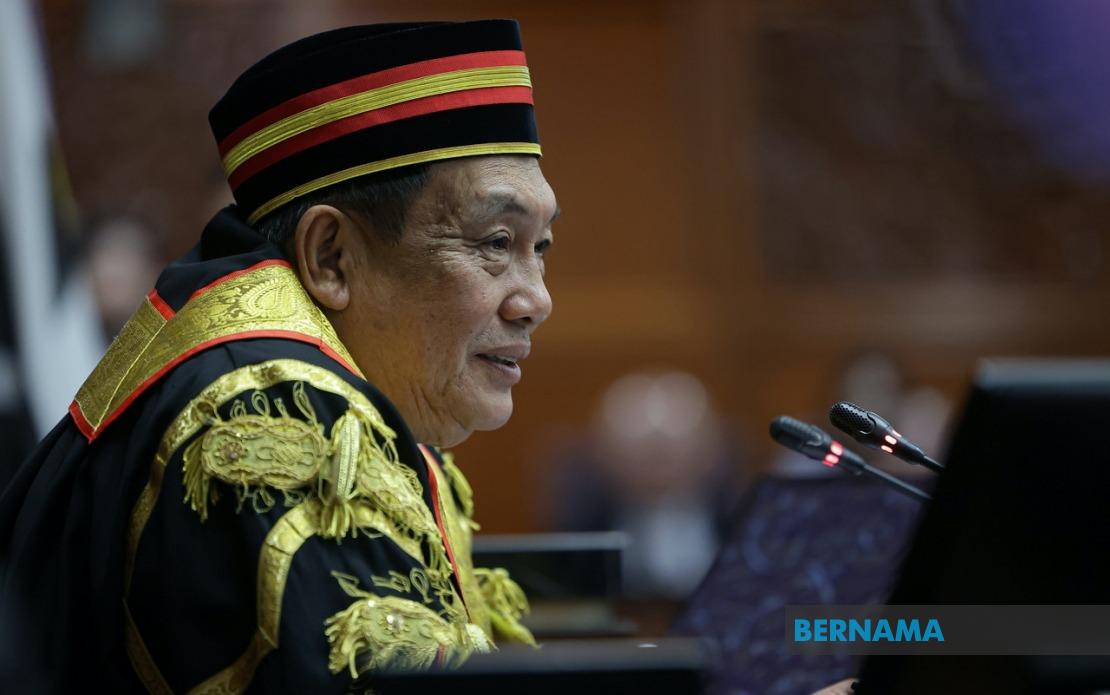
Malaysia's Youth Parliament has been characterised as a crucial educational institution for nurturing a generation of young citizens who grasp the fundamentals of democratic governance, according to Dewan Negara President Datuk Awang Bemee Awang Ali Basah. Speaking at Universiti Malaysia Terengganu during Parliament Malaysia's PBMy roadshow on August 27, Awang Bemee positioned the initiative as far more than a ceremonial platform—instead framing it as an experiential learning environment where emerging leaders acquire the civic competencies essential for Malaysia's democratic future.
The Senate president described Youth Parliament as functioning like a "school of democracy" for younger generations, distinguishing it from conventional educational pathways by offering tangible exposure to parliamentary processes. Young participants encounter the full spectrum of democratic engagement: formulating substantive positions, articulating arguments in debate, absorbing constructive criticism, and ultimately accepting decisions reached through majority consensus. This immersion teaches what Awang Bemee identifies as perhaps the most vital lesson in governance—that every stance taken by a public figure carries corresponding obligations to constituents and the broader national interest.
Awang Bemee elaborated on what differentiates effective leadership from mere positional authority. Leadership, he argued, transcends rhetorical capability to encompass genuine attentiveness to constituents' grievances; it extends beyond issuing directives to encompassing problem-solving and collaborative sense-making; and crucially, it means treating public office as a public trust rather than a platform for self-advancement. These characterological qualities develop through precisely the kinds of deliberative experiences Youth Parliament facilitates, shaping individuals into stewards of democratic values rather than opportunistic politicians.
Within Malaysia's institutional architecture, Awang Bemee positioned Youth Parliament as a complementary structure to Parliament itself. Whereas Parliament functions as the decision-making apex of the legislative system, Youth Parliament channels perspectives from younger demographics, thereby enriching the quality of democratic deliberation by incorporating voices historically marginalised in formal policy discussions. This arrangement strengthens Malaysia's democratic infrastructure by ensuring that governmental decisions reflect not merely established interests but also the concerns and aspirations animating emerging generations who will inhabit the consequences of current policies.
The Senate president articulated three foundational pillars supporting youth empowerment initiatives. The first emphasises cultivating institutional and cultural openness that privileges inclusive democratic participation. This requires structural mechanisms enabling young people to communicate their perspectives, institutional responsiveness ensuring those perspectives receive serious consideration, and a social ethos valuing differing viewpoints as strengthening rather than threatening democratic cohesion. Malaysia's ethnic, religious and cultural heterogeneity, Awang Bemee suggested, constitutes a strategic asset when complemented by deliberate cultivation of intercommunal understanding and reciprocal respect—yet this potential remains unrealised absent deliberate institutional commitment.
The second pillar reframes educational priorities beyond conventional metrics of examination performance and credential accumulation. Contemporary young people require competencies extending far beyond disciplinary mastery: critical analytical faculties enabling independent judgment of complex information; technological literacy encompassing not merely operational facility but ethical reasoning about digital technologies; comprehension of artificial intelligence's implications across societal domains; creative capacities; entrepreneurial orientation; communicative effectiveness; and civic literacy regarding governmental processes and citizens' roles within them. Awang Bemee emphasised that technological capability divorced from robust ethical frameworks risks producing technically skilled but morally rudderless individuals incapable of wielding technology toward constructive national purposes.
Within this educational framework, Awang Bemee identified the Blue Economy as representing significant opportunity for Malaysian youth engagement. This emerging economic domain encompasses fisheries modernisation, aquaculture expansion, maritime tourism development, renewable marine energy production, and advanced shipping infrastructure, all conducted within environmental constraints prioritising marine ecosystem preservation and coastal region sustainability. Exposing young people to these nascent economic opportunities positions them not as passive recipients of employment but as potential innovators and entrepreneurs capable of building prosperous livelihoods whilst contributing to national development objectives.
The third pillar addresses the relationship between democratic liberties and civic responsibility. Awang Bemee identified a persistent misconception within societies experiencing democratic freedoms: the equation of liberty with exemption from accountability. Democratic systems guarantee individuals extensive latitude for expressing ideas and opinions, yet this freedom necessarily excludes licence to disseminate deliberately false information, launch defamatory campaigns, or deliberately incite social discord. Young people, as the demographic most extensively engaged with digital communication platforms, bear particular responsibility for exercising these technologies judiciously, a imperative Awang Bemee articulated through practical guidance: verify information sources before amplification, apply scrutiny before accepting claims, seek comprehension before forming judgments, and contemplate ramifications before acting.
This emphasis on responsible technology use addresses a distinctly contemporary challenge facing Malaysian democracy. Social media platforms have dramatically lowered barriers to public communication, enabling young citizens unprecedented voice whilst simultaneously facilitating rapid dissemination of misinformation, coordinated harassment campaigns, and deliberate polarisation. The integration of digital citizenship training into Youth Parliament's curriculum represents a recognition that democratic maturation now necessarily encompasses technological literacy alongside traditional civic knowledge.
Awang Bemee expressed confidence that Malaysian youth, equipped through initiatives like Youth Parliament with both democratic competencies and ethical frameworks, could function as bridge-builders across Malaysia's diverse communities. This aspirational vision imagines younger generations transcending inherited communal divisions through collaborative problem-solving and shared commitment to national advancement. Realising this potential requires sustained institutional investment in platforms enabling genuine youth participation rather than ceremonial consultation, coupled with senior political and administrative figures demonstrating through their own conduct the authentic commitment to democratic values they expect younger citizens to internalise.
The UMT event incorporated a discussion forum interrogating whether Malaysian youth function as active drivers of national transformation or passive spectators observing political processes from the periphery. Featuring Parliament Malaysia's chief administrator Datuk Dr Ahmad Husaini Abdul Rahman, the forum created space for university students to pose substantive questions to senior parliamentary officials, instantiating the democratic engagement Awang Bemee advocates. Such direct interaction between younger generations and institutional leadership cultivates the understanding that political processes remain accessible to ordinary citizens rather than constituting closed domains reserved for professional politicians.
Parliament Malaysia's nationwide roadshow conducting these sessions across higher education institutions reflects institutional commitment to embedding Youth Parliament within Malaysia's universities rather than constituting an isolated initiative disconnected from where young people concentrate intellectually. This strategic positioning recognises that university years represent critical periods when young people develop foundational political beliefs, civic values, and behavioural dispositions toward democratic participation or withdrawal. Engaging students during these formative years potentially yields far greater returns in cultivating politically engaged citizenship than interventions targeting individuals after their worldviews have solidified.
The broader initiative aims cultivating leadership characterised by integrity rather than merely expedient ambition, developing a youth cohort simultaneously informed regarding policy complexities, conscious of their responsibilities as democratic participants, and prepared to contribute actively toward Malaysia's continued democratic development. Success requires not merely institutional programming but also authentic senior leadership modelling the virtues Awang Bemee advocates—demonstrating through concrete actions that democratic commitment, critical engagement with evidence, respectful disagreement, and prioritisation of collective welfare above factional advantage constitute not impediments to effective governance but essential prerequisites for it.

