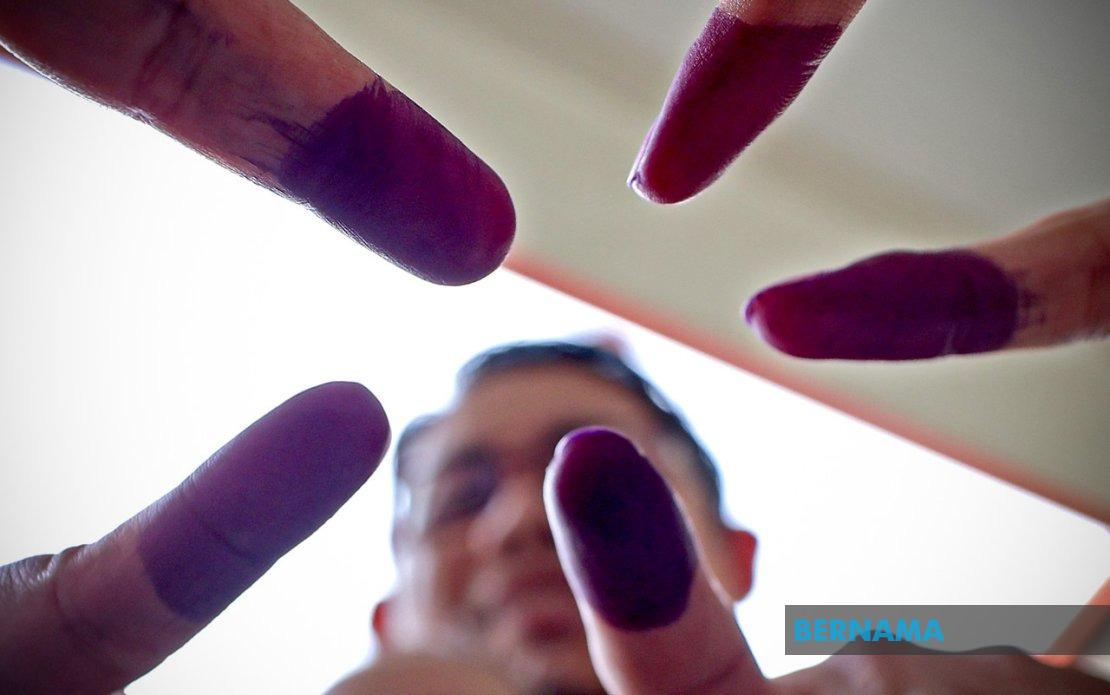
The 16th Johor state election on July 11 will be contested in a dramatically altered electoral landscape where young, uncommitted voters could prove decisive in marginal constituencies. With the implementation of Undi18 and automatic voter registration expanding the voting pool, political analysts are flagging the emergence of a generation of first-time electors—many ideologically unaligned with traditional party machines—as potentially the most influential bloc in determining outcomes across tightly contested seats. The shift represents a fundamental challenge to conventional ground warfare and raises questions about how established political machinery will adapt to mobilise voters who have grown up in an era of social media and digital information flows.
According to Election Commission data, more than 1.29 million registered voters in Johor are below the age of 40, a cohort comprising 165,386 voters aged 18 to 20, 544,657 aged 21 to 29, and 587,888 aged 30 to 39. This youthful demographic's sheer numerical weight means that in closely divided contests—where victory margins often hinge on hundreds or even dozens of votes—their collective voting behaviour could readily determine which candidate crosses the finish line. The significance becomes even more pronounced when considering that first-time voters across all constituencies now represent a substantial presence, fundamentally altering the calculus of competitive campaigns in ways that traditional political analysis struggles to predict with confidence.
Associate Professor Dr Mohd Yusri Ibrahim, research chief at the Ilham Centre, contends that the influx of first-time voters necessitates a complete recalibration of campaign strategy. He emphasises that in marginal seats, the voting preferences of this demographic cohort could easily function as the decisive factor, given their detachment from longstanding partisan allegiances that have historically structured Malaysian electoral competition. The implication is that no campaign team can afford to treat young voters as a secondary or tertiary target—they must become central to any credible path to victory, yet remain notoriously difficult to predict and mobilise using traditional methods.
The challenge for political parties lies in crafting messaging that resonates across vastly different constituencies and voter segments simultaneously. Dr Mohd Yusri suggests that effective campaigns must now operate on multiple channels: social media platforms where urban youth congregate online, combined with sustained face-to-face engagement in rural areas where older voters continue to rely on personal networks and community relationships. This dual-track approach represents a significant escalation in campaign complexity and resource intensity, requiring parties to maintain sophisticated digital operations while simultaneously sustaining boots-on-the-ground mobilisation efforts that have always been labour-intensive.
Dr Mohammad Tawfik Yaakub from Universiti Malaya's Department of Political Science argues that voters aged 18 to 39, numbering approximately 1.2 million across the state, constitute the election's most consequential demographic segment. Critically, this generation evaluates candidates through a fundamentally different lens than their predecessors. Rather than filtering political choices through party affiliation or ideological commitment, they assess individual candidates on demonstrable performance, personal credibility, and tangible problem-solving ability. This represents a significant departure from voting patterns shaped by ethnic and religious identity politics that have long dominated Malaysian electoral behaviour, suggesting a potential generational realignment in how voters conceptualise political choice.
The geographical divide in information exposure further complicates campaign strategy. Urban voters, saturated with national news narratives and social media discourse, process political information through entirely different channels than rural counterparts who remain embedded in local gossip networks and personalised candidate relationships. While social media can undoubtedly generate viral momentum and create the appearance of widespread enthusiasm, Dr Mohammad Tawfik emphasises that this digital energy means little without corresponding grassroots machinery capable of converting online momentum into actual votes cast on election day. Parties with strong social media presence but weak ground organisation frequently discover that digital popularity does not translate into electoral advantage, as the gap between online engagement and actual voting behaviour remains considerable.
The appetite for new political faces among Johor voters has clearly strengthened, yet analysts caution against interpreting this as a simple preference for youth over experience. Youth alone provides insufficient foundation for electoral victory; credibility and demonstrated capability remain non-negotiable requirements. Voters may be willing to cast ballots for relatively unknown candidates, but only if those individuals project competence and can articulate coherent solutions to concrete problems. This nuance is crucial for understanding the actual constraints operating on anti-incumbent or third-force candidates seeking to dislodge entrenched political actors—novelty is advantageous but not sufficient without substantial substantive backing.
Economic concerns are positioned to overshadow abstract political narratives in this election cycle. The combination of rising living costs, wage stagnation, housing affordability pressures, and employment uncertainty creates an environment where bread-and-butter issues dominate voter consciousness. Dr Mohammad Tawfik predicts that whichever political force most convincingly articulates credible solutions to these immediate material concerns will possess a significant electoral advantage. Slogans and identity-based appeals hold diminishing sway when voters are preoccupied with how they will pay rent, feed their families, or plan for retirement. This economic focus could work to the advantage of opposition parties that can position themselves as challengers to incumbent complacency, or conversely benefit ruling parties that can claim credit for specific pro-poor initiatives.
The fence-sitter phenomenon extends beyond mere swing voters in the traditional sense. These uncommitted electors increasingly look beyond the bounds of identity politics entirely, rejecting the framework that has structured Malaysian politics for decades. Instead, they demand realistic policy proposals grounded in evidence and feasibility rather than rhetorical flourish. This represents a potential structural weakness for any political actor whose campaign relies primarily on invoking ethnic or religious sentiment—such appeals lose effectiveness when voters have mentally exited the identity-politics framework altogether. Parties must compete on substantive grounds or risk losing large portions of this critical demographic.
Voter turnout will substantially influence which party benefits most from the youthful demographic shift. First-time voters, particularly those aged 18 to 20, show historically inconsistent turnout patterns—they may be mobilised by particular candidates or issues, or remain disengaged and home on election day. The party that invests most effectively in turnout operations targeting young voters while simultaneously persuading fence-sitters through credible policy messaging will likely emerge victorious in tight contests. Early voting on July 7, before the main election on July 11, could provide useful indicators of which parties have successfully energised their base and persuaded persuadable voters.
Malaysia's electoral landscape is clearly undergoing generational transition, with Johor serving as a crucial testing ground for how political competition evolves in an era of expanded youth suffrage and digital communication. The state election represents far more than a regional political event; it constitutes a referendum on whether traditional party structures can adapt to new voter preferences, or whether they will be displaced by more nimble political actors capable of commanding the digital sphere while maintaining organisational capacity on the ground. The outcomes will reverberate through subsequent federal elections and shape Malaysian politics for years beyond July 11.

