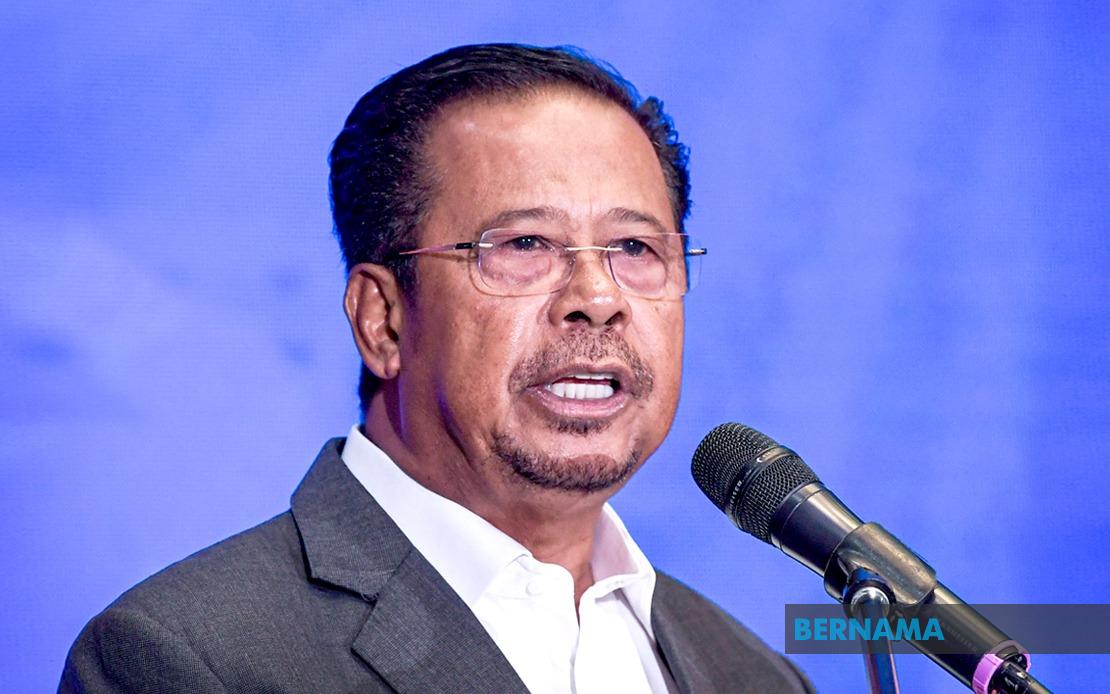
Twenty university students engaged in substantive debate on Malaysia's energy future at the inaugural Minister's Cup competition, held in conjunction with the 7th International Sustainable Energy Summit (ISES) 2026 in Kuala Lumpur. The centrepiece discussion examined whether Malaysia should pursue expanded exports of renewable energy-based electricity to neighbouring countries while simultaneously fulfilling domestic supply requirements, a question that sits at the intersection of regional cooperation and national energy security.
The debate format proved instrumental in elevating energy policy discourse beyond government circles and expert forums. By positioning university students as principal voices in this discussion, organisers underscored an important principle: young people who will inherit the consequences of today's energy decisions deserve meaningful participation in shaping those decisions. The Government team secured the championship award, while Muhammad Uwais Mohd Hazril Munir @ Umar, a 20-year-old student from Universiti Malaya's Faculty of Law, earned recognition as the Best Debater, demonstrating that rigorous argumentation on complex infrastructure matters is accessible to emerging scholars.
Deputy Minister of Energy Transition and Water Transformation Datuk Seri Abdul Rahman Mohamad presided over the awards ceremony, affirming the government's investment in platforms that encourage critical thinking about energy transitions. His presence, alongside Tan Sri Dr Wan Ahmad Dahlan Abdul Aziz in his dual capacity as Chief Secretary to the Government and chairman of the Sustainable Energy Development Authority Malaysia (SEDA), signalled institutional commitment to embedding energy literacy within national discourse.
The underlying question debated at the Kuala Lumpur Convention Centre carries particular significance for Malaysia and the broader Southeast Asian region. As countries accelerate decarbonisation efforts, the potential for cross-border renewable energy trade represents a compelling pathway to accelerated green transition. However, this opportunity exists in tension with persistent domestic energy needs. Malaysia's own electricity demand continues expanding alongside urbanisation and industrialisation, raising legitimate questions about whether exporting renewable capacity might constrain domestic supply or elevate consumer energy costs. The debate format allowed participants to articulate these competing priorities rather than defaulting to rhetorical certainty.
SEDA's strategic communications director, Izzad Zalman Abdul Kader, articulated a rationale extending beyond tournament mechanics. Engaging young people in structured policy debate strengthens what he termed energy literacy—the capacity to understand how electricity is generated, distributed, and consumed, and to make informed choices reflecting this knowledge. This objective aligns with the Malaysia Energy Literacy Programme (MELP), a national initiative established to furnish Malaysians with accurate, verified information on energy systems. MELP recognises that public understanding of energy remains fragmented, often constrained by misinformation or oversimplification.
The debate platform uniquely facilitates what traditional government communication channels struggle to achieve: authentic exposure to competing perspectives presented with equal rhetorical force. Audiences hearing arguments from both sides of the renewable export question encounter the genuine tensions inherent in energy policy, rather than receiving pre-digested conclusions. As Muhammad Uwais noted, this pedagogical approach renders complex technical and policy matters more comprehensible to broader publics by embedding them within narrative and argumentative frameworks people encounter daily.
For Malaysian stakeholders monitoring the country's energy transition, the Minister's Cup initiative signals institutional recognition that sustainable energy adoption requires more than technological investment or regulatory frameworks—it demands cultivation of a citizenry capable of engaging thoughtfully with energy policy tradeoffs. This insight becomes particularly important as Malaysia charts its course toward renewable energy targets amid regional competition for investment and expertise.
Afiq Athmar Mohamed, a 21-year-old economics student from Universiti Malaya, highlighted the collaborative dimension of the initiative. Coordination between ministries, government agencies, and media organisations amplified the competition's reach and legitimacy. This interdepartmental approach contrasts with siloed policy development and suggests institutional appetite for integrated strategies spanning energy, communications, and education portfolios.
The substantive focus on renewable energy exports reflects Malaysia's positioning within regional energy architecture. As Southeast Asian neighbours pursue ambitious renewable capacity expansion, opportunities for coordinated infrastructure development and cross-border electricity trading become increasingly viable. Brunei, Singapore, and other regional economies possess constrained domestic generation potential, creating natural import demand for renewable-sourced electricity. Malaysia's geographic positioning and existing generation infrastructure position it as a potential supplier, though realising this opportunity requires reconciling export ambitions with domestic imperatives.
The debate motion itself contained analytical sophistication often absent from public energy discourse. Rather than presenting renewable energy expansion as an unambiguous good, it foregrounded a genuine constraint: the question of whether export commitments might compromise domestic supply adequacy. This framing reflects mature policy reasoning that recognises sustainability encompasses not only carbon reduction but also energy security and economic viability.
Participation of twenty university students indicated healthy recruitment interest in energy policy discourse among younger Malaysians. This demographic will drive the country's energy transition implementation over coming decades, making their engagement in policy formation processes consequential for institutional legitimacy and policy efficacy. When young people participate in shaping energy futures rather than merely receiving policy outputs, commitment to implementation and willingness to embrace necessary behavioural changes typically strengthen.
The ISES 2026 summit itself provided authoritative context for the debate, positioning energy literacy initiatives within a global conversation on sustainable development. This international framing elevates Malaysian efforts beyond domestic significance, connecting local university students with transnational challenges and solutions. For Southeast Asian readers, the message is clear: energy transitions succeed when governed through inclusive deliberation that welcomes emerging voices and subjects assumptions to scrutiny.

