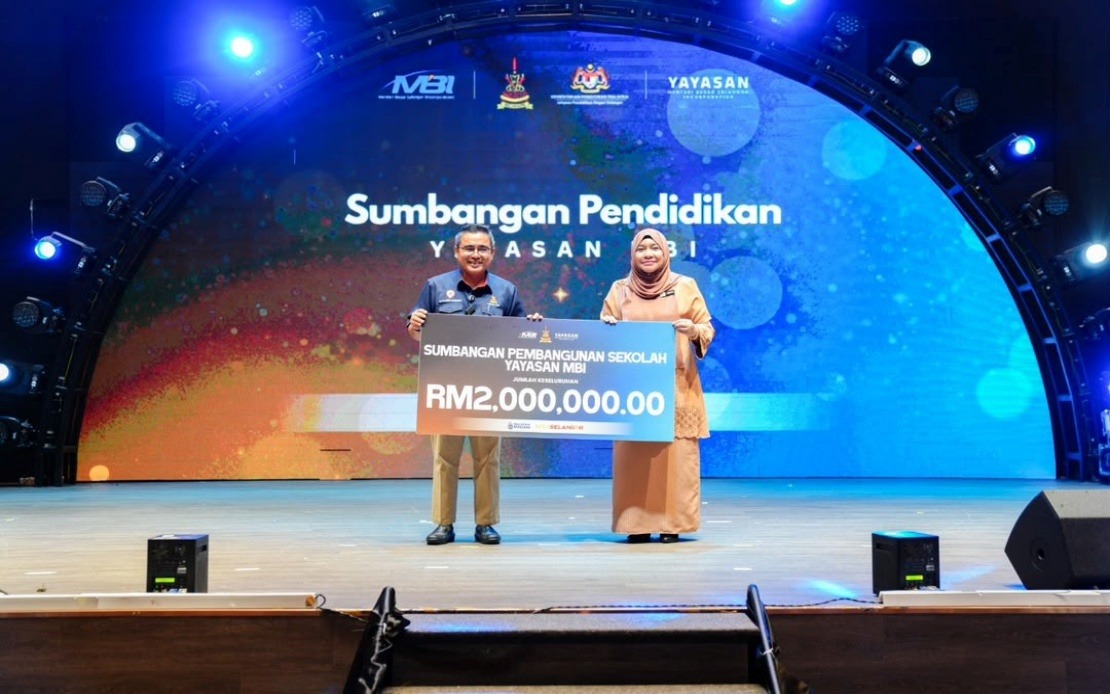
Yayasan Menteri Besar Selangor (Incorporated) has committed RM2 million in fresh funding directed at schools throughout the state, marking another significant step in the foundation's push to enhance educational quality and accessibility. The disbursement, channelled through the organisation's School Development Contribution programme, underscores a strategic pivot toward investing directly in the physical and human infrastructure that underpins effective teaching and learning in Malaysian classrooms.
According to Ahmad Azri Zainal Nor, who heads the foundation, the allocation represents far more than routine charitable spending. He characterised education as a cornerstone element of the foundation's long-term vision, with approximately two-thirds of all initiatives currently directed at the sector. This concentration reflects a deliberate philosophical stance: that improving schools constitutes an investment in human capital rather than merely providing temporary relief. The distinction matters because it signals how Yayasan MBI conceptualises its role within Selangor's development trajectory—not as a gap-filler but as a foundational contributor to generational progress.
The funding announcement emerged during the Yayasan MBI Education Aspiration 2026 event, which served simultaneously as a platform for deepening partnerships with key stakeholders and acknowledging the work educators undertake across the state. This event-based approach to launching initiatives carries particular significance in Malaysia's education landscape, where teacher morale and public recognition of the profession have become pressing concerns. By hosting a dedicated education forum, the foundation reinforced that its contributions operate within a broader ecosystem of support and coordination rather than existing as isolated gestures.
Immediate applications of the RM2 million focus on tangible improvements to learning environments. The money targets upgrades to school facilities and infrastructure—categories that encompass everything from classroom furniture and teaching materials to laboratory equipment and outdoor learning spaces. These investments matter acutely in Malaysian schools, where facility disparities between well-resourced urban institutions and less-developed rural or estate schools create persistent inequities. Enhanced physical infrastructure can meaningfully improve educational outcomes, particularly in subjects requiring specialised spaces or equipment.
Beyond bricks and mortar, the foundation's programmes demonstrate a commitment to addressing education holistically. The Back to School Tour Programme delivers direct support during the crucial transition into new academic years, when families facing financial constraints might struggle to afford uniforms, bags, and stationery. The Selangor People's Tuition Programme and Didik Kasih Programme both provide free supplementary learning support, recognising that classroom instruction alone may prove insufficient for students facing socioeconomic barriers or learning difficulties. These initiatives collectively target education as a multifaceted challenge requiring intervention at multiple points.
Parent-Teacher Association collaborations merit particular attention, as they represent efforts to mobilise community-level engagement rather than relying exclusively on top-down provision. When foundations work through PTAs, they tap into grassroots networks already embedded within school communities, increasing the likelihood that interventions address locally identified priorities. This approach also builds sustainability by strengthening the institutional capacity of schools themselves rather than creating dependency on external actors.
Yayasan MBI's partnership with the Selangor State Education Department signals recognition that charitable efforts function most effectively when aligned with government planning and implementation capacity. Rather than operating parallel to official structures, the foundation positions itself as a complementary actor within the state's education machinery. This coordination matters significantly, as it enables better targeting of resources toward schools with greatest need and ensures that foundation-funded initiatives integrate seamlessly with curriculum delivery and pedagogical approaches sanctioned by education authorities.
For Selangor specifically, these investments carry regional significance. The state encompasses both highly developed urban areas and less developed peripheral regions, creating within its borders the full spectrum of Malaysian education challenges. Selangor's demographic diversity—encompassing established suburbs, new townships, industrial zones, and agricultural hinterlands—means that education initiatives must accommodate vastly different contextual realities. RM2 million distributed strategically across this geography can catalyse meaningful improvements in multiple school communities simultaneously.
The stated commitment to building an inclusive, quality, and sustainable education ecosystem aligns with Malaysia's broader national aspirations following the launch of the Madani Framework and various education reform initiatives. Selangor, as the nation's economic engine and home to the federal territories' administrative functions, occupies a symbolic position within Malaysian development. When significant private philanthropic resources flow into Selangor's schools, the demonstration effect ripples across the country, potentially encouraging similar commitments from other foundations and corporate entities.
However, scaling these efforts poses ongoing challenges. While RM2 million provides meaningful support, the total public education budget in Malaysia runs into billions annually, indicating that philanthropic contributions, however welcome, address only marginal gaps. The sustainability question persists: can annual disbursements like this one be maintained indefinitely, and how do schools plan investments knowing that foundation funding may fluctuate based on economic conditions and organizational priorities? These structural questions underpin longer-term education policy discussions in Malaysia.
The emphasis on teacher welfare and recognition also deserves analysis. By honouring educators through dedicated events and channelling resources toward improving their working conditions—better facilities ostensibly create more comfortable teaching environments—the foundation acknowledges that educational quality depends fundamentally on teacher motivation and retention. Malaysian education faces documented challenges in retaining talented teachers, particularly in less popular postings. When foundations invest in school infrastructure alongside acknowledging teacher contributions, they contribute indirectly to professionalisation and workplace satisfaction.
Looking forward, the Education Aspiration 2026 branding suggests a multi-year commitment extending at least through 2026. This temporal framing allows for more ambitious planning than single-year allocations permit. Schools can conceptualise larger infrastructure projects and pedagogical shifts knowing that funding may be available across multiple cycles. For Malaysian education stakeholders monitoring philanthropic trends, Yayasan MBI's sustained focus on the sector provides some grounds for optimism regarding external support for school improvements, even as government budgets face competing demands across multiple portfolios.

