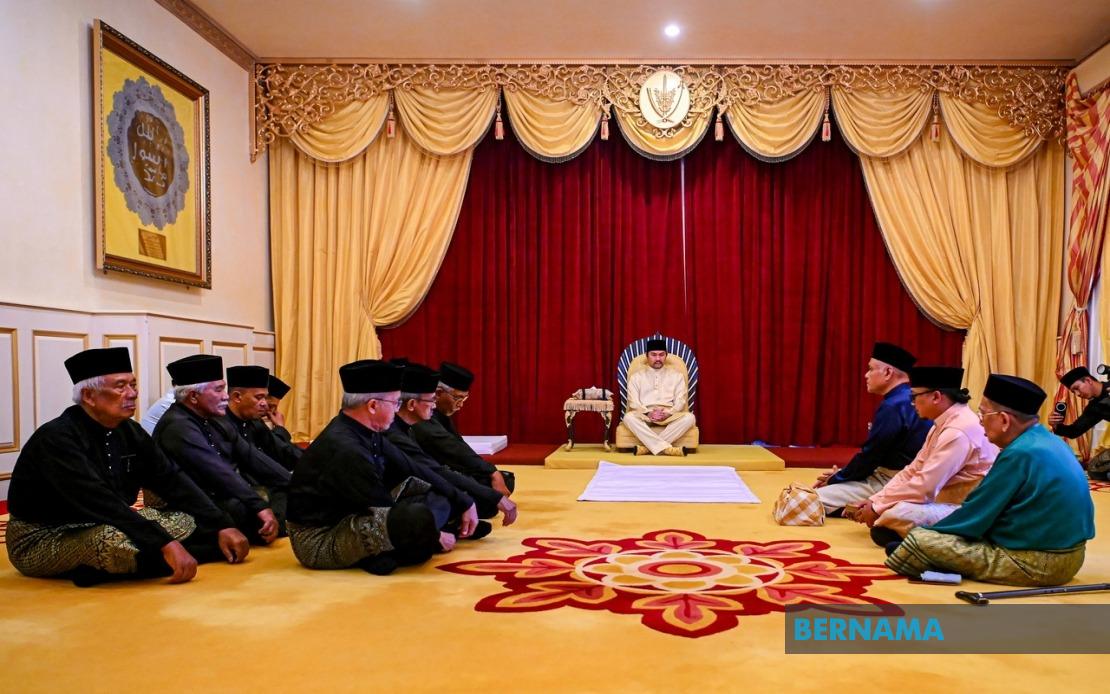
The Yang Dipertuan Besar of Negeri Sembilan, Tuanku Muhriz Tuanku Munawir, has granted his consent for a formal royal ceremony to take place tomorrow morning at Istana Besar Seri Menanti in Kuala Pilah, marking the installation of the newly selected Undang of Luak Sungei Ujong. The decision was formally announced through a royal audience held at the palace today, during which the affirmation was conveyed by Tunku Besar Seri Menanti Tunku Ali Redhauddin Tuanku Muhriz on behalf of the Yang Dipertuan Besar, establishing the ceremonial framework for this significant hereditary leadership transition within the principality's traditional governance structure.
The selection of Muhammad Faris Johari, aged 29, to serve as the 11th Undang of Luak Sungei Ujong followed comprehensive adherence to the customary selection procedures long established within the luak. The Buapak customary council assembly, responsible for identifying successors to this hereditary position, conducted the selection process in strict accordance with adat practices specific to Sungei Ujong. This appointment fills the vacancy created following the dismissal of his predecessor, Datuk Klana Petra Datuk Mubarak Dohak, who served as the 10th Undang of Luak Sungei Ujong before his removal was formally accepted by the Dewan Keadilan dan Undang.
Waris Negeri Sungei Ujong Datuk Sinda Maharaja Razlan Hamid, who represented the luak during the royal audience and briefed media afterwards, emphasised that every aspect of Johari's selection adhered to the time-honoured customs and traditions that govern leadership selection in Luak Sungei Ujong. His confirmation of the selection's legitimacy carries particular weight, as the Waris Negeri position holds custodial responsibility for ensuring that traditional governance practices remain intact and properly observed. The affirmation from both the customary council and the Yang Dipertuan Besar demonstrates the dual validation—customary and constitutional—that characterises Negeri Sembilan's unique system of hereditary leadership.
Tunku Ali Redhauddin, speaking on behalf of his father, expressed satisfaction that all procedural requirements had been met prior to the formal installation ceremony. He noted that preparations for the ceremony, technically known as Istiadat Menghadap Menjunjung Duli Bagi Menyempurnakan Kejadian Undang Luak Sungei Ujong, would be coordinated between the adat leaders and the Orang Empat Istana, the palace's administrative office responsible for managing ceremonial affairs. This coordination reflects the integrated nature of Negeri Sembilan's governance, where traditional adat structures work alongside formal state institutions to maintain institutional continuity and legitimacy.
The forthcoming installation ceremony assumes broader significance within Negeri Sembilan's political landscape, as it represents the formal affirmation of leadership within the luak system—the nine territorial divisions that comprise the principality's traditional administrative framework. Each luak maintains its own Undang, a position that historically carried considerable authority over local affairs, land matters, and customary disputes. Although modern governance has substantially centralised state functions, the Undang position retains symbolic importance and remains embedded within the state's constitutional arrangement, particularly regarding customary law administration and adat matters affecting local communities.
Paralleling Johari's installation, the Yang Dipertuan Besar similarly approved a formal ceremony for tomorrow to install the 22nd Undang of Luak Rembau, another of Negeri Sembilan's nine luaks. This simultaneous scheduling of installation ceremonies indicates a deliberate effort to streamline the ceremonial affirmation processes across multiple luaks, possibly reflecting accumulated vacancies or succession matters requiring collective resolution. The back-to-back ceremonies will underscore the Yang Dipertuan Besar's role as constitutional apex of Negeri Sembilan's dual governance system, where hereditary legitimacy derives both from customary adat foundations and formal state constitutional provision.
Menteri Besar Datuk Seri Aminuddin Harun confirmed that the decision to accept Datuk Klana Petra's dismissal had been formally ratified during a special sitting chaired by Tuanku Muhriz at Istana Besar Seri Menanti. The special sitting format suggests that circumstances surrounding the previous Undang's removal warranted elevated procedural solemnity, though specific grounds for the dismissal were not disclosed in available statements. This confidentiality regarding internal customary disciplinary matters reflects established practice in such hereditary governance systems, where adat processes often remain insulated from broader public discussion to preserve institutional dignity and traditional authority structures.
The timing and scale of these installation ceremonies highlight the practical intersection between Negeri Sembilan's constitutional monarchy and its anchoring in customary governance traditions. Unlike Malaysia's other states, Negeri Sembilan operates under a unique elective monarchy system where the Yang Dipertuan Besar is selected by the collective council of rulers representing the nine luaks, rather than being a hereditary position within a single dynasty. This distinctive arrangement means that the luak leaders, embodied by figures such as the incoming Undang of Luak Sungei Ujong, collectively exercise constitutional power in selecting and potentially deposing the state's supreme ruler, making the integrity and legitimacy of luak-level leadership matters of constitutional consequence.
For Malaysian readers accustomed to more centralised governance models, Negeri Sembilan's system presents a fascinating counterpoint. The state's capacity to maintain functional traditional institutions alongside modern administration demonstrates that adat governance need not be ceremonial theatre but can constitute living, operative elements of state structure. The rigorous adherence to customary selection procedures in appointing Johari—rather than executive appointment or electoral processes—reflects the state's deliberate preservation of traditional authority mechanisms, even as it navigates contemporary governance requirements and constitutional frameworks.
The installation ceremony tomorrow carries significance beyond the immediate succession matter. It represents Malaysia's continuing engagement with its hereditary governance heritage at a moment when questions about institutional legitimacy, procedural transparency, and the balance between tradition and modernity occupy broader political discussion nationally. Negeri Sembilan's transparent handling of the succession process—announcing procedures, confirming customary compliance, and scheduling formal ceremonies—models an approach where traditional governance can function with public accountability alongside respect for adat propriety.
Looking forward, Johari's tenure as Undang of Luak Sungei Ujong will require navigation of complex expectations. As the youngest generation ascending to such positions, he will be expected to maintain adat traditions while potentially engaging with contemporary governance challenges affecting his luak's communities. The selection of someone in his late twenties suggests the Buapak council's confidence in combining youthful energy with traditional responsibility, potentially signalling institutional adaptation to modern circumstances while preserving customary authority foundations.

