The Malaysian government's push to establish a formal accreditation system for religious speakers operating on social media and online platforms has gained backing from the Yayasan Dakwah Islamiah Malaysia (YADIM), which views the measure as essential for protecting the integrity of Islamic teachings in an increasingly digital spiritual landscape. The proposal, announced by the Minister in the Prime Minister's Department (Religious Affairs) Dr Zulkifli Hasan, represents an attempt to address growing concerns about unqualified individuals presenting themselves as religious authorities without substantial Islamic knowledge or proper credentials.
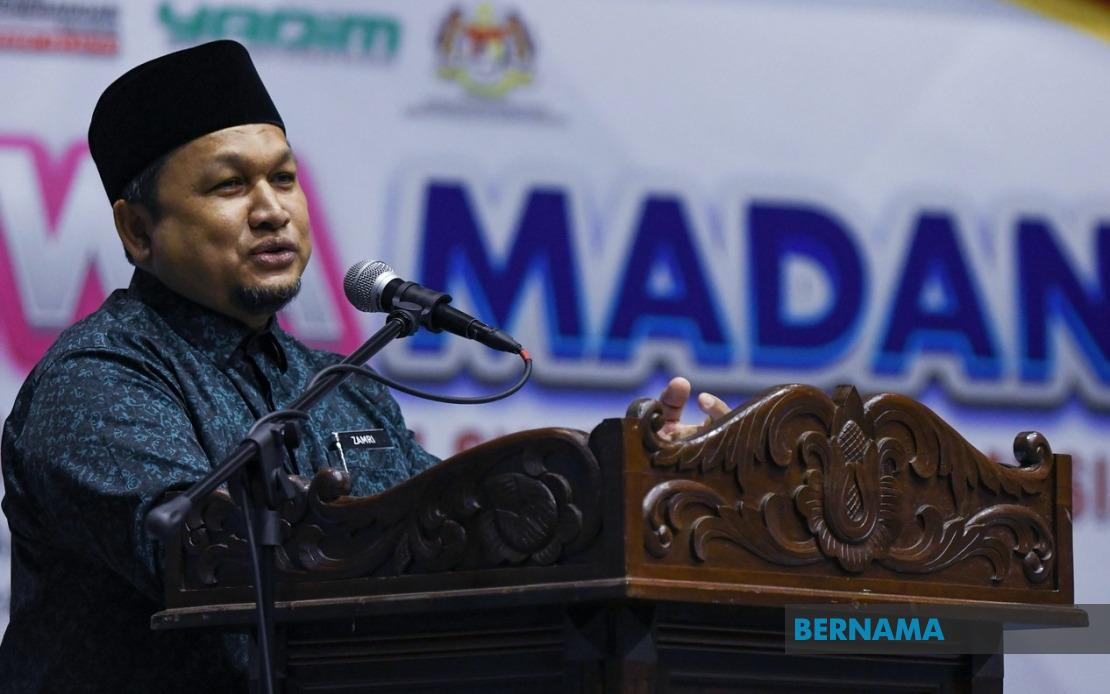
Zamri Zainal Abidin, chief executive officer of YADIM, articulated the foundation's support by emphasising that such regulatory oversight would serve multiple protective functions in Malaysia's religious ecosystem. Rather than constraining legitimate dakwah efforts, he argued, the accreditation framework aims to establish baseline standards of competence and integrity among those who use digital platforms to discuss and teach Islamic matters. This distinction reflects an important nuance in the debate: the government is not seeking to silence religious discourse but rather to ensure that those engaging in it possess adequate grounding in Islamic scholarship and theology.
The proliferation of unverified religious content online has created a particular challenge for Malaysian authorities concerned about doctrinal accuracy. Zamri highlighted how the absence of gatekeeping mechanisms allows virtually anyone to adopt the title of ustaz or preacher on social media platforms without demonstrating any formal training or qualification in Islamic studies. This democratisation of religious authority, while ostensibly inclusive, has enabled the spread of teachings that contradict established Islamic principles or misrepresent religious sources. The consequences extend beyond doctrinal disputes into the realm of public trust, as conflicting religious messages from competing online personalities create confusion and potentially undermine institutional religious authority.
Young Malaysians represent a particular focal point of concern in this debate. As digital natives increasingly turn to social media for religious guidance rather than traditional institutions or trained clerics, the risk of exposure to inaccurate or deliberately distorted Islamic teachings intensifies. Zamri warned that young people, lacking the theological foundation to critically evaluate religious content, are especially vulnerable to misleading information presented with apparent authority. The cumulative effect of such exposure, he suggested, erodes public confidence in legitimate religious institutions and trained scholars, creating a problematic polarisation between official and informal religious authorities.
YADIM's endorsement carries particular weight given its position as the government's primary dakwah agency operating under the Prime Minister's Department. The organisation has institutional credibility built on decades of coordinating Islamic outreach activities across Malaysia. By positioning itself as a potential strategic partner in implementing the accreditation framework, YADIM signals both support for the initiative and readiness to contribute its expertise to the regulatory process. This alignment between a major religious institution and government policy suggests that the proposal enjoys broad support among Malaysia's formal religious establishment.
The foundation has also pointed to its existing practices as evidence that accreditation systems are both feasible and compatible with active dakwah work. YADIM-trained preachers, including those in its Daie Muda programme, already receive formal accreditation from the Federal Territories Mufti Department. This established model demonstrates that credentials can be awarded to qualified religious speakers without significantly impeding their ability to conduct outreach activities. The precedent suggests that implementing a broader national system would not require revolutionary changes to existing structures but rather formalisation and standardisation of practices already operating in parts of Malaysia's religious administration.
The broader context of this proposal reflects ongoing tensions in Malaysia between maintaining Islamic orthodoxy and preserving the space for diverse Islamic expression and practice. The government's concern about unqualified online preachers stems partly from incidents where heterodox teachings or teachings deemed incompatible with mainstream Islamic jurisprudence have spread through social media before institutional authorities could respond. By establishing accreditation requirements, the government aims to restore a level of institutional control over the dissemination of Islamic knowledge without resorting to outright censorship or suppression of online religious content.
Implementing such a framework presents significant practical challenges that extend beyond Zamri's relatively optimistic framing. Determining which qualifications constitute adequate grounding in Islamic studies requires navigating questions about which Islamic traditions and scholarly schools should be recognised. Malaysia's plural Islamic landscape encompasses diverse theological perspectives, and any accreditation system risks being perceived as privileging particular interpretations over others. Additionally, the technical challenge of monitoring and enforcing accreditation standards across multiple social media platforms operating globally adds considerable complexity to implementation.
The proposal also intersects with broader concerns about online freedom and government regulation of digital spaces. While YADIM frames accreditation as a quality-assurance mechanism rather than censorship, critics may argue that mandatory accreditation for religious speech sets a precedent for government oversight of online expression more broadly. The distinction between legitimate credentialing and problematic restriction of religious freedom remains contested, particularly as governments across Southeast Asia increasingly assert control over digital content.
From a regional perspective, Malaysia's approach to regulating online religious discourse offers lessons and cautions for other Muslim-majority or Muslim-minority nations in Southeast Asia navigating similar challenges. Countries including Indonesia, Singapore, and Brunei face comparable issues regarding the spread of unverified religious teachings through digital platforms. Malaysia's experience with formalising accreditation frameworks could either provide a model for balanced regulation or serve as a cautionary example of how good intentions in religious governance can inadvertently restrict legitimate expression.
The timing of this proposal reflects Malaysia's broader recalibration of religious policy under current leadership. With increased attention to Islamic institutional authority and the purported dangers of online misinformation, the government is reasserting institutional oversight of religious matters. YADIM's support signals alignment with this broader direction, positioning the foundation as a stakeholder in implementing tighter controls over who speaks authoritatively about Islam in the public sphere. This alliance between government and religious institutions suggests that further regulatory measures in this domain may follow.

