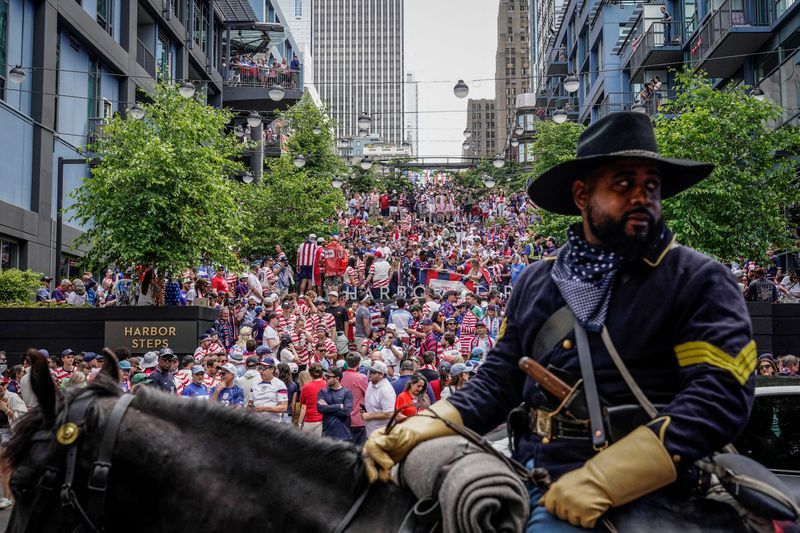
The 2026 FIFA World Cup has spread across 16 cities spanning North America, bringing the world's most celebrated sporting event to communities large and small. Through the lens of Reuters photographers stationed at training camps and matches, the tournament reveals how football transcends borders and transforms urban spaces into gathering points for global celebration. What emerges from their observations is a tapestry of local cultures, sporting traditions, and the powerful unifying force of the beautiful game.
Mexico City stands as the spiritual heart of the tournament in the region, with Estadio Azteca serving as a landmark venue that has witnessed some of football's greatest moments, including two World Cup finals. Yet the passion for soccer extends far beyond the stadium's grand structure. In neighbourhoods throughout the capital, communities have reimagined their urban geography to create spaces for the game, with residents building makeshift pitches wherever space permits. This reflects how deeply football is woven into Mexico's cultural fabric, with the sport serving as both recreation and expression for ordinary Mexicans. Meanwhile, Guadalajara carries its own World Cup mystique, with locals still remembering Pelé's 1970 visit, a connection honoured through the unveiling of a statue celebrating the Brazilian legend. The convergence of Mexican and Colombian supporters in the city demonstrated football's capacity to forge unexpected friendships, with visiting fans ultimately cheering for each other's teams with genuine warmth.
Monterrey exemplifies the Mexican tradition of casual, community-centred football culture. Here, the sport naturally integrates with everyday life, whether enjoyed during backyard barbecues with beer and friends or watched collectively in neighbourhood bars. This organic connection between football and social gathering illustrates how the tournament slots into established patterns of leisure and connection rather than disrupting them. The ease with which locals embrace the World Cup reflects decades of accumulated sporting tradition.
Miami presents a markedly different context, where the tournament feels less like an external event and more like an affirmation of the city's existing character. The substantial Latin American population means that World Cup energy resonates with communities who already celebrate their heritage and maintain strong ties to their countries of origin. The Florida heat and humidity test visitors accustomed to different climates, yet fans demonstrate remarkable resilience, suggesting that the passion for football transcends physical discomfort. This normalization of World Cup activity in Miami reveals how major sporting events can integrate seamlessly into cities with strong diaspora populations.
Texas hosts embody American spectacle at its grandest scale. From Dallas to Houston, the tournament has been characterised by supersized everything—towering highways, enormous barbecue portions, and massive stadiums dwarfing those found in most other host cities. Mexican supporters have been visible throughout, and notably, local Americans have shown willingness to support visiting nations when the United States isn't competing, suggesting a cosmopolitan sporting mentality. The Argentina matches drew packed stadiums where Lionel Messi's record-breaking goal created atmospheric moments that will define this World Cup for those present. The sheer magnitude of infrastructure and hospitality in Texas reflects American approaches to sporting spectacle, where entertainment encompasses far more than the ninety minutes on the pitch.
Atlanta's unconventional stadium design—featuring a retractable roof and unusual seating configurations—initially seemed incompatible with traditional football aesthetics, yet the venue has generated remarkable atmosphere. The surrounding fan zones have overflowed with supporters, while restaurants broadcast matches to packed houses, demonstrating how World Cup fever animates entire urban economies. Business owners report unprecedented activity, suggesting that the tournament's economic ripple effects extend well beyond ticket sales and merchandise.
Los Angeles, a sprawling metropolis often characterised by isolation within personal vehicles and separate neighbourhoods, has experienced genuine urban transformation through the World Cup. The tournament has pulled residents and visitors into shared public spaces, breaking through the fragmentation that typically defines LA experience. Various diaspora communities—Iranians, South Koreans, Mexicans, and others—have seized the opportunity to publicly celebrate their heritage, creating visual and cultural diversity that enriches the broader city. This phenomenon highlights how sporting events can temporarily overcome urban fragmentation and foster unexpected cross-cultural encounters.
San Francisco's experience carries deeper significance in the contemporary American context. As migration policies have created tension and uncertainty within immigrant communities, the World Cup has offered a space where people proudly display their ancestral connections through flags, cuisine, language, and cultural expression. Simultaneously, many Americans encounter cultures they would otherwise never experience, creating organic cross-cultural education. This exchange embodies the tournament's deeper purpose beyond football—to facilitate human connection and mutual understanding across national and cultural boundaries. For photographers like Carlos Barria, accustomed to covering immigration controversies, this positive intercultural engagement offers a contrasting and redemptive narrative.
Kansas City, positioned at the border of two states, has embraced the World Cup as a natural extension of its deep sporting heritage. Baseball, American football, and soccer coexist comfortably within the city's culture, each commanding genuine passion and support. The overwhelmingly positive atmosphere reflects how sports communities that harbour diverse athletic traditions tend to welcome new competitions rather than view them as competitors for attention. This acceptance suggests that cities with established sporting pluralism integrate World Cup energy more naturally than those dominated by single sports.
Philadelphia presents a striking contrast to heavily transformed cities. Despite hosting matches, the tournament's presence remains curiously muted away from stadium proximity. Unlike football-dominant nations where World Cup tournaments become ubiquitous topics of conversation and dominate public atmosphere, Philadelphia maintains relatively normal operations on non-match days. This difference illuminates how football's global dominance masks its still-secondary status in American sporting hierarchies, where baseball and basketball command deeper cultural investment. For international photographers accustomed to tournament fever in their home countries, Philadelphia's relative indifference offers anthropological insight into American sporting preferences.
New York City has delivered characteristic excess and simultaneity. Norwegian fans perform their Viking row traditions, Latin American supporters flood Times Square for pre-match celebrations, and the city has simultaneously witnessed the New York Knicks capturing an NBA championship for the first time in over fifty years. This collision of major sporting events reinforces New York's identity as a city where everything happens simultaneously and nothing fully captures complete attention—a permanent condition of overstimulation and opportunity.
Boston's experience carries personal resonance for Brian Snyder, who covered the 1994 World Cup when the United States last hosted the tournament. The transformation in public enthusiasm between 1994 and 2026 is palpable, with far greater numbers of supporters engaging with the event. Beyond mainstream visibility, immigrant communities—Haitian, Moroccan, Cape Verdean—have emerged publicly to support their nations, suggesting that increased immigration and demographic shifts have fundamentally altered how Americans engage with football. Scotland's Tartan Army has garnered particular attention, but the broader story involves diverse communities claiming space to express their sporting allegiances.
Toronto's coverage includes an unexpected wildlife encounter when a falcon nearly collided with photographer Bernadett Szabo near the stadium. This incident revealed that a falcon family—parents and four chicks—inhabits the stadium, introducing an element of natural unpredictability into the human spectacle. Such moments remind us that sporting events, regardless of their monumentality, remain embedded within larger ecological and environmental contexts that occasionally assert themselves dramatically.
Vancouver and Seattle present contrasting Pacific Northwest experiences. Vancouver has largely resisted obvious transformation by the tournament, with subdued atmosphere and limited visible engagement except by those actively seeking World Cup activities. Seattle, conversely, has embraced festive street celebrations near the stadium, with fans dressing in patriotic colours and enjoying extensive concession offerings. These differences suggest that tournament atmosphere depends significantly on local civic culture and how cities choose to frame and promote the event. Seattle's entertainment-focused approach aligns with broader American sporting philosophy, where spectacle and consumption complement on-field competition.

