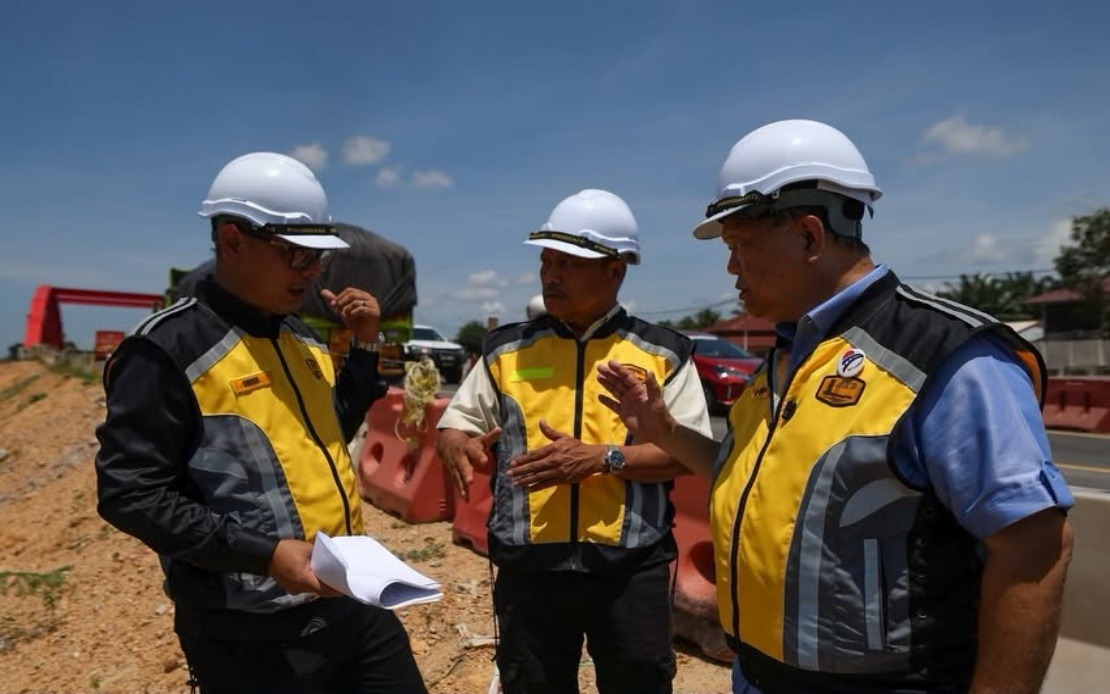
Works Minister Datuk Seri Alexander Nanta Linggi has issued a firm directive to accelerate the Sungai Durian Bridge Replacement Project in Kuala Krai, signalling the government's growing impatience with construction delays that have plagued the initiative despite multiple extensions granted to the contractor. The minister conveyed his expectations during a surprise inspection of the site, where he assessed progress firsthand and determined that further delays would be unacceptable to both the ministry and the communities awaiting the project's completion.
The Sungai Durian Bridge project represents one of several infrastructure undertakings in Kelantan aimed at improving regional connectivity and economic development. The repeated extensions, totalling six since the project's commencement, have raised concerns about project management and execution capability among stakeholders who have watched anticipated completion dates slip repeatedly. For residents and businesses in the Kuala Krai district, these delays translate to continued reliance on aging or inadequate crossing infrastructure, affecting daily commutes and commercial operations in the region.
Nanta identified specific technical obstacles that have contributed to the scheduling problems. Borepile installation works, a critical foundation component for the bridge structure, have encountered unexpected complications involving existing utility pipelines that cross the project site. These underground utilities necessitate careful coordination and often require realignment or protective measures, adding complexity to what should be straightforward foundation work. Additionally, the temporary support structure required to install the steel bridge components has presented its own challenges, suggesting that project planning may not have adequately accounted for the infrastructure complexity beneath and around the construction area.
The minister's intervention represents a significant escalation in governmental oversight, moving beyond routine monitoring to direct operational involvement. By visiting the site unannounced and communicating directly with the contractor, Nanta has signalled that the ministry is taking active ownership of the project's trajectory rather than simply accepting contractor-supplied progress reports. This hands-on approach suggests confidence in the ministry's ability to identify problems and implement solutions, though it also raises questions about why such intervention was not deployed earlier when initial delays became evident.
Nanta's instruction for the contractor to deploy additional resources at the site reflects a recognition that current staffing and equipment allocation have proven insufficient to maintain schedule adherence. Bringing more workers, machinery, and expertise to the project represents the most direct response to delay, though it carries cost implications that typically fall either to the contractor or, ultimately, to the government through contract variations. The directive to expedite construction works generally and resolve technical issues promptly in collaboration with the Public Works Department creates a dual accountability structure where both the contractor and the government agency must take responsibility for forward momentum.
For Malaysian infrastructure observers, this scenario exemplifies recurring challenges in public works project execution. Cost overruns and timeline extensions plague major construction initiatives across the country, whether attributable to design flaws, site conditions, contractor capability, or resource constraints. The Sungai Durian Bridge project, despite its regional significance, is merely one instance of this broader pattern. The willingness of the current ministry leadership to publicly acknowledge delays and demand accountability represents a departure from previous approaches that sometimes allowed problems to fester with minimal intervention.
The public dimension of the minister's response carries political implications for Kelantan, a state where infrastructure development has historically been a contentious issue reflecting broader political divisions. Communities in Kuala Krai have already experienced extended delays, and frustration with the pace of project delivery feeds into broader perceptions about government efficiency and responsiveness. Nanta's public commitment to completion according to the current schedule essentially places his credibility on the line, creating political pressure to deliver results.
The emphasis on benefiting the people reflects acknowledgment that infrastructure projects ultimately derive their legitimacy from serving public needs rather than merely representing construction contracts or budget expenditures. The Sungai Durian Bridge, once completed, will facilitate movement and commerce in a district that depends on adequate transportation infrastructure for economic development. The extended timeline has inadvertently imposed costs on communities that should have been enjoying the benefits years earlier, creating a cumulative impact that goes beyond simple budget considerations.
Going forward, the ministry's sustained monitoring of the project will be essential to translating the minister's directives into tangible acceleration. Regular inspections, progress tracking, and documented compliance with acceleration requirements will demonstrate whether the contractor genuinely intends to meet the new timeline or whether further extensions remain inevitable. The involvement of the Public Works Department in collaborative problem-solving creates institutional capacity to address technical obstacles that purely private-sector approaches might struggle with.
The Sungai Durian Bridge project now enters a critical phase where contractor performance will be scrutinised more intensely than previously. The stakes have shifted from routine construction monitoring to a test of government capacity to enforce accountability and deliver promised outcomes. For other projects facing similar delays across Malaysia and the broader Southeast Asian region, the approach demonstrated here may serve as either a template for intervention or a cautionary example of what occurs when projects fall significantly behind schedule. The ultimate measure of success will be whether the bridge opens to public use within the timeframe now being enforced, finally delivering the infrastructure benefits that Kuala Krai residents have been awaiting.

