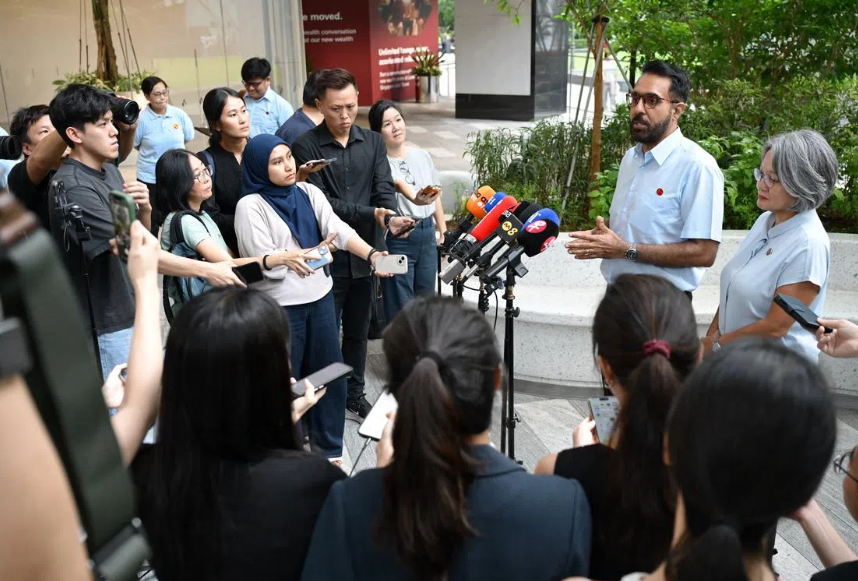
Pritam Singh walked out of a gruelling six-hour internal party process in late June with his position intact and his grip on the Workers Party strengthened. After facing a vote of no confidence and then contesting a leadership election, Singapore's opposition chief emerged with the backing of party cadres—82 out of 106 members voted for him to remain as leader. Singh's demeanour as he addressed waiting journalists suggested a man who had successfully navigated the most serious internal challenge of his tenure since becoming secretary-general in 2018.
The Singapore Workers Party's affirmation of Singh represents more than a routine internal vote. It signals that the party has collectively decided to absorb the political cost of standing by a leader with a conviction for lying to Parliament. This decision came after Singh was found guilty in the lower courts and again by the High Court in December 2025 for misleading Parliament concerning the fabricated account offered by then-Member of Parliament Raeesah Khan regarding alleged police mistreatment of a sexual assault victim. The conviction triggered a parliamentary motion that effectively removed Singh from his formal role as Leader of the Opposition, a position Prime Minister Lawrence Wong terminated following the guilty verdict.
What makes this moment significant is not simply that Singh retained his leadership, but how the party responded internally. A disciplinary panel investigated Singh's actions and determined that he had breached the party's Constitution. Yet rather than imposing substantial consequences, the party's highest leadership body issued only a formal letter of reprimand—a sanction that observers and critics have characterised as remarkably lenient given the circumstances. This measured approach suggests the party's top brass viewed the matter as closed and settled, regardless of external political perception.
The internal opposition that triggered the special cadres conference had hoped for a more rigorous accounting. The group that signed the letter calling for the extraordinary meeting envisioned a meaningful challenge to Singh's continued leadership and actively lobbied for another cadre member to step forward as an alternative candidate. These efforts continued right up until the week of the conferences, yet no challenger materialised. Party sources indicate that while Singh faced questioning during the proceedings, some cadres who spoke also expressed their support for him. The hoped-for inquisition did not materialise in the form the dissidents had anticipated.
The endorsement from Low Thia Khiang, the party's former chief and the architect of the modern Workers Party, provided crucial political cover for Singh. When asked by reporters before the Sunday meetings, Low stated clearly that he still supported Singh. Within the Workers Party context, Low's backing carries considerable symbolic weight. His willingness to publicly reaffirm confidence in Singh signalled to cadres that the party's institutional memory and original leadership saw no reason to abandon the current secretary-general. This intergenerational continuity has likely reassured many party members that backing Singh did not represent a departure from core party values.
Party chair Sylvia Lim used the aftermath of the leadership election to signal the party's future direction, noting that leadership renewal would be a critical focus for the organisation. Having held her position for 23 years, Lim acknowledged that the party was conscious of the need to develop new talent and bring fresh faces into leadership roles. Her comments suggest that Singh's re-election does not mean the party is complacent about succession planning or the development of alternative leadership figures. The party appears to recognise that Singh, despite his resilience, may not represent the face of the Workers Party indefinitely.
The Workers Party's unified stance also reflects a calculation about party survival in Singapore's political environment. Opposition parties that become consumed by public internal conflict face significant electoral penalties, as leadership upheavals and factional disputes undermine voter confidence and create openings for the dominant People's Action Party to portray them as chaotic and unreliable. By closing ranks quickly and decisively, the Workers Party has insulated itself from this particular vulnerability. The party can now refocus on parliamentary work and building its national profile without the distraction of unresolved internal grievances.
Yet the party's decision to stick with Singh raises uncomfortable questions about whether political survival and pragmatic unity have trumped principles. When asked how he would respond to those who characterise the Workers Party as being run by a convicted liar, Singh offered little beyond directing critics to his website and restating his earlier parliamentary position. This response avoided engaging substantively with the moral and ethical dimensions of the conviction, treating it instead as a matter to be managed rather than genuinely addressed. For voters in the middle ground—those considering whether to support the opposition but not yet committed—this manner of response may feel evasive or unsatisfying.
The Workers Party's performance in May 2025 general elections provides some empirical counterweight to concerns about voter rejection. Held while Singh had already been convicted in the lower courts, the election saw the party not only consolidate its existing constituencies but expand its footprint by securing two Non-Constituency MP seats. To party loyalists and Workers Party leadership, this result suggested that voters had already rendered their verdict on the conviction saga in a political rather than legal framework. Many supporters appear to view Singh's legal troubles through a partisan lens, distinguishing between the justice system's judgment and their own assessment of his suitability to lead the opposition.
However, the general election result, while positive for the Workers Party, did not produce the kind of breakthrough that would suggest Singh has fully transcended the conviction controversy with the broader electorate. The party remains the clear political underdog against the PAP and, by virtue of that position, operates under less intense public scrutiny than the ruling party would. This structural advantage masks deeper questions about whether the middle-ground voter—the pragmatic, centre-leaning Singaporean who might otherwise consider opposition politics—views the Workers Party and Singh as ready for expanded responsibility. The cadres' overwhelming support for Singh indicates internal confidence, but whether that confidence translates into the broader political legitimacy needed to expand opposition politics in Singapore remains uncertain.
The resolution of the internal party crisis also illuminates larger questions about the nature of opposition politics and accountability. The Workers Party's closure of ranks suggests a prioritisation of collective institutional strength over individual accountability for serious breaches of parliamentary conduct. This approach may be tactically sound in Singapore's political environment, where opposition disunity has historically benefited the ruling party. Yet it also establishes a precedent whereby conviction for misleading Parliament, while resulting in formal reprimand, does not fundamentally alter a leader's position or standing within the party. For those concerned about standards of accountability in public life, the lesson might be troubling.
Looking forward, the Workers Party faces the task of converting its newfound internal unity into expanded electoral appeal. The party's solid showing in 2025 and its growing parliamentary profile suggest momentum, but the Pritam Singh conviction saga, though resolved internally, remains a potential vulnerability with voters who place high value on integrity and accountability. The party's ability to attract middle-ground voters may ultimately depend not on whether Singh remains leader—that question has been decisively settled—but on whether the party can credibly argue that it maintains high standards of conduct and principled governance despite the conviction of its current leader. That task remains incomplete.

