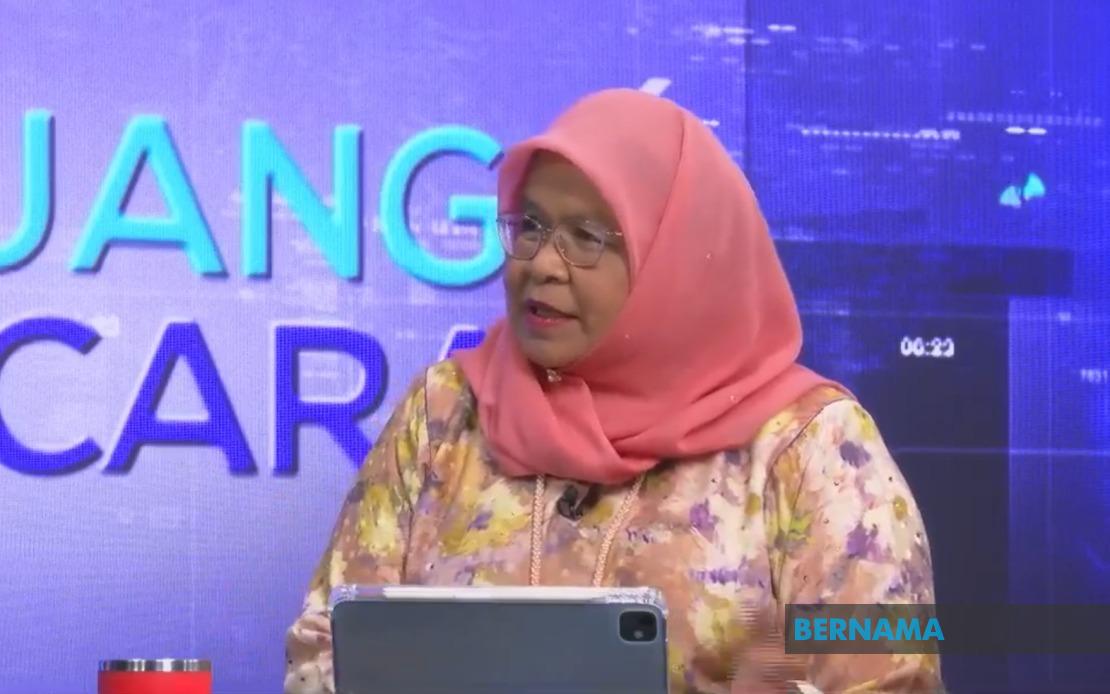
Women across Malaysia need far more than symbolic inclusion in leadership roles if the country is to benefit from female talent and perspectives in policymaking. Datuk Seri Dr Maimunah Mohd Sharif, the Government's Sustainable Urban Development advisor and former mayor of Kuala Lumpur, has underscored that genuine empowerment demands a comprehensive framework combining opportunity, professional development, and institutional trust.
The challenge facing Malaysia becomes clearer when examining current participation rates. Women now constitute 56.4 per cent of higher education enrollees according to 2025 data, yet this educational advantage fails to translate into senior roles, with only 27 per cent occupying management positions. This gap between education and leadership reflects structural barriers rather than capability deficits. At the political level, women hold just 13.5 per cent of parliamentary seats and represent 16.1 per cent of Cabinet positions—figures that fall substantially short of demographic parity and suggest untapped potential in governance.
Maimunah's perspective draws from direct experience navigating male-dominated institutional hierarchies. She argues that women's presence in decision-making structures is not merely a matter of equality but of policy effectiveness. When women are absent from rooms where decisions affecting communities are made, their distinct needs and viewpoints remain unrepresented, potentially leading to incomplete or misaligned policy solutions. This argument moves beyond diversity rhetoric to practical governance: societies that exclude half their population from strategic roles inevitably limit the quality of their decisions.
The former KL mayor's call for women to seize opportunities when presented comes with a crucial companion message—the responsibility for success cannot rest solely on individual women. She explicitly identifies three prerequisites: supportive systems, formal training in leadership competencies, and organizational cultures that genuinely trust female leaders' judgment and capabilities. Without these structural elements, women who do advance often find themselves isolated, unsupported, and scrutinized far more intensely than male counterparts in equivalent positions.
Parallel insights from the private sector reinforce this analysis. Datuk Mona Suraya Kamarudin, a non-executive independent director at Nomura Asset Management, observes from the financial services industry that women frequently possess strong technical credentials and mid-level experience but rarely progress to executive ranks. The finance sector, ostensibly meritocratic in its insistence that competence determines advancement regardless of gender, still maintains significant gender imbalance in leadership. Kamarudin's point—that finance professionals are selected on capability rather than identity—rings hollow when women remain concentrated below the C-suite despite demonstrable technical proficiency.
The disconnect between women's skills and their advancement opportunities points to systemic gatekeeping rather than individual shortcoming. Organizations that claim merit-based advancement while maintaining male-dominated leadership must confront uncomfortable questions about whose merit they recognize and whose they overlook. The financial sector's supposed gender-neutrality masks persistent barriers in recruitment, mentorship, sponsorship, and advancement pathways that favor established networks historically dominated by men.
Family and domestic considerations add another critical dimension to this discussion. Kamarudin identifies family support as essential for women balancing professional and personal responsibilities, yet this framing contains an implicit inequality: male leaders are rarely expected to articulate how family support enables their careers, suggesting that childcare and household management remain disproportionately coded as female responsibility. Until workplaces and societies redistribute these burdens more equitably, women face an additional tier of expectations and constraints that male peers do not encounter.
Malaysia's trajectory on women's leadership reflects broader Southeast Asian patterns. The region has made incremental progress—women's parliamentary representation has grown, corporate boards increasingly include female members, and women now outnumber men in tertiary education across most ASEAN countries. Yet progress stalls consistently at transition points between education and employment, and between mid-level and senior positions. This plateauing suggests that removing formal barriers is insufficient; active institutional investment in developing and promoting female talent is required.
The economic case for accelerating women's leadership is compelling for Malaysian policymakers. Countries with greater gender balance in leadership positions demonstrate higher innovation, more diverse problem-solving approaches, and improved economic performance across multiple sectors. Malaysia's aspiration to higher-income status and regional competitiveness depends partly on mobilizing talent currently underutilized due to gender. The women already obtaining university degrees represent human capital whose full potential remains constrained by leadership pipelines that narrow as seniority increases.
Moving forward requires clarity that merit and opportunity are distinct concepts. Meritoriously identifying talented women is meaningless if opportunities to advance remain restricted by informal networks, unspoken expectations, or lack of targeted development programs. Organizations serious about women's leadership must implement transparent advancement criteria, visible mentorship programs pairing junior women with senior leaders, and accountability mechanisms ensuring that talent identification translates into actual promotion.
The experiences Maimunah and Kamarudin articulate suggest Malaysia possesses no shortage of capable women ready for greater responsibility. The constraint lies not in female talent but in institutional willingness to invest in, promote, and genuinely trust women as decision-makers. This requires sustained cultural and structural change—not one-off initiatives or symbolic appointments, but fundamental redesign of how organizations identify, develop, and advance leadership talent regardless of gender.

