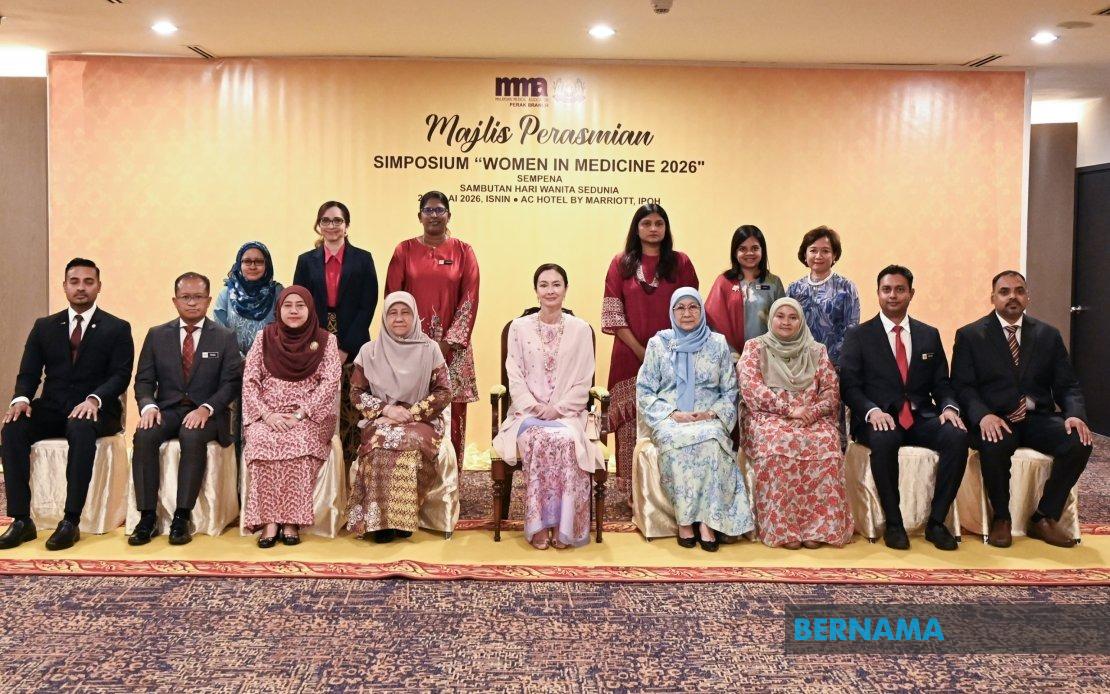
The Malaysian medical profession must significantly expand its commitment to women in leadership positions if it hopes to navigate an increasingly complex healthcare landscape, according to the Perak branch of the Malaysian Medical Association. Speaking at the Women in Medicine (WIM) 2026 Symposium held in Ipoh on International Women's Day, medical leaders underscored how women bring distinctive qualities—including broader perspectives, greater empathy and genuinely patient-centred approaches—that are indispensable for a sector grappling with unprecedented pressures.
Dr Monesh Pillai, chairman of the Perak MMA, articulated a vision in which women occupy not merely token roles but substantive decision-making positions capable of steering the nation's healthcare trajectory. The contemporary medical system confronts a constellation of formidable challenges that demand precisely the kind of innovative and forward-thinking leadership women are positioned to provide. Mental health crises continue to proliferate across Southeast Asia, with increasing numbers of patients seeking psychiatric and psychological support. Simultaneously, non-communicable diseases—obesity, diabetes, cardiovascular conditions—have displaced communicable illness as the primary health burden in Malaysia and the region. The demographic shift toward an ageing population introduces entirely new care paradigms, while artificial intelligence and digital health technologies are fundamentally reshaping how medicine is practised and how healthcare systems operate.
The intersection of these pressures creates what some observers characterise as a critical juncture for Malaysian healthcare. Traditional medical hierarchies and decision-making structures, which have historically favoured male advancement, may not possess the flexibility or innovation capacity these emerging problems require. Advocates for gender-balanced leadership argue that women's lived experiences—both within medicine and across society—equip them with intuitive understanding of systemic inequalities that male-dominated structures often overlook. This insight becomes particularly valuable when designing healthcare responses to vulnerable populations, whether marginalised communities, low-income households, or patients navigating mental health crises where stigma remains a significant barrier.
The symposium, officiated by the Raja Permaisuri of Perak, Tuanku Zara Salim, attracted prominent healthcare figures including the Perak Health director and representatives from the Menteri Besar's office, signalling institutional recognition of gender equity's importance within medical circles. Dr John Emmanuel, the organising committee chairman, reframed empowerment beyond merely creating opportunities. True empowerment, he argued, requires constructing conditions where women possess genuine agency—the freedom to lead, contribute meaningfully and achieve their professional aspirations without constraint. This conceptualisation challenges Malaysian healthcare systems to examine not just recruitment metrics but workplace cultures, mentorship pipelines, and promotion pathways that may inadvertently disadvantage women despite formal equality policies.
The contemporary healthcare landscape has evolved substantially from previous eras when discussions of women in medicine centred almost exclusively on female doctors. Today's conversation encompasses women functioning across the entire medical ecosystem—as administrators directing hospitals, researchers pioneering new treatments, educators shaping the next generation, nurses providing frontline care, pharmacists managing medications, allied health professionals delivering specialised services, and patients advocating for better care. This broader understanding reflects healthcare's fundamental transformation into a genuinely multidisciplinary enterprise where physicians represent merely one component of complex care delivery systems. Women's advancement across these varied roles creates leadership pipelines that might eventually reshape institutional priorities and policy directions.
For Malaysia specifically, this conversation arrives at a moment of regional healthcare transition. Southeast Asian nations increasingly compete for medical talent and healthcare innovation leadership, with women constituting a growing proportion of medical school graduates across the region. Countries that successfully harness women's capabilities in senior roles gain competitive advantage in attracting talented professionals and developing innovative solutions to population health challenges. Conversely, systems that continue relegating women to subordinate positions risk losing talented practitioners to international opportunities and falling behind in healthcare innovation metrics. The Perak MMA's advocacy thus carries implications extending well beyond gender equity rhetoric—it addresses regional competitiveness and Malaysia's positioning within global healthcare hierarchies.
The symposium featured presentations from accomplished healthcare leaders including Monash University Malaysia's president and pro vice-chancellor, Datuk Dr Adeeba Kamarulzaman, who explored pathways through which women translate clinical experience into global health policy influence. Such presentations serve crucial functions beyond conveying information; they provide visibility and aspirational models for younger women navigating medical careers, demonstrating that senior leadership remains accessible and that their professional contributions can scale from individual patient encounters to population-level policy shaping. Dr Sangeetha Siniah's presentation on immunology and allergy health illustrated how women researchers continue advancing clinical knowledge in specialised areas, though such contributions sometimes receive less institutional recognition than deserved.
The integration of International Women's Day with this year's symposium—organised around the theme of rights, equality and empowerment—underscores recognition that gender equity represents not peripheral welfare concern but fundamental justice and effectiveness imperative. Healthcare systems fundamentally depend on trust, particularly from vulnerable populations already alienated by previous experiences of discrimination or neglect. When women participate substantially in leadership and policy-making, these systems signal genuine commitment to serving diverse populations equitably rather than perpetuating historically exclusive structures. This symbolic dimension carries material consequences for healthcare outcomes and public health programme uptake.
Moving forward, the challenge for Malaysian medical institutions involves translating these symposium declarations into concrete institutional change. This requires examining everything from medical school curriculum design and residency programme structures through to promotion criteria, flexible working arrangements enabling professional advancement alongside caregiving responsibilities, and mentorship systems that actively cultivate emerging female leaders. Without such systemic transformation, calls for greater women's leadership risk remaining rhetorical exercises divorced from meaningful practice. The Perak MMA's symposium, by gathering diverse healthcare stakeholders and amplifying women's voices, constitutes a beginning—but only if followed by sustained institutional commitment and measurable progress toward gender-balanced medical leadership across Malaysia.

