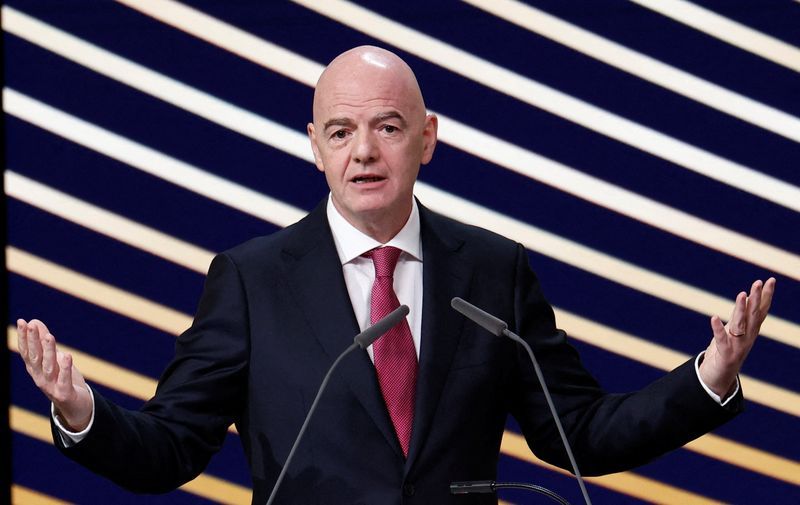
The governance turmoil engulfing FIFA has unexpectedly thrust two women into the spotlight as the most articulate critics of President Gianni Infantino, forcing a reckoning over how the world's most popular sport is run and who should lead it. Laura McAllister of Wales and Lise Klaveness of Norway, serving as the only female members on UEFA's executive committee, have emerged as commanding voices opposing Infantino during a crisis triggered by his unsuccessful push to establish FIFA Football Enterprises, a venture backed by private equity investors that encountered fierce resistance from regional football bodies across the globe.
The brewing confrontation illuminates a deeper organisational malaise at FIFA, where McAllister argues that fundamental principles governing the sport have been compromised by commercial interests and political interference. She points to multiple incidents that have shaken confidence in Infantino's stewardship, ranging from FIFA's entanglement with the ill-fated European Super League proposal to the controversial decision to overturn a red card given to American player Folarin Balogun following intervention by U.S. President Donald Trump. These episodes collectively suggest that governance at football's international governing body has deteriorated significantly, with Infantino's judgment repeatedly questioned by stakeholders worldwide.
The rebellion gathered pace when Wales became the first national association to withdraw support for Infantino's re-election bid, creating a domino effect that saw dissent rapidly spread within FIFA's own institutional structures. McAllister's call for a boycott of FIFA events received unanimous backing during an emergency UEFA meeting, underscoring the breadth of opposition to the current leadership. An emergency gathering was scheduled for Morocco where Infantino planned to address the mounting pressure, but the damage to his authority appeared increasingly difficult to repair given the coordinated resistance from multiple continental confederations.
McAllister characterises the present moment as a critical juncture where football risks losing its foundational values and soul to unbridled commercialism. Speaking to her motivations, she emphasises that both she and Klaveness draw from their backgrounds as international players for their respective countries before transitioning into governance roles, bringing a commitment to principles that prioritises the sport's integrity over financial gain. Her perspective reflects a values-driven approach that contrasts sharply with what she perceives as the transactional mindset dominating FIFA's current administration, where business considerations frequently overshadow the grassroots ethos that should define global football.
The question of whether football is prepared to embrace female leadership has gained traction amid this institutional crisis, with former FIFA President Sepp Blatter publicly declaring that it was time for a woman to head the sport's global governing body. Yet McAllister sounds a cautious note, recognising that while symbolic progress matters, the underlying political architecture of FIFA remains fundamentally inhospitable to female leadership without deeper structural change. She argues that meritocracy alone cannot overcome the ingrained male-dominated power networks that have historically controlled football's international institutions, and that genuine progress requires deliberate, sustained effort rather than performative gestures.
Currently, only 10 of FIFA's 211 member associations are presided over by female presidents, a stark disparity that underscores football's lagging position relative to other international sports organisations. This statistical reality becomes even more pronounced when compared to Olympic governance, where the International Olympic Committee is now headed by a woman and has achieved near gender parity in competition opportunities. Michael Payne, a former IOC marketing director, highlighted that the Olympic movement has pioneered gender equity initiatives for two decades, whereas football's World Cup competitions remain structurally unequal, with men's and women's tournaments receiving vastly different investment, media attention, and commercial support.
McAllister emphasises that achieving meaningful female representation in FIFA's upper echelons requires building momentum gradually rather than forcing rapid institutional transformation, which she warns risks backlash that could undermine long-term progress. Her pragmatic approach reflects a political maturity gained through her background as a political scientist, where she understands that sustainable change emerges through coalition-building and demonstrating competence rather than demanding revolutionary shifts. She and Klaveness have already demonstrated their capacity to mobilise dissent and articulate coherent critiques of institutional dysfunction, positioning themselves as credible candidates should leadership opportunities emerge in the future.
The governance crisis itself stems partly from Infantino's perceived disconnection from the values that animate the sport at its grassroots level. McAllister argues that women in football leadership, particularly those with experience in developing the women's game, often maintain stronger tether to the principle that football belongs to everyone regardless of gender or economic status. She contends that football should remain accessible to children in the world's poorest nations alongside wealthy footballing nations, that it must serve girls as equally as boys, and crucially, that private capital should not be permitted to reshape the sport's fundamental structures according to profit imperatives.
The resistance coalescing around Infantino represents more than institutional infighting; it reflects a philosophical divide over football's purpose and governance philosophy. McAllister and Klaveness have positioned their opposition within a framework emphasising democratic accountability, transparency, and alignment with the sport's foundational mission rather than personal ambition for greater power. This ethical positioning has resonated with UEFA member associations and created political space for broader questioning of FIFA's administrative direction, even among traditionally conservative football administrators who might otherwise defer to established leadership hierarchies.
Looking forward, the pathway to female leadership in FIFA depends partly on whether the current crisis produces genuine institutional reform or merely temporary leadership adjustments. McAllister's insistence on building momentum through consistent demonstration of competence and values-driven decision-making suggests that female leaders must prove not merely their capacity to manage football organisations, but their ability to restore trust and integrity to institutions severely compromised by corruption and self-dealing. The women emerging as Infantino's most credible critics have already begun this process, positioning themselves as alternatives to the current model of football governance.
For Malaysian and Southeast Asian football stakeholders, these governance questions carry particular significance given the region's developing football infrastructure and its reliance on FIFA's institutional legitimacy. The presence of vocal, principled female leaders challenging FIFA's power structure provides a model for reform within Asian football confederations, many of which lag behind European and other continental bodies in female representation. As regional associations consider their positions on FIFA's future direction, they should recognise that supporting leaders committed to transparent governance and equitable development serves their long-term interests in building sustainable, inclusive football ecosystems across Asia.

