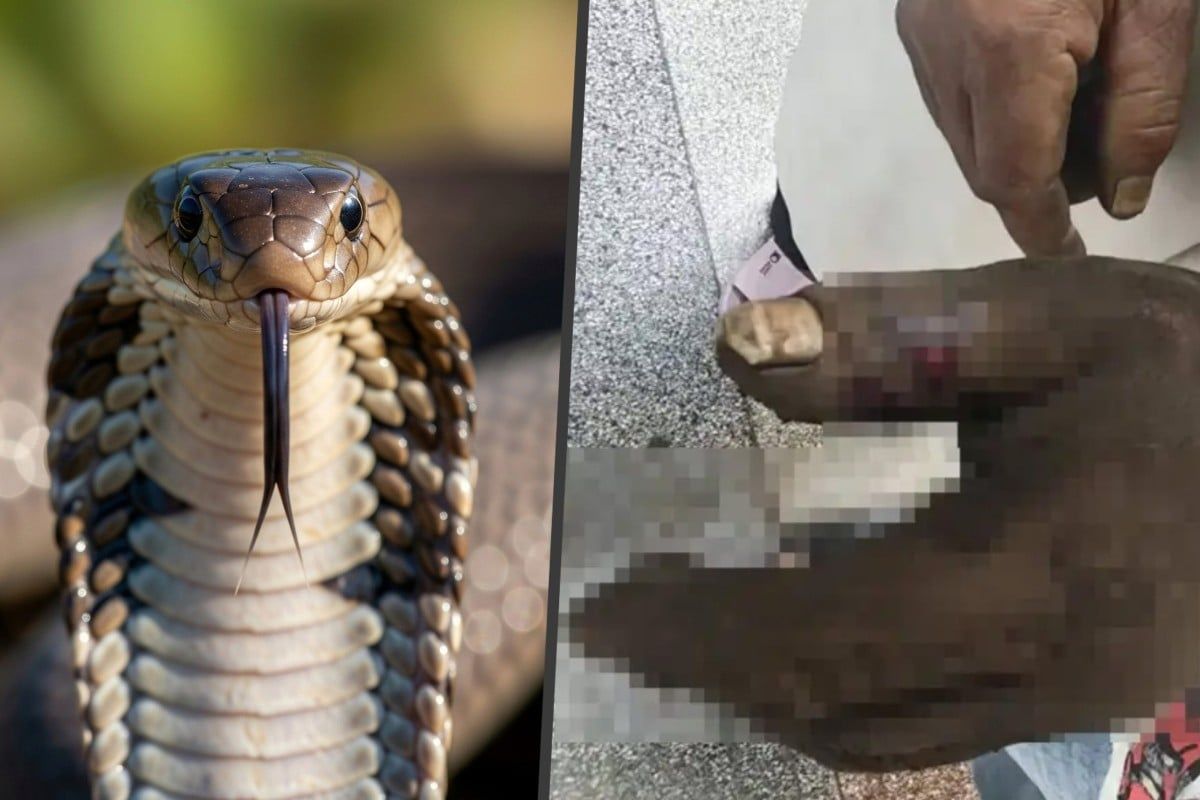
A dramatic case of medical misadventure unfolded in southwestern China when a farmer's wife, attempting to save her husband's life using a technique she had watched on television, ended up poisoning herself instead. The incident occurred in Yuanyang county, Yunnan province, when the man was bitten by a cobra while working in his field. Within moments, his finger began to swell and he experienced dizziness and weakness. His wife, spotting what she believed was an emergency requiring immediate action, resorted to sucking the venom directly from the wound without any protective equipment—a decision that would have serious consequences for both of them.
The farmer was rushed to hospital for treatment, but hours after arriving, his wife developed alarming symptoms of her own. Numbness began spreading across her mouth, tongue, face and limbs, and by the following day she was experiencing severe fatigue. Recognising the signs of envenomation, her family rushed her to hospital as well. Doctors at Honghe Prefecture No 3 People's Hospital confirmed that both patients had been poisoned by the local cobra species and admitted them for injections of antivenom serum and supportive medical care. The couple's condition stabilised within days, and they were eventually discharged to continue their recovery at home.
This case has become a stark teaching moment for medical professionals across China, who point to a fundamental misunderstanding about how snake venom behaves in the human body. Medical experts at the Yunnan hospital have highlighted that the oral cavity contains an exceptionally rich network of blood capillaries running through the mucous membranes. When venom comes into contact with these delicate tissues, it does not remain in the mouth but instead rapidly enters the bloodstream, poisoning the person attempting the rescue. The woman's good intentions were undone by basic human anatomy—a bitter irony that underscores how dangerous improper first aid can be.
Another critical misconception that continues to circulate, particularly through popular entertainment, is the notion that a snakebite wound should be cut open to allow bleeding and supposedly flush out the venom. Doctors warn that this approach is equally perilous. Such intervention can cause the victim to lose dangerous amounts of blood, introduces infection risks through an open wound, and does nothing to prevent venom from spreading through the bloodstream. The reality of envenomation is far more complex than television dramas suggest. Snake venom seeps rapidly into the tissues beneath the skin and enters the circulatory system through tiny punctures—often barely visible to the naked eye—making it virtually impossible to extract through mechanical means once the bite occurs.
Beyond sucking and cutting, other dangerous home remedies have taken root in popular imagination. Some people believe that applying heat to a snakebite or using ice can help manage the injury, but medical authorities caution against both approaches. These measures do not neutralise venom and may actually cause additional tissue damage or impede proper circulation. The treatment options that actually work are far more straightforward yet require access to proper medical facilities. When a snakebite occurs, the paramount action is to contact emergency medical services immediately and minimise movement, as physical activity accelerates venom circulation through the body.
Physicians also stress the importance of gathering information about the offending snake. If the victim or bystanders can note the reptile's colour, distinctive patterns, head shape, or ideally capture a photograph, this information becomes invaluable for healthcare providers. Different snake species carry different venoms with varying toxicological profiles, and identifying the species allows doctors to administer the appropriate antivenom serum. This seemingly minor detail can mean the difference between recovery and serious complications. In the Yunnan case, the patients' survival likely depended on quick hospital access and the ability of medical staff to identify the cobra species accurately.
The incident reflects a broader pattern of snakebite emergencies gaining prominence in Chinese social media and public consciousness. Cases involving serious envenomation tend to attract considerable online attention, particularly when they involve unexpected victims or unusual circumstances. These viral moments, while sometimes sensationalised, do serve an important public health function by keeping snake safety top of mind. However, they also tend to amplify myths and reinforce false remedies that people have learned from entertainment media rather than medical sources.
A particularly sobering example occurred in neighbouring Guangdong province in May, when a 14-year-old middle school student was bitten by an unidentified snake on the school campus during outdoor activities. The boy initially dismissed the incident because he experienced no immediate pain and did not clearly see what had attacked him. This false sense of security proved dangerous. It was only after several hours had passed, when his limbs became numb and his vision began to blur, that he thought to report the incident to a teacher. Medical intervention arrived just in time; doctors treating him stated bluntly that delaying treatment by merely one to two additional hours could have been fatal, as the venom would have progressed to respiratory paralysis. The boy's survival underscores both the grave risks of envenomation and the critical importance of prompt professional medical care.
The Yunnan couple's misadventure has resonated throughout Chinese social media, with many online commentators reflecting on the gap between fictional depictions of emergency medicine and medical reality. One observer noted that the case served as a reminder that television dramas frequently portray medical procedures and emergency responses that bear little resemblance to actual medical science. Another contributor took a more sentimental view, remarking that despite the unfortunate outcome, the wife's instinctive action demonstrated profound love and commitment to her husband's survival, even if her method was dangerously flawed. This human dimension adds emotional weight to what might otherwise be simply a cautionary tale about medical misinformation.
For Southeast Asian readers, the incident carries particular relevance, as snake encounters remain a genuine hazard across the region's tropical and subtropical environments. Malaysia, Thailand, Indonesia, and other countries with similarly rich biodiversity face comparable challenges regarding snakebite management and public awareness. The proliferation of misinformation through entertainment media transcends national boundaries, meaning that dangerous first-aid myths may be equally prevalent among Malaysian and Southeast Asian communities. Public health authorities throughout the region would be wise to use such high-profile cases as springboards for education campaigns emphasising proper snakebite response: immediate contact with emergency services, immobilisation of the affected limb, and rapid transportation to a facility equipped with appropriate antivenom stocks.

