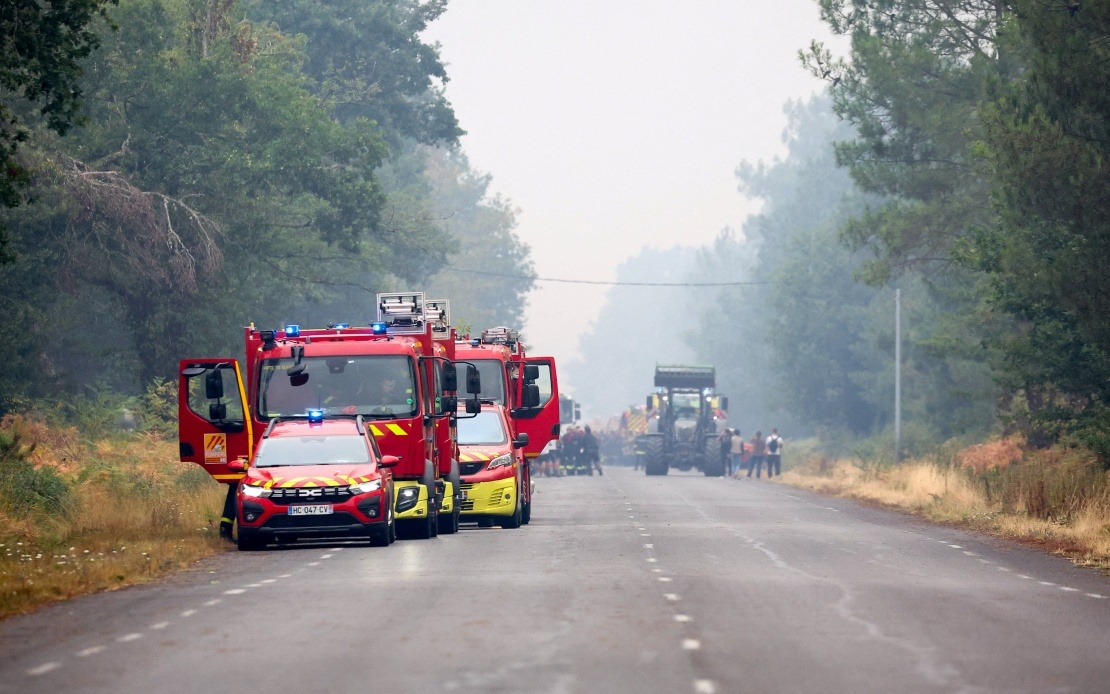
The major wildfire crisis engulfing southwestern France and central Spain has entered a more manageable phase, with emergency services reporting stabilisation of multiple fire fronts after days of intense and destructive blazes. However, the respite appears temporary, as weather forecasters predict another severe heatwave moving into both nations within days, raising concerns that containment gains could quickly be reversed and new fires sparked across an already-exhausted landscape.
In the Gironde department of southwestern France, which has borne the brunt of this month's conflagration, authorities confirmed Wednesday morning that the primary wildfire had stabilised, though firefighters still battled sporadic flare-ups overnight that were ultimately brought under control. The prefecture emphasised that conditions remained relatively calm through the night, with over 2,000 firefighters still actively deployed across the fire perimeter to extinguish remaining hotspots and prevent any sudden reignition. The toll on emergency personnel has been severe, with 126 firefighters sustaining injuries since the Gironde fire began, underscoring the extreme hazards faced by those working on the frontlines.
Other regions have shown further progress in recent days. In the Var department further east, firefighting teams successfully contained a blaze Tuesday that had consumed nearly 4,800 hectares of forest. The southwestern Landes department experienced similar success Monday, with approximately 350 firefighters managing to contain a separate fire after it had scorched 3,600 hectares. Despite these containment victories, both Gironde and Var remain among 65 departments placed under orange alert status due to the persistently high risk of forest fires, demonstrating how volatile conditions remain across the region even as specific blazes are brought under control.
The underlying meteorological threat looms large over these apparent gains. France's national weather authority, Meteo-France, has issued orange heat alerts across 16 departments, signalling that the severe heatwave expected to move into the region could rapidly recreate the dangerous conditions that initially sparked this crisis. The combination of extremely high temperatures, low humidity, and potentially strong winds has historically proven catastrophic for fire prevention efforts, making the timing of this incoming heatwave particularly concerning for exhausted emergency services and vulnerable communities.
Spain faces a similarly precarious situation, with multiple active fire fronts still requiring constant attention despite some positive developments. The Sierra Oeste forest fire in the Madrid region remained stable overnight with no reported flare-ups, according to Spanish media reports, yet firefighting operations continue across Madrid, Avila, Toledo, Castellon, and Almeria as the nation also prepares for an approaching heatwave. The Spanish authorities, like their French counterparts, recognise that current containment is fragile and that incoming weather patterns could rapidly shift the situation from improving to critical once again.
Evacuations have begun to reverse in several Spanish regions as local authorities regain confidence in fire containment, offering some measure of relief to displaced residents. Late Tuesday, residents of 15 municipalities across Madrid and Avila received permission to return to their homes. In Castellon, 9,000 evacuees from multiple communities were allowed to begin returning, while 6,000 residents from 11 municipalities in Toledo similarly received the all-clear. These returns represent a tentative restoration of normalcy for communities that endured frightening displacement during the worst of the fires.
Yet one major Spanish fire continues to defy control efforts, illustrating how unpredictable and dangerous the situation remains. The Vall d'Uixo wildfire in Castellon, burning since Saturday, has devastated 10,000 hectares and forced 10,000 people from their homes, and remains described as out of control. This fire alone demonstrates that despite broader progress across the region, individual blazes can still pose severe threats and complicate evacuation timelines for thousands of residents. The persistence of this particular fire, even as others stabilise, suggests that terrain, weather microclimates, or resource allocation challenges continue to hamper complete containment efforts.
The infrastructure disruptions caused by these fires remain extensive. Thirty roads across Avila, Castellon, Madrid, Toledo, and Leon remain closed, restricting movement and commerce across a vast swath of the Iberian Peninsula. These closures affect not only emergency response but also the normal functioning of regional economies and supply chains, with implications that extend beyond the immediate fire zones. The logistical challenges of maintaining emergency operations while simultaneously reopening transportation networks require careful coordination from multiple authorities.
For readers in Malaysia and Southeast Asia, these European wildfires underscore the escalating climate challenges facing even developed nations with sophisticated emergency response infrastructure. The sheer scale of resources deployed—thousands of firefighters, air support, and coordinated multi-agency responses—barely contain these blazes, raising questions about how less-developed regions might manage similar crises. Moreover, the incoming heatwave threat illustrates how climate patterns are creating overlapping weather hazards rather than discrete, manageable events, complicating disaster planning and emergency response strategies. Southeast Asia, already vulnerable to transboundary haze from Indonesian wildfires and increasingly severe weather patterns, must monitor these international experiences as cautionary models for regional preparedness.
The situation in France and Spain also highlights the potential economic and social costs of intensifying fire seasons. Beyond the immediate destruction of forests and property, mass evacuations disrupt tourism, agriculture, and local services across affected regions. Injured emergency personnel require ongoing care, and the psychological impact on evacuated residents compounds the physical destruction. These cascading effects offer sobering context for policymakers across Southeast Asia considering climate adaptation investments and wildfire prevention strategies.

