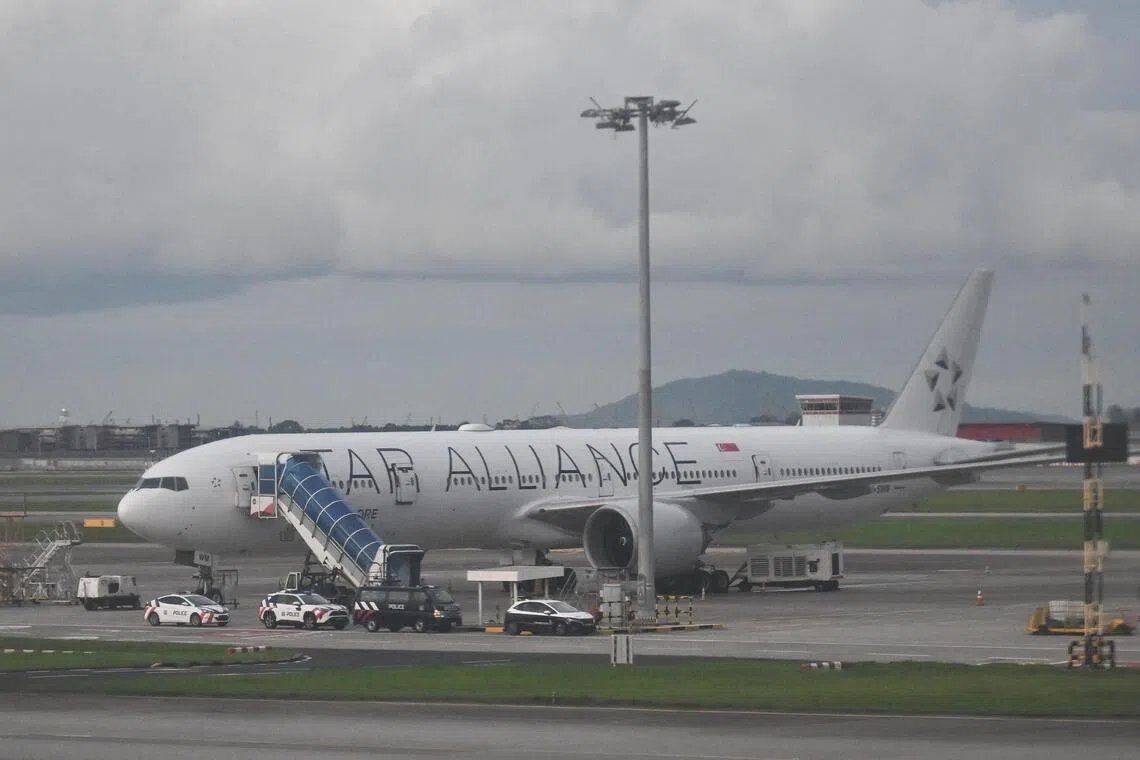
Linda Kitchen, a 74-year-old British widow, has commenced legal action against Singapore Airlines at the High Court in Britain following the death of her husband during a catastrophic turbulence event that struck Flight SQ321 in May 2024. The lawsuit seeks damages to fund specialist medical care for Ms Kitchen's fractured spine, injuries sustained when the aircraft suddenly descended over 54 metres in approximately five seconds while en route from London to Singapore. Her husband, renowned theatre director Geoffrey Kitchen, suffered a fatal heart attack during the incident, bringing an abrupt and devastating end to what was meant to be a six-week holiday across Southeast Asia and Australia after 52 years of marriage.
The turbulence occurred on 21 May 2024 as the Boeing 777-300ER aircraft traversed airspace above Myanmar during a routine breakfast service. Passengers and crew described a harrowing scene as the sudden vertical drop threw people and objects throughout the cabin with violent force. Geoffrey Kitchen fell directly onto his wife, crushing her against the armrest and causing the serious spinal injuries that continue to affect her daily life. Cabin crew and fellow passengers rushed to assist, with a physician on board immediately initiating cardiopulmonary resuscitation, but these emergency efforts proved unsuccessful in saving Mr Kitchen's life.
The aircraft, carrying 211 passengers and 18 crew members, was immediately diverted to Suvarnabhumi Airport in Bangkok for an emergency landing. The incident resulted in a staggering casualty toll, with 79 people sustaining injuries of varying severity. Ms Kitchen spent ten days hospitalised in Thailand before being airlifted back to her home in Bristol, United Kingdom. She received the news of her husband's death two days after the incident, a delay that compounded her trauma and confusion during an already overwhelming medical ordeal.
Following her return to Britain, Ms Kitchen's recovery proved prolonged and demanding. She remained in hospital for approximately a week after arriving home and subsequently required substantial assistance during her rehabilitation. She has described the emotional and physical toll of the tragedy with candour, noting that the severity of her injuries left her unprepared for the shock of her husband's passing. "When I got separated from Geoff, I knew he was in a bad way, but nothing prepared me for hearing he had died. It was absolutely devastating," she told British media outlets. The psychological impact of losing her life partner of over half a century whilst simultaneously battling serious physical injury has underscored the human cost of the disaster.
Ms Kitchen's legal representative, Anthe Korelidou, a specialist aviation lawyer, has indicated that the family's grievances extend beyond compensation to encompass a desire for comprehensive answers about how the disaster occurred and whether preventative measures were overlooked. "While it's more than two years since Geoff's death, Linda and the rest of her family continue to have a number of questions and concerns about what happened and if more could have been done to prevent their injuries," Ms Korelidou stated. The legal action filed at the High Court encompasses two separate claims—one on Ms Kitchen's behalf for her personal injuries and a second claim representing the estate of Geoffrey Kitchen. Her legal team has characterised the commencement of High Court proceedings as a pivotal development in the quest to obtain accountability and understanding.
Ms Kitchen is not alone in pursuing legal recourse. Court records indicate that at least six additional passengers—Bradley Richards, Jack Jenkins, Hannah Fullerton, Andrew Dawood, Bryan Matthews, and the couple Pauline and Michael Rainey—have similarly initiated legal proceedings against Singapore Airlines. This collective action reflects widespread dissatisfaction with the airline's response and raises questions about the adequacy of compensation offers already extended. The airline had previously issued settlement proposals to affected passengers, with those sustaining minor injuries offered US$10,000 and those requiring ongoing specialist care receiving an advance payment of US$25,000, alongside full airfare refunds for all passengers aboard the flight.
Singapore Airlines responded to queries from The Straits Times on 29 August by declining to comment on litigation matters before the courts, adhering to standard legal practice. However, the airline had previously issued a formal apology to all passengers and crew members, stating: "We sincerely apologise to all passengers and crew members on board Flight SQ321 for their traumatic experience. The safety and well-being of SIA's passengers and staff are our top priority." Nevertheless, the continued legal action suggests that the airline's apology and initial compensation packages have not fully addressed the grievances of affected passengers and families.
Investigations into the root cause of the incident have pointed to meteorological factors rather than operational or mechanical failures. Singapore's Transport Safety Investigation Bureau (TSIB), an agency under the Ministry of Transport, completed its inquiry and determined that severe storm clouds likely responsible for the turbulence were not detected by the aircraft's onboard weather radar system, thereby catching the captain without advance warning of the hazardous conditions. This finding underscores the unpredictable nature of severe atmospheric phenomena and the limitations of current detection technology. However, the TSIB concluded that it remains inconclusive whether technical malfunctions within the radar system itself contributed to the failure to identify these dangerous weather formations.
The incident has raised important questions about aviation safety protocols and weather detection capabilities in Southeast Asian airspace, particularly regarding the detection and avoidance of severe turbulence phenomena. For Malaysian aviation authorities and the broader regional aviation industry, the SQ321 case serves as a sobering reminder of the risks posed by atmospheric hazards and the importance of continued investment in meteorological monitoring and radar technology. The undetected storm clouds that caught the SIA aircraft suggest gaps in real-time weather awareness systems that could affect other carriers operating in similar airspace over Myanmar and neighbouring regions.
Ms Kitchen's legal action represents an important moment for aviation accident litigation in the United Kingdom and internationally. By pursuing damages through the High Court, she is not merely seeking financial compensation but demanding transparency and accountability from a major airline carrier. Her case reflects a broader principle within aviation law that carriers must demonstrate comprehensive safety measures and that when catastrophic failures occur—whether mechanical or meteorological—airlines bear responsibility for ensuring passenger safety to the maximum extent operationally feasible. The outcomes of her case and those of fellow claimants may establish important legal precedents regarding airline liability in turbulence-related incidents.

