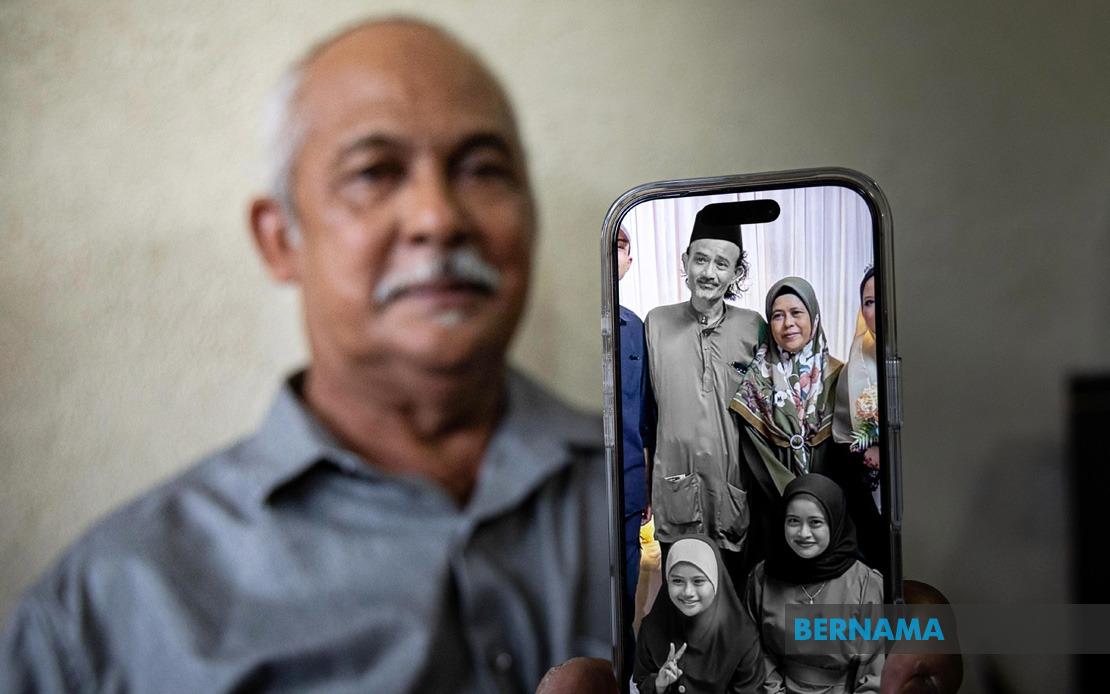
The lone surviving member of a family decimated in a traffic tragedy on Jalan Sultan Ismail in Kuala Lumpur continues to grapple with profound confusion and memory loss in the aftermath of an accident involving a Malaysian Immigration Department truck. Norhayati Razali, 55, has been transferred from the intensive care unit at Kuala Lumpur Hospital to a regular ward following the collision that claimed the lives of her spouse and two offspring, representing a modest recovery trajectory despite the emotional and cognitive challenges she now confronts.
Her medical condition has gradually stabilised over recent days. Doctors have observed that she can now consume food and liquids independently, without reliance on feeding tubes, marking tangible progress in her physical rehabilitation. However, this improvement in bodily function masks a far more distressing reality: the psychological trauma and neurological complications stemming from her injuries have left her unable to process or retain crucial information about her family's fate.
According to Mohd Nadzri Razali, her brother, Norhayati sustained multiple injuries across her body—contusions and fractures affecting her hands, waist, knees, and legs—alongside significant head trauma that necessitated prolonged hospitalisation. The severity of her cranial injuries appears directly linked to her current cognitive difficulties, creating a cruel irony wherein physical recovery proceeds while mental and emotional recovery stalls.
The family made the agonising decision to inform Norhayati of her losses and even arranged for her to view the remains of her loved ones, hoping that confronting physical reality might cement the truth in her consciousness. Her response was initially passive—she simply nodded without speaking, suggesting a degree of comprehension in that moment. Yet this apparent understanding dissolved rapidly. Within twenty-four hours, Norhayati began asking about the whereabouts of her missing family members, indicating that the information had failed to establish itself in her memory or that she had regressed into denial as a psychological defence mechanism.
This pattern of forgetting is not uncommon among trauma survivors with significant head injuries, particularly those involving the temporal and frontal lobes. Norhayati's situation highlights the intersection of physical recovery and psychological distress—she is healing physically but remains trapped in a devastating loop of relearning and re-grieving. Her family faces the prospect of repeatedly delivering news of deaths that their relative appears unable to retain or process, compounding their own trauma with the burden of serving as unwilling messengers of loss.
Mohd Nadzri has articulated the family's uncertainty regarding the duration of his sister's remaining hospitalisation. Medical authorities in Kuala Lumpur have not yet determined whether her condition permits transfer to a facility closer to her home in Perak—either in Ipoh or Teluk Intan—a logistical matter that carries profound emotional significance. Such a transfer would ease the substantial burden of travel for family members attempting to provide support and maintain her connection to her community and familiar surroundings.
The practical challenges facing the family underscore the broader social dimensions of this tragedy. Mohd Nadzri acknowledged that he has been unable to visit his sister yet, lacking transportation to Kuala Lumpur and expressing anxiety about navigating the capital's road network unfamiliar to him. This situation, replicated across countless families managing crises far from home, illustrates how geographic distance compounds grief and complicates the provision of family care during critical medical periods.
Beyond the immediate medical and familial dimensions, the accident itself has emerged as the subject of escalating scrutiny and questions about institutional accountability. The collision occurred on August 19 when a Malaysian Immigration Department Black Maria truck, operating under activated beacon and siren while allegedly empty, entered an intersection controlled by a red traffic light. The vehicle was en route to Chow Kit for an immigration enforcement operation when it collided with a Proton Saga travelling on a green light, subsequently careening off course and striking the family members and a second vehicle, an Inokom Matrix.
Mohd Nadzri has articulated the family's determination to pursue justice through proper investigative channels. He specifically referenced the potential existence of traffic camera footage, emphasising that transparent and methodical investigation remains essential for establishing accountability and ensuring that the circumstances leading to this preventable tragedy are thoroughly examined. The family's call for justice reflects not merely personal grievance but a broader public interest in institutional responsibility and traffic safety governance.
The incident raises substantive questions about emergency vehicle operations within urban traffic systems. The use of activated warning equipment and the apparent treatment of the vehicle's passage as legally privileged does not exempt operators from fundamental traffic regulations. The fact that the truck allegedly possessed an active red-light override—or that operators believed it appropriate to proceed through a red signal—suggests either inadequate training, misunderstanding of emergency vehicle privileges, or operational procedures that prioritise speed over public safety. These institutional questions warrant examination alongside the investigation into driver behaviour during the incident.
For Norhayati, the weeks and months ahead will involve not only physical rehabilitation but also neurological recovery and profound psychological adjustment. Her family faces an uncertain timeline, constrained resources, and the heartbreak of witnessing her struggle with incomplete memories of loss. Meanwhile, the broader question of how government institutions manage high-speed emergency operations through populated urban areas remains unresolved, suggesting that the consequences of this single accident may extend well beyond one family's tragedy into systemic issues affecting public safety across Malaysian cities.

