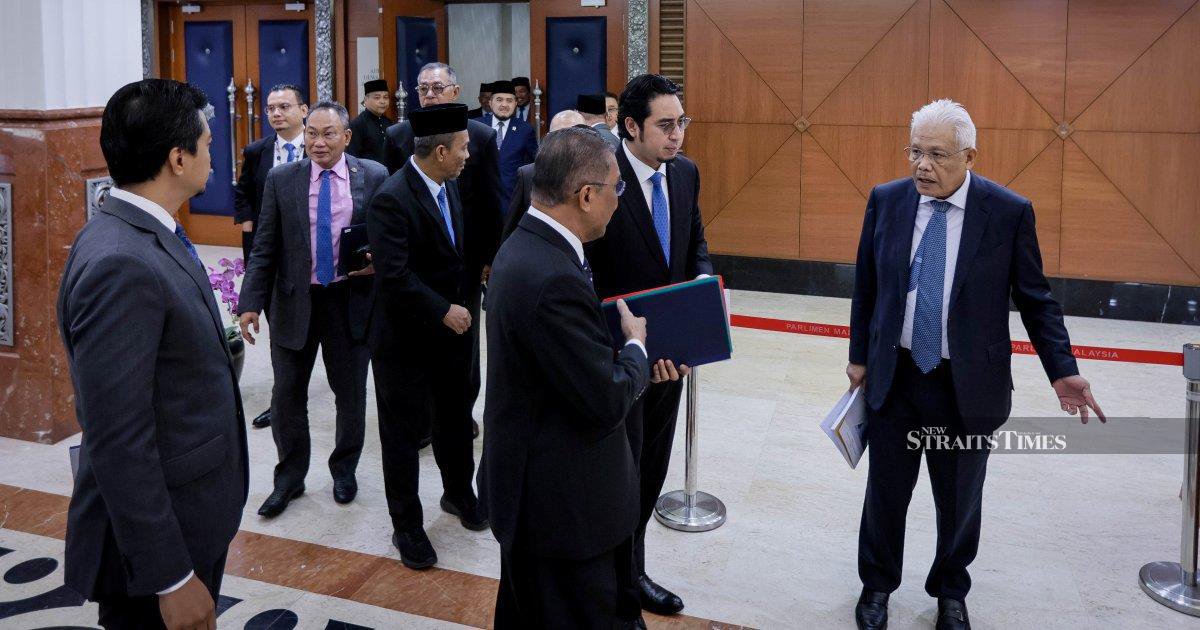
The latest opposition departure from Parliament, triggered by disagreement over the Royal Commission of Inquiry findings on Tabung Haji, has reignited a longstanding tension in Malaysian political discourse: whether such walkouts constitute principled protest or merely performative politics. The incident underscores a paradox that haunts legislative chambers across the Commonwealth — the very same action that opposition benches defend as necessary dissent becomes dismissed as theatrical grandstanding when their political opponents employ it, revealing the selective ethics that govern parliamentary conduct.
Tabung Haji, the pilgrimage fund administered for nearly half a century to assist Malaysian Muslims undertaking the hajj, has long been embroiled in controversy surrounding its financial management and investment decisions. The Royal Commission of Inquiry was established to investigate the fund's governance and the circumstances surrounding its performance during periods of alleged mismanagement. The inquiry's conclusions carried significant political implications, touching on decisions made across multiple administrations and involving figures from various political parties. When the report's findings were tabled in Parliament, they became not merely a matter of record but a flashpoint for political contestation.
The opposition's decision to walk out reflected their assertion that the report's release and parliamentary discussion failed to address what they considered fundamental questions about accountability and the treatment of contributors' savings. Rather than engaging in the standard parliamentary theatre of rebuttal speeches and pointed questions, opposition lawmakers chose instead to physically absent themselves — a tactic that transforms the chamber itself into the message. This approach bypasses the conventional mechanisms of parliamentary debate, opting instead for a symbolic gesture that draws media attention and signals deep dissatisfaction with the proceedings.
However, this tactic's legitimacy appears to depend heavily on whose interests it serves. When governing parties have walked out during opposition speeches or committee hearings, government supporters have frequently characterised such absences as disruptive and disrespectful to parliamentary institutions. Conversely, opposition members view their own walkouts as principled stands against perceived injustice or procedural impropriety. This inconsistency in moral reasoning reveals how parliamentary tactics become interpreted through the lens of partisan advantage rather than constitutional principle.
The effectiveness of parliamentary walkouts as a protest mechanism remains debatable. On one hand, they generate immediate media coverage and signal to observers outside Parliament that members view an issue as sufficiently grave to warrant extraordinary action. A full chamber engaged in routine business suddenly becomes notable by the presence of empty seats — an absence that speaks louder than presence might. Opposition parties banking on the visibility of their departure hope to mobilise public opinion or pressure the government into reconsidering its approach.
Yet the tactic carries significant strategic risks. Walkouts mean opposition lawmakers surrender their voice in the chamber at a moment when speeches and questions might sway undecided members or create a parliamentary record of their objections. The absence of opposition members also means the government faces no immediate rhetorical opposition to its narrative, potentially allowing the ruling coalition to shape the day's proceedings without contradiction. Furthermore, repeated recourse to walkouts risks diminishing their impact through familiarity — once the tactic becomes routine, its shock value erodes.
The Tabung Haji controversy illustrates how governance issues intersect with religious sensibilities and personal financial security for millions of Malaysians. Contributors view the fund as a sacred trust, and mismanagement affects not only investment returns but also the spiritual dimension of an obligation central to Islamic practice. This emotional and religious dimension elevates the political stakes beyond routine fiscal disputes, explaining why opposition parties felt compelled to register their dissent through dramatic action rather than procedural objection alone.
For Malaysian and Southeast Asian readers, this incident raises broader questions about parliamentary culture. Walkouts reflect a breakdown in the consensus that legislative proceedings, however contentious, remain forums where opposing viewpoints can coexist. When members abandon the chamber, they implicitly suggest the institution has failed its fundamental purpose — to accommodate disagreement while preserving the capacity for dialogue and compromise. This erosion of parliamentary norms, whether through government or opposition action, weakens democratic institutions by suggesting that legitimate grievances cannot be aired through established channels.
The double standard in evaluating walkouts also points to a troubling truth about Malaysian politics: constitutional and procedural principles are often invoked selectively, depending on whether their application benefits or harms a particular faction. This approach to governance degrades institutional legitimacy across the board, as citizens struggle to identify consistent principles underlying political behaviour. When the same action carries opposite moral valence depending on who performs it, the public inevitably concludes that principles matter less than power.
Moving forward, Malaysian lawmakers might consider clarifying what circumstances justify extraordinary parliamentary action and establishing standards that apply regardless of which side employs them. This would require remarkable cross-party discipline and agreement on fundamentals — a commodity in short supply in current Malaysian politics. Without such agreements, walkouts will likely continue, each justified by the side employing it and condemned by the side on the receiving end, with parliamentary culture continuing its incremental decline.
The Tabung Haji situation also reminds observers that Malaysian political conflicts increasingly turn on questions of institutional legitimacy and procedural fairness rather than purely ideological disagreement. Opposition parties cannot hope to shift policy through walkouts alone; they require that such actions resonate with a broader public sense that their cause is just and that procedures have genuinely broken down. The challenge for Malaysia's political class is rebuilding confidence that parliamentary institutions can serve justice and transparency even when they produce unwelcome outcomes — an achievement that requires consistent application of principles regardless of partisan consequences.

