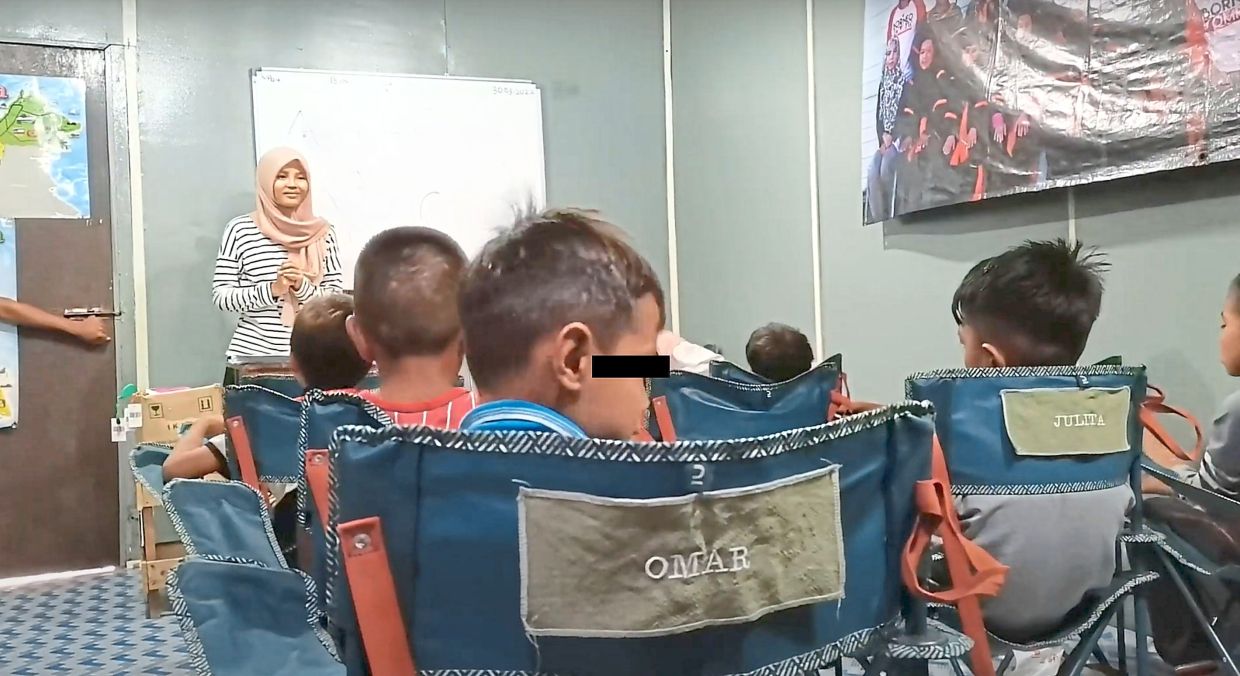
Children who have spent their entire lives in Malaysia – attending school, building friendships, and knowing no other home – are being denied citizenship simply because their parents were not married when they were born. This troubling scenario became law following a pair of Court of Appeal decisions that has reignited debate about whether Malaysia's constitutional citizenship framework serves the best interests of its youngest residents in the modern era.
Both landmark cases involved children with documented biological links to their Malaysian fathers, confirmed through DNA testing. Yet the court ruled that because the mothers – from Indonesia and the Philippines – were not legally married to the fathers, the children's nationality must follow the mothers' countries of origin. The children had minimal or no contact with their mothers after early childhood and possessed no meaningful ties to their mothers' homelands. Under the Federal Constitution, the court held, the marital status of parents at the time of birth remains the decisive factor in determining a child's right to Malaysian citizenship.
This constitutional provision, which dictates that citizenship be determined through the mother when a child is born outside legal marriage, dates back decades to an era when family structures and mobility patterns differed vastly from today. The application of this provision raises a fundamental question in contemporary legal systems: should biological parentage, now verifiable with near-perfect scientific certainty, carry less weight than a formality of law simply because a marriage certificate was never signed? The gap between what modern science can establish and what the law recognises has become increasingly difficult to defend.
Child rights advocates and civil society organisations have mounted a vigorous response to these rulings, arguing they fail to prioritise what family law specialists term the "best interests of the child" – a principle that has become foundational to child welfare systems across the developed world. The Development of Human Resources for Rural Areas (DHRRA), a respected civil society organisation, points out that Malaysia stands as one of only two countries globally where fathers lack the constitutional power to confer citizenship upon their biological children in such circumstances. This distinction places Malaysia alongside a shrinking minority of nations that maintain this restriction, while most jurisdictions have reformed their laws to reflect evolving understandings of family law and gender equality.
Historically, many legal systems imposed significant burdens on children born outside marriage, restricting their inheritance rights, family names, and social standing in ways that affected their entire lives. Over recent decades, however, a global movement has gradually dismantled these distinctions. Legal scholars and policymakers have come to recognise that penalising children for circumstances beyond their control represents a form of injustice. The principle has increasingly taken hold that the law should hold adults accountable for their own choices, not transfer that accountability to their offspring.
The disconnect between adult behaviour and childhood consequences is particularly stark in citizenship cases. When an adult commits an infraction – speeding, tax evasion, fraud, or violence – that person bears the legal consequence. Yet in these citizenship disputes, the child alone faces a lifetime of repercussions for a decision made by two adults. The child had no voice in whether their parents married, no role in determining their birthplace, and no agency in the circumstances of their conception. Nevertheless, they become the sole bearer of indefinite legal limbo, a status far more severe than any penalty imposed on the adults involved.
The nature of human relationships exists in shades of grey that legislation often struggles to accommodate. Romantic partnerships do not always culminate in marriage. Children are born both through deliberate planning and by accident. Some relationships withstand decades of commitment; others dissolve after weeks. These patterns are neither novel nor particularly extraordinary – they represent the normal spectrum of human experience across cultures and throughout history. Population movements and cross-border relationships have characterised human societies since ancient times, yet contemporary citizenship laws have not always evolved to match these realities.
Marriage and citizenship serve fundamentally distinct legal purposes, a distinction that current provisions conflate problematically. Marriage represents a voluntary contract between consenting adults, creating mutual rights and obligations. Citizenship, by contrast, determines the legal identity and political belonging of an individual – including children who have had absolutely no say in the matter. The two concepts serve entirely different functions within a legal system. Conflating them, as the current constitutional framework does, treats citizenship as a moral judgment on adult relationships rather than addressing the practical question of whether a child genuinely belongs within a nation's political community.
The true inquiry should be far simpler: does this child rightfully belong in Malaysia? When a child has been born here, raised here, educated here, and formed all their meaningful social relationships here, the answer seems obvious regardless of parental marital status. Equally pressing is a second question that the current system leaves unaddressed: what becomes of stateless children? Children left without citizenship become adults trapped on society's periphery, facing systematic barriers to education, healthcare, formal employment, banking services, and housing. Many remain mired in poverty and social exclusion throughout their lives, unable to fully participate in their own communities. This outcome hardly serves Malaysia's national interest or development goals.
This citizenship problem is not confined to individual cases but rather represents a recurring structural issue that has surfaced repeatedly over decades, manifesting through various circumstances. Foundlings, children born in remote indigenous communities where registration proves difficult, and infants delivered without official documentation all find themselves in similar legal purgatory. The common thread runs through every instance: children become trapped in legal uncertainty through circumstances entirely beyond their control or comprehension. Their stories may vary, but the underlying injustice remains identical.
Recent developments suggest that Malaysia's parliament recognises the need to modernise citizenship provisions. In 2024, lawmakers amended the Federal Constitution to permit Malaysian mothers to automatically transmit citizenship to children born abroad, a significant step acknowledging that contemporary citizenship law must reflect gender equality and current realities of global mobility. This successful constitutional reform demonstrates that such changes are politically achievable when the case is made persuasively. The principle established in that amendment – that citizenship laws must evolve to match modern family patterns and international mobility – applies equally to the situation of children born to Malaysian fathers and foreign mothers.
The path forward requires honest acknowledgment that rigid application of century-old provisions creates injustices in the contemporary context. Conferring Malaysian citizenship on children who have no realistic connection to any other nation, combined with judicial discretion to consider individual circumstances, would align Malaysia's law with both modern child welfare principles and the precedent established by the recent maternal citizenship amendment. Every child deserves to begin life as a full member of their own community, with a secure legal identity and the opportunities that citizenship provides. Malaysia has both the capacity and the recent precedent to grant that birthright to the children who genuinely belong here.

