Malaysia Madani is the policy and governance framework that defines Prime Minister Anwar Ibrahim's administration. The word "Madani" is Arabic in origin, connoting a civilised and modern civil society. Since Anwar took office, the concept has shaped how the government frames its economic and social agenda.
The framework was first launched on October 2, 2022, and was formally introduced as national policy on January 19, 2023, in Putrajaya. At its heart are six core values, which together form the MADANI acronym drawn from Malay words: Sustainability (keMampanan), Prosperity (kesejAhteraan), Innovation (Daya cipta), Respect (hormAt), Trust (keyakiNan) and Compassion (Ihsan).
Each value points to a policy direction. Sustainability emphasises long-term, responsible development. Prosperity focuses on raising living standards and shared economic gains. Innovation drives the push toward a high-value, technology-led economy. Respect underlines racial and religious harmony in Malaysia's diverse society. Trust speaks to good governance and rebuilding public confidence in institutions. Compassion frames social welfare and support for vulnerable groups.
These values are not just slogans. They underpin concrete initiatives such as the Madani Economy framework, which sets measurable national targets, and social programmes including expanded cash assistance for lower-income households. The government has tied its budgets — including the RM470 billion Budget 2026, themed "The People's Budget" — to the Madani vision.
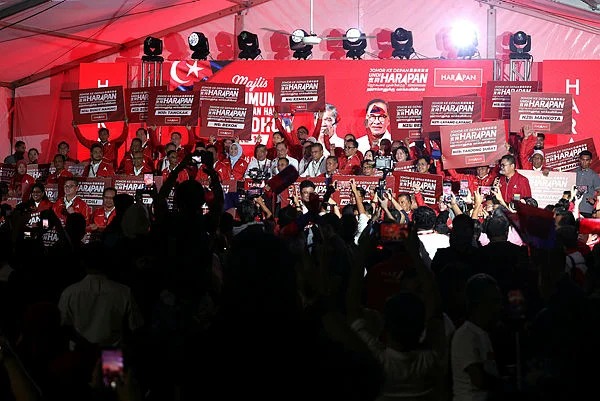
Supporters argue the framework provides a coherent direction for reform, good governance and inclusive growth. Critics question how fully the lofty values translate into everyday improvements for ordinary Malaysians. Either way, Malaysia Madani has become the defining language of the current government, and understanding its six values helps make sense of the policies rolled out under Anwar Ibrahim's leadership — including the campaign messaging Pakatan Harapan carries into the 2026 Johor state election.

