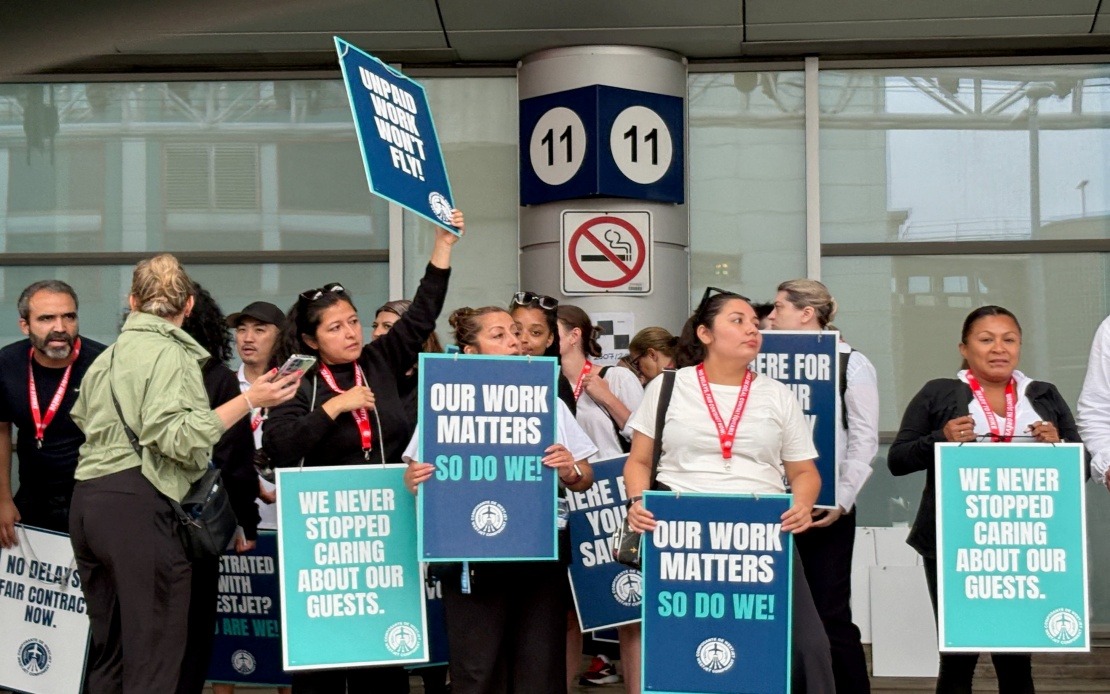
The Canadian aviation sector experienced significant disruption when more than 4,000 flight attendants at WestJet initiated strike action on Sunday, bringing the airline's operations to a standstill. The work stoppage immediately cancelled roughly 600 flights per day and left an estimated 250,000 passengers scrambling to find alternative travel arrangements. The timing could not have been worse for the airline and its customers, as the strike commenced just ahead of Monday's civic holiday in Canada, one of the most congested travel weekends on the annual calendar.
WestJet, which ranks as Canada's second-largest carrier by passenger volume, faces substantial financial consequences from the labour action. The airline had warned stakeholders that the strike would impose significant costs on its operations, though precise figures remain to be calculated once the full extent of disruptions becomes clear. Beyond the immediate monetary impact, the carrier's reputation and customer relationships face potential long-term damage as travellers experience cancelled bookings and complicated rebooking processes during a critical revenue period.
The root of the conflict centres on compensation structures for work performed outside traditional flight hours. Flight attendants are campaigning for recognition and payment for ground duties completed before aircraft departure and after landing, a practice that has long been a contentious issue within the aviation industry. Currently, WestJet's flight attendants earn between $28.88 and $53.61 per credit hour, but this calculation does not account for the preparatory and concluding tasks essential to safe flight operations.
The compensation model championed by striking workers is not unprecedented within North America's airline industry. Delta Air Lines became an early adopter of ground work payment in 2022, acknowledging the labour involved in cabin preparation and post-flight procedures. Air Canada subsequently adopted a similar framework in February following the conclusion of new labour negotiations, offering flight attendants compensation reaching up to 70 per cent of their hourly rate for work performed during the hour preceding takeoff. This precedent has emboldened WestJet's workforce to demand comparable recognition.
The Canadian Union of Public Employees, which represents the striking flight attendants, attributes the labour action directly to management intransigence. Alia Hussain, speaking for the union, stated that nearly eleven months of bargaining had failed to produce meaningful progress, forcing members to resort to strike action as a last resort. The union's position reflects frustration with what it characterises as WestJet's unwillingness to address legitimate workplace concerns throughout an extended negotiation period.
WestJet's leadership has expressed regret regarding the strike but maintained the airline's position. Chief Executive Officer Alexis von Hoensbroech acknowledged the hardship imposed on passengers, employees, and business partners, framing the company's stance as disappointing rather than unreasonable. The airline committed to issuing refunds to affected passengers, though the administrative burden of processing such claims during ongoing disruptions adds complexity to an already challenging situation.
Federal government officials have monitored the dispute with concern. Patty Hajdu, Canada's Jobs Minister, publicly expressed disappointment that negotiations had stalled, indicating government expectations that industrial relations machinery should have resolved the matter through dialogue rather than strike action. Such political commentary, while diplomatically neutral in tone, underscores the high-profile nature of aviation labour disputes in democratic societies where public inconvenience becomes a political issue.
For Malaysian and Southeast Asian observers, the WestJet situation illuminates broader patterns within global aviation labour relations. Airlines across the region and worldwide face mounting pressure from workers seeking recognition of full-time equivalent compensation for tasks historically treated as ancillary duties. The question of ground work payment represents a microcosm of evolving employment standards where automation, efficiency pressures, and worker advocacy collide.
The precedent established by Delta and Air Canada carries implications extending beyond Canadian borders. As regional carriers throughout Asia expand their international operations and face competition from North American and European airlines, questions about labour compensation standards become increasingly relevant. Flight attendants globally observe industry developments, and successful labour outcomes in major markets influence expectations elsewhere.
The strike also reflects labour market dynamics in developed economies where unionised workforces possess sufficient bargaining power to disrupt services affecting millions. In contrast, aviation workers throughout much of Southeast Asia operate within different regulatory and organisational contexts, often with limited collective bargaining capacity. This disparity shapes workforce satisfaction and retention patterns differently across regions, with implications for service quality and operational stability.
The resolution of the WestJet dispute, whenever it materialises, will likely establish templates for future negotiations within Canadian aviation and potentially influence discussions in other jurisdictions. Whether WestJet eventually capitulates to union demands, reaches a compromise framework, or maintains its current position will signal to the broader labour movement the viability of strike action in compelling management concessions within the increasingly competitive airline industry. The outcome carries symbolic weight beyond the immediate parties involved, shaping worker expectations and management strategies across multiple sectors and geographies.

