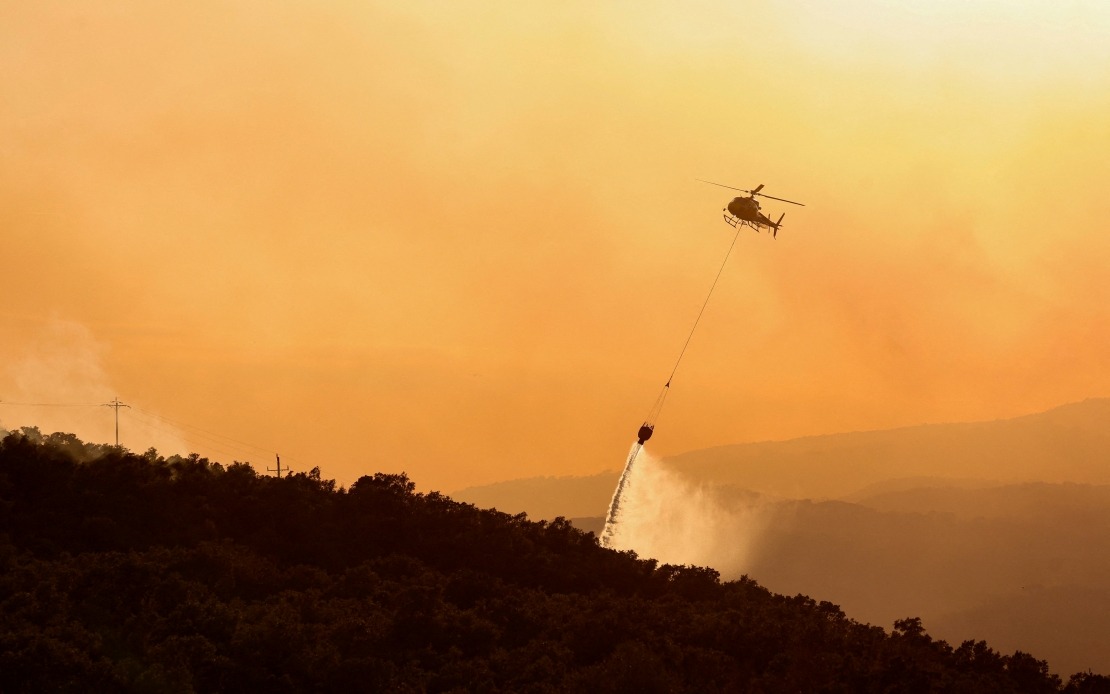
As the United States marked the 250th anniversary of its founding on July 4, celebrations across the western states were significantly curtailed by an unprecedented combination of severe drought, active wildfires, and hazardous weather conditions. Dozens of communities that traditionally celebrate Independence Day with fireworks displays were forced to cancel or substantially restrict their events, creating a stark contrast between the festive intentions and the harsh environmental realities facing the region.
The scale of the wildfire crisis became evident through official government assessments. A national incident report released on Friday documented 41 large uncontained fires burning across the country, with authorities placing the nation at its second-highest level of wildfire preparedness. This elevated status reflects the exceptional threat posed by multiple simultaneous fires spreading across vulnerable territories, straining firefighting resources and creating dangerous conditions that made traditional celebrations impractical.
Utah emerged as one of the most severely affected states. Governor Spencer Cox implemented an emergency statewide restriction on fireworks use in response to the catastrophic fire conditions. Under the temporary order, local governments retained limited authority to designate specific zones where fireworks might be permitted through July 5, though even these exceptions represented a dramatic departure from normal Independence Day practices. The underlying cause was unmistakable: state drought data revealed that 94 per cent of Utah was experiencing either severe or extreme drought conditions, creating tinderbox-like circumstances across the landscape.
Utah State Forester Jamie Barnes characterised the wildfire situation as extraordinarily severe, noting that the fires were spreading with unprecedented speed compared to historical patterns. What made the 2024 season particularly alarming was the accumulation of damage—officials reported that the state had already burned more acreage than the combined total of the previous four years, demonstrating an accelerating trajectory of destruction.
Colorado confronted similarly challenging circumstances. The state's Division of Fire Prevention and Control reported more than a dozen active wildfires burning across different regions during the week of July 4. Multiple cities and counties responded by cancelling their traditional fireworks celebrations, including major communities such as Durango, Vail, and Pueblo. Vail's cancellation represented its sixth such action since 1998, with the most recent previous cancellation occurring in 2021, indicating that extreme fire danger had become an increasingly common factor in holiday planning decisions.
Colorado Springs, the state's second-largest city, took the particularly significant step of eliminating all Fourth of July fireworks displays citywide. Fire department officials justified the decision by emphasising the extreme danger posed by current conditions, drawing explicit comparisons to the circumstances preceding the devastating 2012 wildfire that destroyed over 300 homes and caused widespread destruction. Mayor Yemi Mobolade acknowledged the disappointment generated by the cancellation, noting that the timing was particularly poignant given the nationwide 250th anniversary celebrations.
The restrictions extended substantially beyond Colorado and Utah. Officials in Wyoming, Nebraska, and New Mexico similarly implemented limitations on fireworks activities, driven by either severe drought or acute wildfire danger in their respective regions. Professional fireworks displays, which generally employ more controlled conditions and safety protocols than consumer fireworks, were expected to proceed in most locations, though even these were subject to increased scrutiny and local decision-making.
Meteorological conditions substantially exacerbated the fire danger across multiple regions. The national incident report warned that strong winds combined with extremely low humidity levels would significantly elevate fire risk throughout the southwestern states. Simultaneously, much of the eastern and central United States experienced dangerously elevated temperatures, with heat index values exceeding 46 degrees Celsius in certain areas, according to National Weather Service data. These temperature extremes created additional stress on landscapes already stressed by drought.
Scientific research underscores the legitimate connection between fireworks and wildfire activity. Philip Higuera, a fire ecology specialist at the University of Montana, explained to media outlets that Fourth of July fireworks consistently contribute to elevated wildfire occurrence on that single day across the landscape. The volume of ignition sources generated by millions of fireworks creates a measurable spike in fire initiation.
Academic analysis further contextualises the broader wildfire challenge. Research from Lauren Lowman, an associate professor at Wake Forest University, found that nearly half of all land burned throughout the western United States since 2001 has been consumed by wildfires that occurred during or immediately followed heat wave periods. Historical data analysed by Lowman revealed approximately 15,000 wildfires recorded specifically on July 4 between 1992 and 2020, demonstrating the holiday's consistent association with elevated fire activity.
The economic and public health dimensions of the fireworks-wildfire connection became increasingly apparent through insurance and safety data. Fireworks sparked an estimated 32,000 fires nationwide during 2023, according to research compiled by Lowman. This statistic provides crucial context for understanding why fire officials have become progressively more cautious about permitting fireworks in drought-stricken and wildfire-prone regions.
For regional observers across Southeast Asia, the western US wildfire crisis illustrates the growing vulnerability of developed nations to climate-driven environmental challenges. Similar drought-and-fire patterns have increasingly affected ASEAN regions, particularly during El Niño episodes, making the lessons from American communities' responses increasingly relevant for Malaysian and broader regional planning. The decision to restrict traditional celebrations reflects a fundamental recalibration of public priorities when environmental hazards escalate beyond manageable thresholds.

