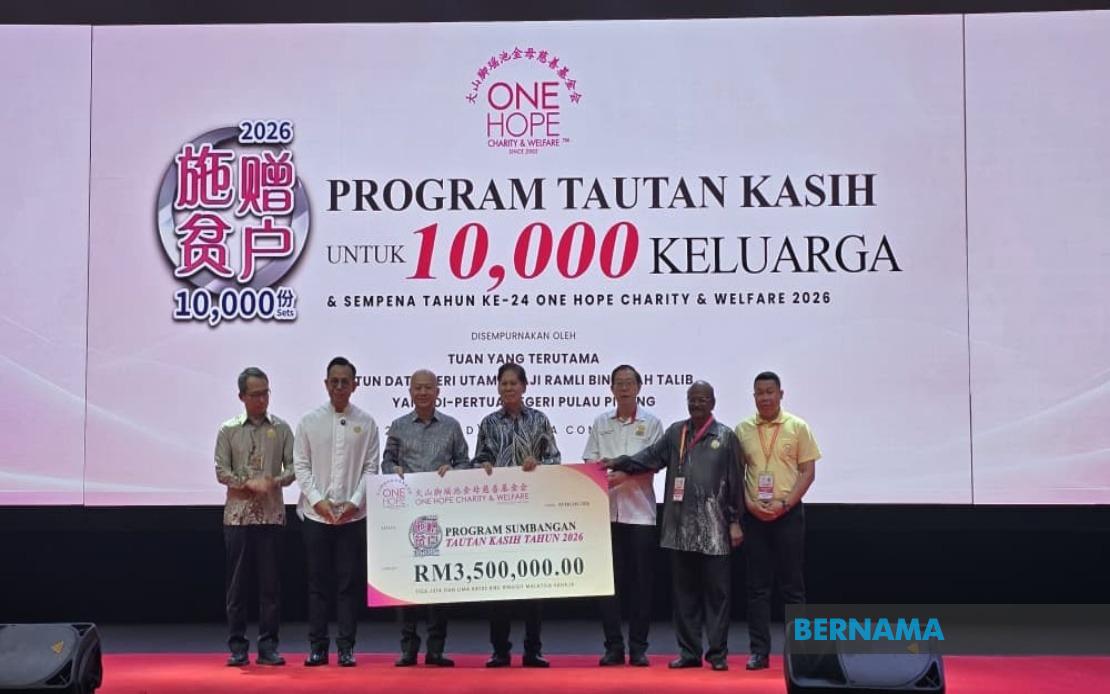
Malaysia's social safety net demands ongoing reinforcement to ensure vulnerable populations receive adequate assistance during hardship, Minister of Entrepreneur Development and Cooperatives Steven Sim Chee Keong has stressed. Speaking at a Butterworth event in Penang, Sim articulated the notion that national development and individual prosperity are inseparable from robust welfare mechanisms that address the disparities inherent in society. The minister's position reflects growing recognition among policymakers that economic growth alone cannot guarantee equitable distribution of opportunity and security across all demographic groups.
Sim's remarks underscored a fundamental principle shaping Malaysia's social contract: that prosperity must be accompanied by tangible mechanisms protecting citizens facing unforeseen circumstances. He pointed out that life's inherent volatility—periods of stability interspersed with unexpected crises—necessitates institutional frameworks capable of responding when individuals encounter financial or personal emergencies. This perspective aligns with evolving global discourse on inclusive development, which emphasises that sustainable national progress depends on maintaining social cohesion across different strata of society. For Malaysian policymakers, the challenge lies in translating such rhetoric into effective, adequately funded programmes.
Beyond mere income support, Sim identified welfare initiatives as instrumental in forging social solidarity across Malaysia's diverse population. He argued that comprehensive social protection systems strengthen inter-community bonds by demonstrating that assistance transcends racial, religious, or political boundaries. This framing is particularly significant in Malaysia's plural society, where welfare policy carries implicit messages about national inclusivity. When welfare reaches beneficiaries without regard to their background, it reinforces the principle that all citizens possess equal claim on national resources and social protection, thereby reducing potential friction points.
One Hope Charity emerged as the centrepiece of Sim's remarks, exemplifying the vision of non-denominational welfare provision. The organisation, which originated as a modest community initiative in Bukit Mertajam, has evolved into one of Penang and Malaysia's largest charitable entities. Its annual distribution of at least RM20 million to the community demonstrates significant philanthropic capacity, though the reliance on private charity for such substantial social provision also highlights gaps in government-led welfare infrastructure. The presence of Penang Governor Tun Ramli Ngah Talib and his wife at the event signalled official endorsement of the charity's approach and the broader principle that welfare strengthening requires collaboration between state institutions and civil society actors.
One Hope Charity's operational model reveals how contemporary welfare provision increasingly depends on coordinated networks of businesses, philanthropists, and community organisations. Founder and chairman Datuk Chua Sui Hau disclosed that this year alone, the organisation extended assistance to more than 10,000 families. Each household received a combination of essential goods valued at approximately RM320 and RM200 in cash, totalling RM520 per family. This dual approach—combining material necessities with monetary flexibility—acknowledges that vulnerable populations require both immediate basic provision and autonomy to address individualised needs. The cash component particularly respects beneficiary agency, allowing recipients to prioritise expenditure according to their specific circumstances.
The charity's cumulative impact between 2021 and 2025 further contextualises the welfare landscape in Malaysia. Chua reported channelling more than RM100 million across multiple assistance categories: direct patient medical treatment, hospital infrastructure support, medical equipment provision, and comprehensive welfare programmes. This diversified portfolio indicates that contemporary welfare extends beyond income maintenance into health and education domains. For a developing economy like Malaysia, where healthcare costs represent a major driver of household poverty, such targeted medical assistance addresses a critical vulnerability point. The willingness of private organisations to supplement government health systems suggests both capacity gaps and emerging recognition of holistic welfare needs.
Looking ahead, One Hope Charity's planned expansion signals intensified welfare engagement as the organisation marks its 25th anniversary next year. Approximately RM30 million in additional welfare initiatives are under consideration, with particular emphasis on expanding the Medical Assistance Programme. This growth trajectory occurs within an environment where demand for welfare assistance remains pronounced despite Malaysia's middle-income status. The persistence of vulnerability alongside economic development reflects structural economic challenges: wage stagnation for lower-income workers, rising costs of living, healthcare expenses, and limited social safety nets for informal sector workers. Private charity expansion may mask the need for government welfare system modernisation.
For Malaysian policymakers and observers, the One Hope Charity model presents both opportunities and cautionary lessons. The efficiency and responsiveness of private welfare organisations demonstrate potential advantages of decentralised, nimble provision. However, delegating substantial welfare responsibility to non-governmental entities creates sustainability risks and equity concerns. Charitable organisations depend on donor generosity, which fluctuates with economic cycles and philanthropic priorities. Additionally, charity-based welfare often leaves gaps—coverage remains geographically uneven, eligibility criteria vary, and the scale of assistance, however commendable, may inadequately address systemic poverty drivers. A comprehensive approach would integrate private sector dynamism with strengthened government social protection systems.
Sim's articulation of welfare as essential to national solidarity carries implications for federal policy direction. Strengthening welfare policies could encompass expanding coverage of existing programmes, increasing benefit adequacy, improving delivery mechanisms, and integrating healthcare, education, and income support. Malaysia's experience with programmes like BR1M and various state-level assistance schemes provides foundational infrastructure, yet critics argue these require modernisation to reflect contemporary cost-of-living realities. Regional comparisons offer perspectives: neighbouring Singapore emphasises mandatory savings and individual responsibility; Thailand and Indonesia rely more heavily on conditional cash transfers and social protection schemes. Malaysia's approach could selectively incorporate such elements whilst maintaining its distinctive social partnership model.
The emphasis on welfare strengthening also reflects demographic and economic pressures particular to Malaysia. An ageing population increases healthcare and aged-care demands; youth unemployment and underemployment persist despite educational expansion; and the digital economy's rise creates vulnerabilities for workers lacking advanced skills. Climate-related disasters, pandemic disruptions, and economic volatility have demonstrated welfare systems' critical importance during crises. Penang itself, as Malaysia's second-major economic centre, experiences internally uneven development—whilst some districts enjoy considerable prosperity, others face persistent deprivation. Welfare strengthening therefore serves simultaneously as moral imperative, social stability mechanism, and economic development strategy.
Ultimately, the calls from senior government figures like Sim for welfare enhancement align with observable shifts in Malaysian public discourse. Increasing media attention to poverty, inequality, and living costs suggests growing political salience of social protection issues. Yet translating ministerial rhetoric into substantive, adequately resourced policy requires sustained commitment, budget allocation, and inter-agency coordination. One Hope Charity's example demonstrates what motivated private actors can achieve; the challenge for Malaysian governance involves mobilising equivalent energy and resources within the public system to ensure that welfare security becomes a fundamental right rather than a matter of charitable goodwill.

