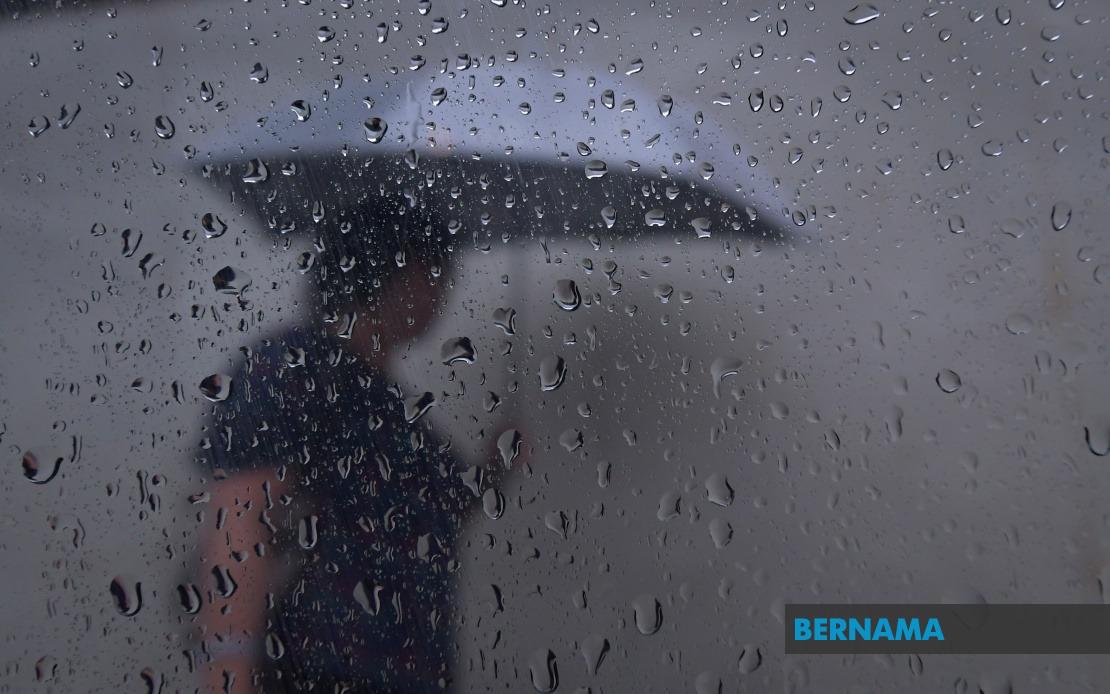
The Johor Meteorological Department has issued a weather advisory ahead of tomorrow's early voting phase for the state's 16th general election, cautioning voters in four districts to expect wet conditions during the morning hours. According to MetMalaysia director Azlai Ta'at, residents in Batu Pahat, Muar, Pontian, and Tangkak should prepare for intermittent showers, though the remainder of the state will enjoy clearer skies in the earlier part of the day. The forecast reflects typical monsoon-influenced weather patterns common to the peninsula during this period, and underscores the logistical challenges election officials must navigate when organising mass participation events across geographically dispersed constituencies.
In contrast to the four affected districts, morning conditions are anticipated to remain predominantly dry and pleasant across Johor Bahru, Segamat, Kluang, Kota Tinggi, Mersing, and Kulai. However, Azlai's broader assessment suggests that voters across the entire state should anticipate a deterioration in atmospheric conditions as the afternoon progresses, with thunderstorms expected to sweep across all electoral divisions. This complete reversal from morning to afternoon weather presents a practical consideration for the state election commission, which has staggered the closing times of early voting centres to accommodate the forecast conditions and manage the flow of voters who may seek to avoid afternoon downpours.
The advisory comes as nearly 25,000 eligible early voters prepare to exercise their franchise before the Saturday general ballot. This early voting cohort comprises two distinct segments of the population whose professional obligations necessitate advance polling arrangements. The Malaysian Armed Forces has mobilised 12,041 personnel together with their spouses to participate in the early voting exercise, reflecting the military's institutional arrangements for ensuring service members retain their electoral voice despite deployment or posting constraints. Similarly, the Royal Malaysia Police and General Operations Force have registered 12,710 officers and their families for the same purpose, underscoring how security sector employees are granted special dispensations to vote ahead of the main polling day.
Election organisers have established 64 early voting stations distributed across Johor to accommodate this cohort, opening their doors from 8 am to enable voting to commence in the early morning before anticipated weather deterioration. The staggered closing times, which vary between noon and 6 pm depending on individual centre locations and the volume of registered early voters at each station, provide flexibility for officials to manage queuing and maintain polling station efficiency should weather conditions worsen. Azlai's recommendation that voters cast their ballots early in the day reflects meteorological concern that afternoon thunderstorms could impede voter movement, delay proceedings, or create safety hazards at polling facilities.
The broader election context involves an electorate of extraordinary scale across the state. Johor's 16th state election encompasses approximately 2.73 million eligible voters who will exercise their rights across 1,140 polling centres when ordinary voting commences on Saturday. This represents one of Malaysia's largest single-state electoral exercises, reflecting Johor's status as the peninsula's second-most populous state and its historical significance as an economic and political powerhouse within the federation. The sheer logistical scope of managing voting across such dispersed locations, combined with unfavourable weather patterns, necessitates careful planning by the Election Commission to ensure smooth operations and maximise voter turnout.
The state election features 172 candidates contesting 56 state assembly seats, a ratio that offers voters considerable choice at the local level whilst maintaining manageable ballot papers at individual polling stations. This distribution of candidates across constituencies reflects the competitive nature of Johor politics and the engagement of multiple political parties in attempting to secure representation in the state legislature. The Saturday polling date itself was strategically selected to facilitate maximum voter participation by avoiding weekday work commitments, though inclement weather could yet influence turnout patterns if voters become discouraged by afternoon conditions.
For Malaysian and Southeast Asian observers, the Johor election represents a significant political test that will shape the balance of power in one of the federation's most strategically important states. The state's political trajectory influences broader national coalitional calculations and policy directions, making the electoral outcome consequential beyond Johor's immediate boundaries. Regional investors and observers typically monitor Johor elections closely given the state's economic importance to Malaysia's manufacturing and service sectors, and the political stability implications of electoral results.
The emphasis on early voting accommodations for military and police personnel reflects Malaysia's constitutional and political commitment to ensuring that security sector employees retain electoral rights despite their institutional constraints. This arrangement distinguishes Malaysia's democratic practice from some other systems where service personnel face voting restrictions, and demonstrates institutional confidence in the political neutrality of security forces. The integration of 24,751 early voters into the election process without apparent controversy or organisational difficulty suggests that the mechanics of expanded electoral access have become routine within Malaysian electoral administration.
Weather forecasts and electoral logistics remain intertwined considerations for election commissions globally, and Johor's situation exemplifies how meteorological factors influence practical voting accessibility. Citizens in remote areas or those with mobility constraints may face particular challenges accessing polling stations during heavy rainfall, whilst transport networks can become congested or disrupted when weather deteriorates. The MetMalaysia director's public advisory thus serves a dual purpose: informing voters of conditions they should anticipate whilst implicitly prompting them to plan their voting activities strategically around the forecast weather progression.

