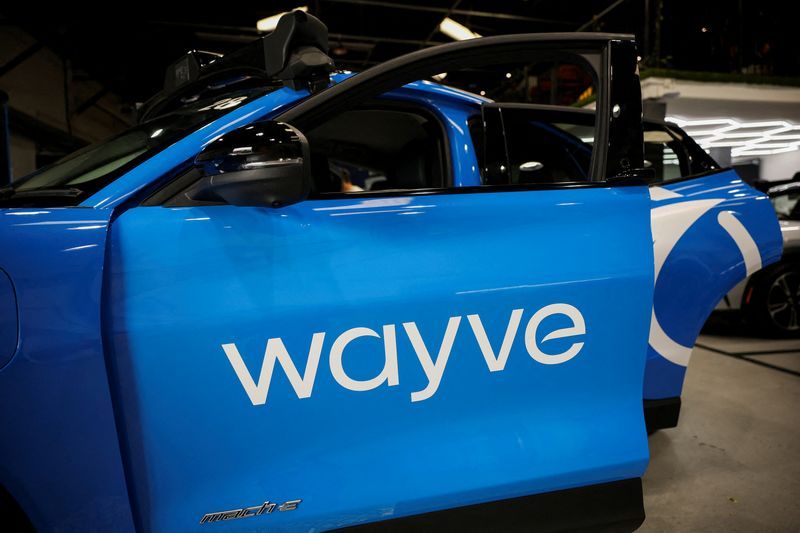
London-based autonomous-driving startup Wayve is capitalising on surging investor appetite for self-driving technology, having amassed $2.8 billion in funding from a diverse coalition spanning technology giants and established automotive manufacturers. The backing ranges from Nvidia to Mercedes-Benz and Nissan, reflecting confidence in the company's distinctive approach to vehicle autonomy. Most notably, Wayve announced in June that it will supply its system to Stellantis, the maker of Jeep vehicles, for deployment in robotaxis operating on Uber's ride-hailing platform—a commercially significant partnership that validates its technology at scale.
The company's competitive advantage rests on its adoption of end-to-end machine learning, an artificial-intelligence methodology that processes sensor data and translates it directly into driving decisions in a manner analogous to human cognition. This approach fundamentally departs from the engineering paradigm that dominated autonomous-driving development for years, which combined conventional AI with hand-coded software rules and high-definition mapping systems to prescribe vehicle behaviour in predefined scenarios. Wayve's model skips the labour-intensive stage of encoding responses to countless edge cases, instead training neural networks to navigate the world through direct observation and experience.
CEO Alex Kendall, a 33-year-old New Zealander who established Wayve in 2017 shortly after completing his doctorate in AI deep learning at Cambridge University, articulated an expansive vision during a recent interview while riding in an autonomously navigating Ford Mustang Mach-E in the San Francisco Bay Area. He emphasized that Wayve's ambition extends beyond any single brand or geography, aiming to democratise full self-driving capability across all vehicle platforms globally. This universalist stance distinguishes Wayve from competitors whose systems are tethered to specific sensor configurations or proprietary hardware architectures.
The autonomous-driving sector has witnessed a fundamental shift in momentum following Alphabet's Waymo expansion over the past two years. Having initially promised driverless vehicles in the early 2010s before encountering repeated setbacks, the industry has finally seen meaningful commercial deployment. Waymo now operates paid robotaxi services across approximately a dozen cities following more than a decade of intensive development, effectively reshaping investor sentiment. This tangible progress has rehabilitated the credibility of autonomous-vehicle ventures and reignited capital flows that had grown sceptical after years of missed timelines and inflated claims.
Paradoxically, end-to-end machine learning was virtually unknown outside academic circles a decade ago, pursued only by niche researchers including Kendall himself. Today, the methodology has migrated from theoretical curiosity to industry-standard consideration, with most major autonomous-driving developers incorporating at least some end-to-end learning elements into their systems. This intellectual transformation reflects growing recognition that conventional programming approaches struggle to handle the combinatorial explosion of real-world driving scenarios, particularly unusual or unprecedented situations that defy explicit rule encoding.
However, this technological embrace comes laden with a critical liability: the opacity of end-to-end systems. The neural networks powering these systems function as notorious "black boxes," rendering their decision-making processes mathematically inscrutable even to their engineers. When vehicles navigated by explicit software rules encountered a problem, developers could trace the causal chain from sensor input to output decision. With end-to-end learning, this transparency vanishes entirely, replaced by probabilistic inference that resists human interpretation.
Wayve's response to this challenge involves generating what it describes as safety maps that identify trajectories through unfolding traffic environments, coupled with algorithmic identification of feasible paths. The company's engineers contend that conventional programming-intensive safety methodologies actually impair autonomous-driving systems when confronted with genuinely novel scenarios, since it proves impossible to anticipate and encode rules for truly exceptional circumstances. Vijay Badrinarayanan, Wayve's vice president of AI, articulated this philosophy by noting that traditional safety logic becomes "brittle" when encountering unpredictable events, whereas human drivers maintain safety through conservative adaptation when confronting uncertainty. This framing positions end-to-end learning not merely as technically elegant but as inherently safer for genuinely autonomous operation.
Waymo, which has itself migrated toward end-to-end models, nonetheless maintains a more hedged position. The company continues supplementing its end-to-end systems with rules-based approaches grounded in software coding and detailed maps, asserting that end-to-end models alone cannot guarantee safety at commercial scale. This bifurcated strategy reflects the industry's prevailing caution regarding full reliance on opaque machine-learning systems for safety-critical applications where accountability and explainability remain regulatory and commercial imperatives.
Nissan, one of Wayve's first major customers, exemplifies the industry's measured embrace of the technology. The company's chief technologist, Eiichi Akashi, confirmed that Nissan engineers are methodically evaluating Wayve's safety paradigm ahead of deploying the system in Japan on the Elgrand people-mover van, scheduled for the fiscal year ending March 2028. While acknowledging the system as "the most advanced" available, Akashi expressed the discomfort that many engineers harbour: the fundamental difficulty in "peering into" these systems to comprehend their decision-making mechanisms. This tension between performance and interpretability will likely define the next phase of autonomous-vehicle development, particularly as regulators demand accountability for autonomous-system failures.
Kendall's strategic positioning emphasises geographic scalability as Wayve's defining commercial advantage. Operating significant facilities in Tokyo, Stuttgart, and Vancouver, the company contends that its methodology eliminates the bottleneck of road mapping and local rule-coding that has constrained competitors. Having successfully tested its AI system across hundreds of cities worldwide without preliminary mapping infrastructure, Wayve argues it can expand into new markets with unprecedented velocity. This claim carries particular relevance for Southeast Asian markets, where road infrastructure complexity, inconsistent traffic patterns, and localised driving norms have historically frustrated autonomous-vehicle deployment.
Academic perspectives on Wayve's approach remain nuanced. Siddartha Khastgir, a safe-autonomy professor at the University of Warwick, acknowledges that end-to-end models should accelerate development and deployment timelines relative to traditional approaches, yet resists declaring one paradigm categorically safer. Phil Koopman, an autonomous-technology expert at Carnegie Mellon University, characterises Wayve's methodology as one viable approach among several potentially viable alternatives, while cautioning that deploying driverless systems safely across the broader United States market will demand at least a decade of further innovation and potentially entirely novel technological breakthroughs. This measured expert consensus suggests that despite Wayve's impressive funding and partnership momentum, the path to globally scaled autonomous-vehicle deployment remains technologically unfinished and temporally protracted.

