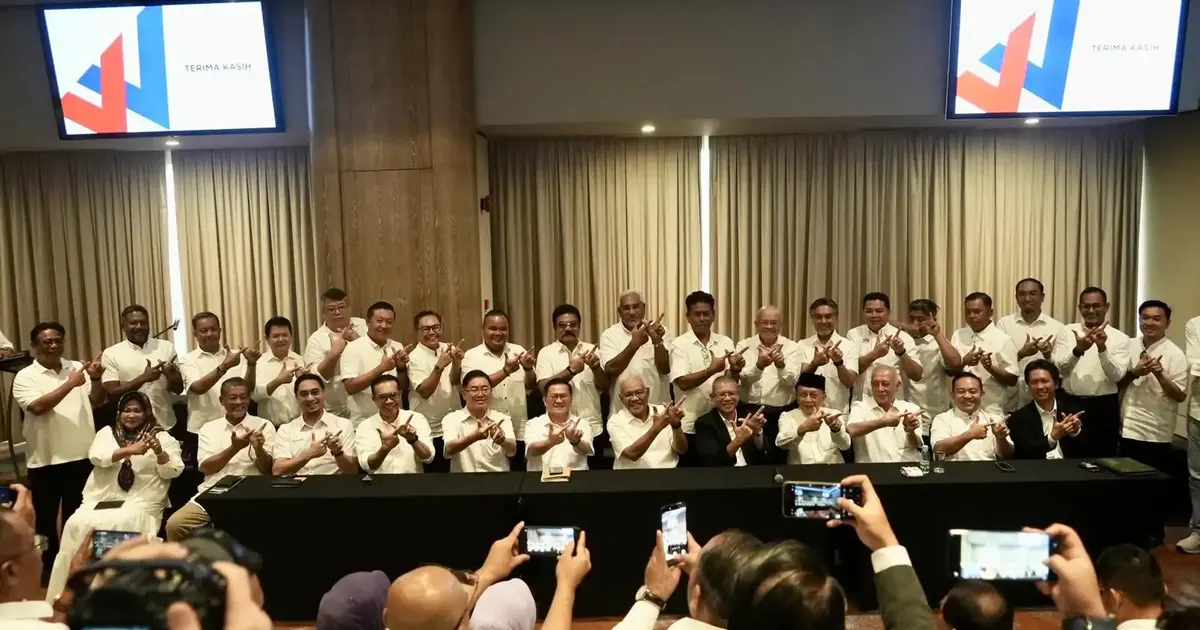
The decision to admit Wawasan party into the Perikatan Nasional coalition has been formally settled through a majority vote by the Supreme Council, according to Sanusi, the poll operations chief for the opposition alliance. The clarification came as Bersatu, a founding member of PN, registered its objections to the expansion, signalling potential friction within the coalition's leadership ranks over the strategic direction of the bloc.
Sanusi's statement underscores a deliberate governance process rather than an arbitrary or unopposed move. By emphasising that the Supreme Council—the highest decision-making body within PN—had voted on the matter, Sanusi was conveying institutional legitimacy to the admission. This procedural emphasis becomes significant when viewing the coalition's stability and the management of internal disagreements within a multi-party alliance that has experienced considerable flux since its formation.
Bersatu's documented objections reveal deeper tensions about coalition growth and resource allocation among existing members. As one of the parties that established PN, Bersatu holds considerable institutional weight within the alliance and cannot be dismissed lightly. The party's formal stance suggests that not all coalition members view Wawasan's entry as strategically beneficial or compatible with their own positioning within the broader political landscape.
The admission of new parties into established coalitions typically raises questions about seat allocation, campaign resources, and representation in negotiated electoral arrangements. These practical considerations often generate internal disputes, particularly when coalitions are positioning themselves for future general elections or state-level contests. Bersatu's hesitation likely reflects anxiety over how Wawasan's presence might affect the party's bargaining power within PN structures.
Wawasan's entry into PN represents a strategic calculation by the coalition leadership to broaden its base or capture specific voter demographics. Incoming parties often bring with them localized support networks, grassroots organisational capacity, or appeal to particular communities that existing coalition members may find difficult to penetrate. From PN's perspective, expanding its membership could translate into competitive advantages in targeted constituencies or regions where the alliance currently lacks visibility.
However, the Supreme Council's decision to proceed despite Bersatu's reservations demonstrates that larger strategic considerations outweighed the concerns of a single component party. This signals a coalition leadership confident enough to move forward on controversial matters through democratic voting rather than seeking consensus—a practical necessity in multi-party alliances where unanimity is often impossible to achieve.
The episode also reveals how opposition coalitions manage internal disagreements differently from government formations. As an out-of-power alliance, PN faces fewer institutionalised checks on its decisions, allowing the Supreme Council greater latitude in admitting new members. Yet this flexibility comes with political costs, as demonstrated by Bersatu's public objection, which could fuel speculation about coalition cohesion ahead of crucial electoral contests.
For Malaysian observers tracking opposition dynamics, this admission reflects a broader competition for political real estate and voter attention. Regional blocs like PN must constantly evaluate whether their current membership sufficiently represents the electorate's diversity or whether strategic gaps require bridging through new partners. The calculus becomes more urgent when established coalitions face electoral pressure or perceive advantages in specific geographic markets.
The Supreme Council's action also illustrates how major decisions within PN are formally legitimised through voting procedures, even when they generate internal discord. This procedural transparency, while not resolving underlying disagreements, at least creates a documentary trail of decision-making that can be referenced during future disputes. Such institutional record-keeping becomes essential in coalitions where member parties retain significant autonomy and can threaten withdrawal or reduced cooperation.
Bersatu's objection should not be read solely as obstructionism but potentially as a strategic signal about the party's priorities and concerns regarding coalition direction. By formally registering dissent, Bersatu establishes a negotiating position that may yield concessions in other areas or clarify the terms under which it continues active participation in PN structures. Opposition coalitions often function as arenas where member parties negotiate leverage across multiple dimensions simultaneously.
The timing and context of Wawasan's admission merit consideration within broader Malaysian electoral politics. State-level dynamics, anticipated polling cycles, and shifting voter preferences all influence when coalitions decide to expand membership. PN's leadership apparently determined that now represented an opportune moment for growth, even if that determination proved divisive among existing partners.
Moving forward, observers should monitor whether Bersatu's concerns translate into concrete consequences for coalition unity or whether the parties eventually reconcile through backroom negotiations and adjusted arrangements. Opposition alliances in Malaysia typically prove more resilient than internal disagreements initially suggest, with member parties recognising that electoral competitiveness requires maintaining coalition structures despite persistent friction over strategy and resource distribution.