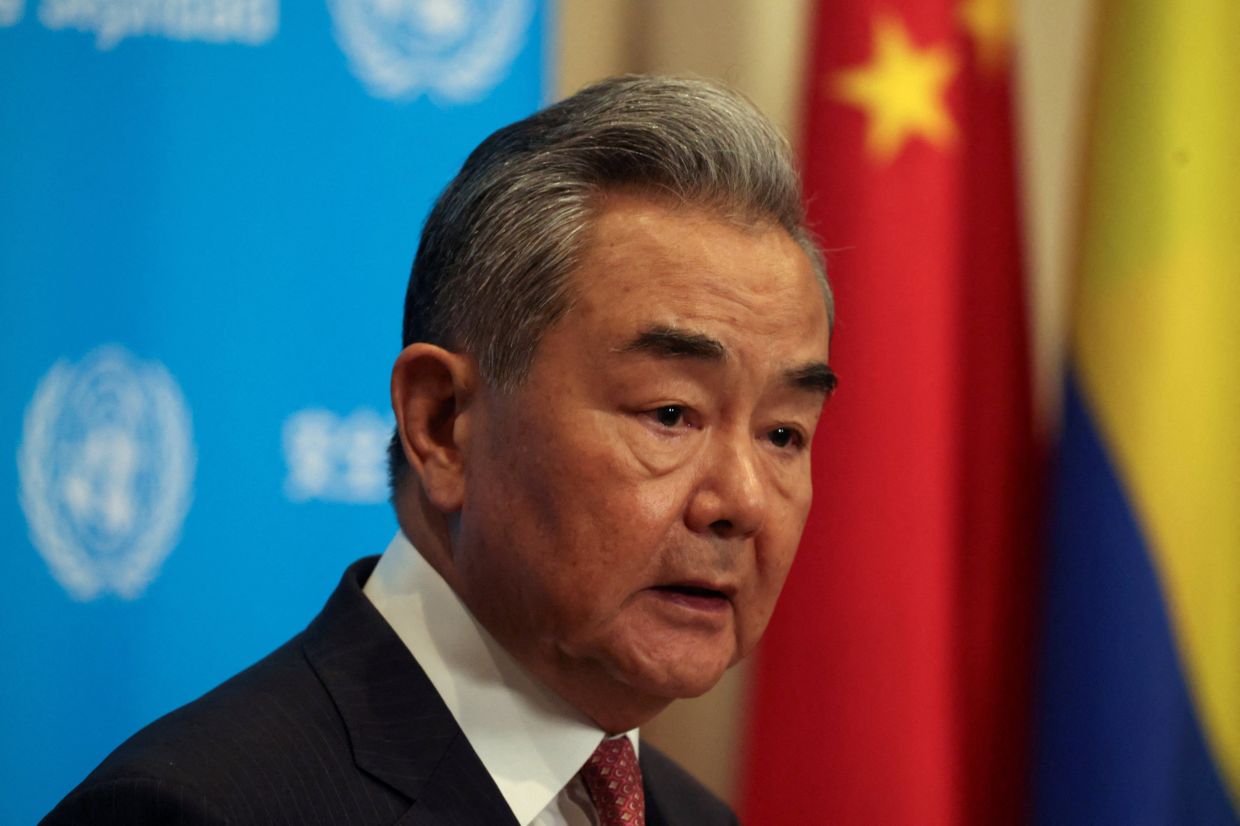
China's Foreign Minister Wang Yi delivered a pointed message to newly appointed US Secretary of State Marco Rubio this week, urging him to approach Taiwan affairs with "utmost caution" as tensions simmer between Washington and Beijing over their most sensitive geopolitical flashpoint. The Tuesday phone conversation underscored Beijing's determination to keep the Taiwan question front and centre in bilateral discussions, particularly as the Trump administration signals a more unpredictable approach to managing great-power competition.
Wang emphasised that nurturing a constructive and strategically stable relationship between the United States and China would benefit both countries as well as the broader international community. He articulated Beijing's position in measured diplomatic language, calling for the two powers to "remove interference, overcome obstacles, and stay firmly on this correct path." The remarks reflected a careful effort to set expectations for how the new US administration might handle one of the world's most volatile disputes, with Taiwan's status remaining the core disagreement between Washington and Beijing.
The Chinese Foreign Minister stressed that building genuine bilateral cooperation cannot be achieved through rhetoric alone. He insisted that tangible progress requires both sides to take concrete steps, demonstrating a willingness to move toward each other and committing to sustained diplomatic effort. This framing suggests Beijing is testing whether the Trump administration, despite its transactional approach to foreign policy, will prioritise stability with China over rhetorical or material support for Taiwan.
Wang outlined a strategic framework for managing the relationship, proposing that Washington and Beijing expand their list of collaborative areas while simultaneously addressing and containing their differences. He advocated for creating additional positive agendas that could build momentum, whilst simultaneously shortening the catalogue of contentious issues and implementing risk-management mechanisms to prevent miscalculation. This approach reflects Beijing's preference for compartmentalising disputes rather than allowing them to contaminate the entire relationship.
The timing of Wang's message carries particular significance given the recent evolution of US-China dynamics. Just weeks before this call, President Xi Jinping met with President Trump at a closely watched summit that Washington framed as a historic breakthrough. During that May encounter, Xi deliberately brought Taiwan to the forefront, warning Trump that any mishandling of the island question could spark military conflict and plunge bilateral ties into an "extremely dangerous situation." Xi's blunt language signalled that Beijing views Taiwan not as a peripheral issue but as a threshold matter that could determine whether relations improve or collapse.
The Trump administration initially presented the May summit as delivering substantial gains for American interests, releasing a fact sheet highlighting Beijing's commitment to address US concerns regarding critical supply chain vulnerabilities and semiconductor shortages. However, the subsequent weeks have revealed cracks in what was portrayed as a breakthrough arrangement. Some recent indicators suggest that underlying strains persist beneath the surface of diplomatic cordiality, raising questions about whether the summit's apparent achievements will translate into durable agreements or prove to be temporary understandings that collapse under pressure.
For Southeast Asian observers, Wang's cautionary message to Rubio carries significant implications. The region has long walked a precarious diplomatic tightrope, maintaining economic ties with China whilst preserving security relationships with the United States and its allies. A Taiwan crisis could devastate this delicate equilibrium, disrupting global trade, drawing countries into forced alignments, and potentially triggering military confrontation in contested waters that affect regional shipping and energy security. Malaysia, as a trading nation deeply integrated into global supply chains and reliant on freedom of navigation in nearby waters, has a substantial stake in US-China stability.
Rubio's appointment as Secretary of State has introduced uncertainty for Beijing. The Florida senator has historically taken harder-line positions toward China and has been vocal about supporting Taiwan, making him precisely the kind of official that Wang's warning appears designed to constrain. By laying out red lines early in Rubio's tenure, Wang is attempting to establish parameters for acceptable American behaviour before the Trump administration potentially adopts more assertive policies regarding Taiwan.
Beijing's framing of Taiwan as an internal affair and its insistence on the "One China" principle remain non-negotiable from Beijing's perspective. However, Washington's strategic commitment to Taiwan, formalised through decades of arms sales and security cooperation, creates an inherent contradiction in US policy that no amount of diplomatic messaging can fully resolve. Wang's appeal for "utmost caution" essentially asks the Trump administration to prioritise ambiguity and avoid actions that might appear as upgrading Taiwan's international status or strengthening its military defences.
The prospect of a potential Xi visit to the United States adds another layer of complexity to these negotiations. Such a trip could provide an opportunity to reset the relationship and potentially negotiate behind-the-scenes understandings on Taiwan. However, it also raises the stakes, as any perceived concessions on Taiwan during such a high-profile summit could trigger domestic political blowback in Washington and embolden Chinese hardliners who might interpret the visit as validation of more assertive policies.
For Malaysian policymakers and business leaders, the stability of US-China relations directly affects regional prosperity and security. The message from Wang Yi this week reflects Beijing's determination to prevent Taiwan from becoming a destabilising factor that derails broader cooperation on trade, climate change, and pandemic prevention. However, whether Rubio and the Trump administration will heed this caution remains an open question that will shape geopolitical trajectories across Asia for years to come.

