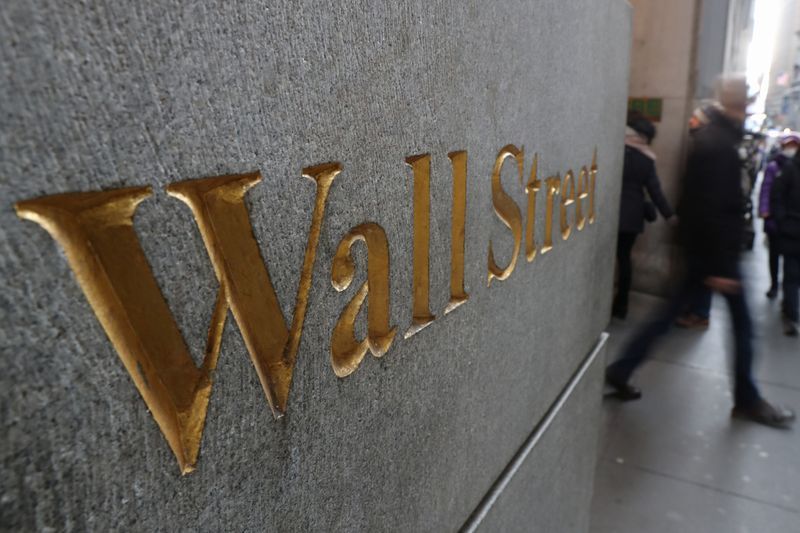
Wall Street capped off a robust opening to August with the Dow Jones Industrial Average scaling fresh record heights, propelled by expectations that easing geopolitical friction between Washington and Tehran could stabilise commodity prices and reduce economic uncertainty. The positive sentiment offered a respite from a challenging July marked by concerns about artificial intelligence trajectories, Middle Eastern conflict dynamics, and the direction of Federal Reserve monetary policy.
The catalyst for the rally centred on remarks from US President Donald Trump on Sunday suggesting that negotiations with Iran regarding reopening the Strait of Hormuz would commence the following day. Although Iran subsequently disputed whether formal talks had been arranged, the mere prospect of diplomatic engagement sufficed to trigger a sharp retreat in crude oil valuations. Prices for crude settled approximately 5% lower as traders repositioned their portfolios on the assumption that military escalation could be averted, reducing the immediate risk of supply disruptions through this critical maritime chokepoint.
The softening of oil prices cascaded through financial markets in multiple directions. Treasury yields declined alongside crude, as investors reassessed the inflation outlook and the probability of sustained economic headwinds. This dynamic created an unusual environment where earnings results, typically the dominant factor shaping equity movements during reporting seasons, competed for attention with macroeconomic signals emanating from geopolitical developments and monetary policy expectations. Market strategists noted that the traditional summer earnings narrative—where robust corporate performance allows participants to look past unsettling global dynamics—had failed to materialise this cycle, with external pressures consistently reasserting themselves.
The broader indices reflected the optimistic opening to August, with the Dow climbing 693.38 points to 53,178.41, representing a gain of 1.32%. The S&P 500 advanced 110.78 points or 1.48% to conclude at 7,600.50, while the technology-heavy Nasdaq Composite surged 540.04 points or 2.13% to reach 25,913.90. Communication services emerged as the standout performer among the 11 major sectors tracked within the S&P framework, ascending 4.3% on the strength of gains registered by Meta Platforms and Alphabet. Conversely, the energy sector retreated 1.2%, reflecting the headwind from lower oil prices that penalised traditional petroleum-focused companies even as the broader market celebrated the stability such declines implied for economic growth.
Investors' focus on the interplay between crude oil valuations and fixed-income yields underscored the precarious balance currently governing market psychology. Art Hogan, chief market strategist at B. Riley Wealth in Boston, captured this sentiment by observing that participants begin each trading session by scrutinising these twin indicators—the barrel price and the 10-year Treasury yield—using them as leading gauges for overall market health. When both decline, equities typically respond favourably; when either rises significantly, risk-off positioning tends to follow. The challenge for earnings season, Hogan noted, lay in the fact that macro disturbances refused to recede into the background, preventing the traditional relief that strong quarterly results normally provide.
Those results have nonetheless delivered impressive growth, with 304 companies in the S&P 500 having reported through Friday and posting aggregate earnings expansion of 29.3% according to LSEG data. Encouragingly, 85.2% of these reporters surpassed analyst consensus expectations, suggesting that management teams have delivered tangible operational performance rather than merely meeting depressed guidance. Amazon exemplified this strength, with shares advancing 4.6% after the e-commerce and cloud giant's market capitalisation crossed the $3 trillion threshold for the first time following last week's earnings announcement. SpaceX, Elon Musk's aerospace venture reporting its inaugural quarterly results since its mid-June initial public offering, jumped 5.6%, though the stock has remained below its $135 issue price for nearly three weeks—a cautionary note about the persistence of post-IPO volatility even amid broader market enthusiasm.
The week ahead promises additional tests of this earnings narrative, with artificial intelligence-adjacent companies including Advanced Micro Devices, SanDisk, and Western Digital scheduled to report. These results will provide further evidence regarding whether technology-sector strength can be sustained against the headwinds created by geopolitical uncertainty and evolving monetary policy expectations. Markets are currently pricing in a 64.5% probability of at least a 25 basis point rate increase at the Federal Reserve's September meeting, according to CME FedWatch, indicating that despite optimistic rhetoric from Fed officials such as New York Federal Reserve President John Williams regarding gradual inflation moderation, monetary tightening remains a live possibility if economic data deteriorates.
Meanwhile, Bristol Myers Squibb shares inched up 0.2% following reports of preliminary merger discussions with AstraZeneca that could produce one of the planet's most valuable pharmaceutical enterprises, valued near $400 billion. Hotel operator Marriott International, conversely, slumped 7% after providing third-quarter profit guidance that disappointed investor expectations, illustrating how individual corporate performance can diverge sharply from broader sectoral or market trajectories. The coming week will deliver multiple labour market readings, culminating Friday in the government employment report—a critical data point that could substantially shift expectations around Fed decision-making and thus influence equity valuations across all major indices.
Breadth indicators suggested healthy underlying momentum, with advancing issues outnumbering decliners by ratios of 2.62-to-1 on the New York Stock Exchange and 3.01-to-1 on the Nasdaq. The S&P 500 registered 15 new 52-week highs against only one fresh low, while the Nasdaq Composite posted 121 new highs alongside 96 new lows, indicating that despite concentrated strength among mega-cap technology names, participation in the rally extended across a broader swath of the market. Trading volume reached 19.36 billion shares across US exchanges, slightly elevated from the 17.66 billion average of the preceding 20 sessions, suggesting that participants engaged with conviction rather than through minimal activity. For regional investors monitoring US market dynamics, this combination of record highs, genuine earnings momentum, and geopolitical optimism—however tentative—presents a meaningful shift in sentiment that could influence cross-border capital flows and currency movements affecting Southeast Asian economies dependent on US consumer strength and investment inflows.

