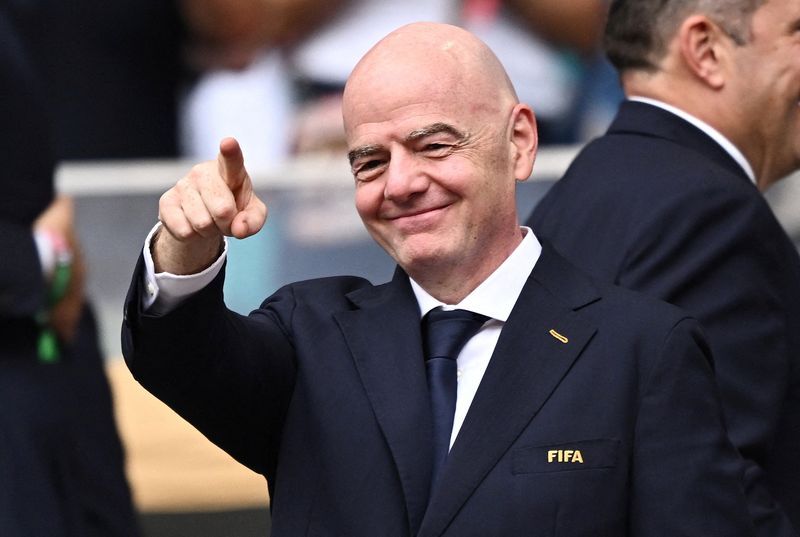
The Football Association of Wales has become the first national federation to formally withdraw its backing for FIFA President Gianni Infantino's campaign to secure another term leading world football from 2027 to 2031. The move signals deepening fractures within the global sports governing body following the dramatic collapse of an ambitious plan that would have generated up to $4.2 billion by selling roughly a 20% stake in a new commercial entity controlling major FIFA competitions, including the World Cup.
Infantino's privatisation scheme represented a radical departure from FIFA's traditional governance model. The initiative would have transferred significant control over the profitable World Cup franchise to private investors, fundamentally reshaping how football's most prestigious tournament operates commercially. The proposal faced mounting opposition from numerous stakeholders within the football community who argued the plan prioritised financial gain over the sport's traditional values and competitive integrity.
The Welsh FA's statement articulated concerns that resonate across the football landscape. In their formal withdrawal of support, the federation cited repeated failures in governance standards, internal processes, leadership decisions, values management, and stakeholder communication. The statement suggested Infantino's judgment has become compromised, declaring that the FIFA President has lost the confidence necessary to lead international football. The Welsh federation emphasised that football's interests must remain paramount, and that abandoning this principle represents a fundamental betrayal.
Infantino's position has deteriorated rapidly in recent days as major regional confederations joined Wales in expressing no confidence. Both UEFA, the European governing body, and CONCACAF, which oversees North and Central American football, announced on Saturday that they have lost faith in Infantino's leadership. UEFA, in particular, led the fierce resistance that ultimately forced FIFA to abandon the controversial privatisation scheme on Friday. The European confederation did not formally confirm media reports suggesting it may pursue legal action against FIFA regarding the failed proposal, though it has taken the significant step of issuing a document preservation order—a legal mechanism that prevents destruction of emails, files, and data in anticipation of potential investigations.
The withdrawal of support from established football nations and confederations marks a remarkable reversal for Infantino, who has enjoyed unusual stability since assuming the FIFA presidency in 2016 following Sepp Blatter's departure. Since then, the Swiss administrator has been re-elected twice without facing opposition, consolidating a seemingly unassailable position within the organisation. His control over FIFA appeared so complete that experts widely assumed his re-election for the 2027-31 term would proceed as routine administrative business.
However, the backlash surrounding the failed commercialisation plan has exposed deeper currents of dissatisfaction that were previously obscured by his electoral dominance. The scheme itself revealed significant governance vulnerabilities and raised questions about how thoroughly Infantino consulted with member federations and regional confederations before advancing such a transformative proposal. The heavy-handed approach appeared to alienate precisely the constituencies whose support would prove essential for securing re-election.
Infantino's path toward March's Congress in Morocco—the venue where his re-election bid would normally proceed—now appears considerably more complicated than anticipated. Rather than a straightforward endorsement, the Congress may become a contested arena where previously suppressed grievances surface. The Welsh withdrawal and confederation statements suggest that organised opposition movements could emerge, challenging Infantino's control for the first time since 2016.
The implications for Southeast Asian football warrant attention, particularly for Malaysia and neighbouring nations. FIFA's internal stability directly affects how international football governance operates and how competitions are structured. Uncertainty surrounding presidential leadership influences decisions about tournament hosting, qualification formats, and financial distributions to member confederations. The AFC, which oversees Asian football including Malaysia's national team, must navigate these turbulent waters carefully, potentially positioning itself within the broader confederation alignments that appear to be forming.
The failed privatisation scheme itself raises important questions about FIFA's strategic direction that extend beyond Infantino's personal future. The plan represented a fundamental shift toward corporate commercialisation of global football, with implications for how competitions are organised, when matches are scheduled, and how broadcasting rights are allocated. For Malaysian audiences and clubs, such changes could affect accessibility to football content and the competitive balance of international tournaments.
Experts suggest the controversy has fundamentally altered Infantino's political landscape within FIFA. What appeared several months ago to be an inevitable coronation now faces genuine uncertainty. The confidence crisis extends beyond parliamentary procedure; it reflects substantive disagreements about FIFA's governance philosophy and the appropriate balance between commercial interests and sporting values.
The situation remains fluid as additional member federations and confederations position themselves. The document preservation order issued by UEFA indicates serious legal preparation that could occupy FIFA's leadership with litigation risks for months ahead. Meanwhile, Infantino's ability to demonstrate renewed commitment to governance reform and stakeholder consultation may become crucial to salvaging his re-election prospects. The March Congress will ultimately determine whether the Welsh withdrawal represents the beginning of a broader exodus or merely a symbolic protest against the FIFA President's leadership approach.

