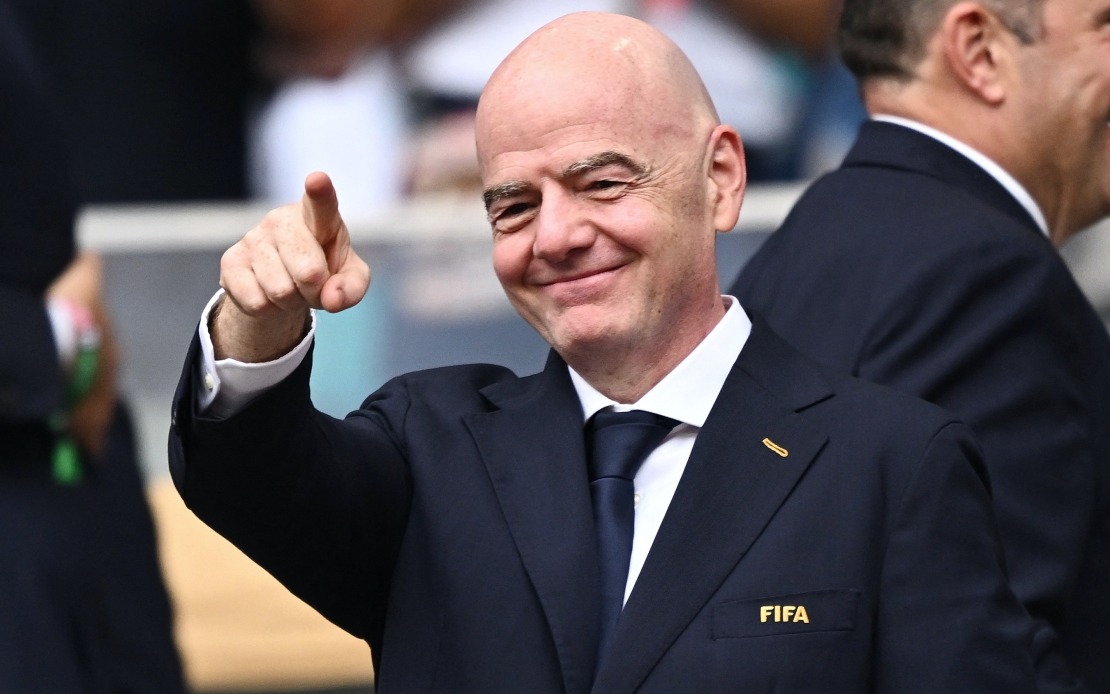
The Football Association of Wales has reversed its backing for FIFA president Gianni Infantino's forthcoming re-election campaign, marking a significant erosion of support for the football administrator. The decision comes in response to Infantino's ill-fated initiative to transform FIFA's financial structure by selling equity stakes in the World Cup tournament to private investors, a scheme that has triggered widespread condemnation across the international football community.
Infantino announced just days before the FAW's statement that he would abandon the FIFA Forward Enterprise proposal, acknowledging the substantial opposition it had generated among continental confederations. Three major football bodies had explicitly rejected the plan, yet its near-implementation has left a lasting imprint on perceptions of Infantino's stewardship. The reversal of the plan itself, however, has not arrested the momentum of criticism, as governing bodies examine the broader implications of how such a transformative proposal could have advanced so far without adequate consultation or consensus-building.
The Welsh governing body's reversal is particularly striking given that the FAW had previously indicated willingness to support Infantino's re-election campaign. In a carefully worded statement released on Monday, the organisation explained that its decision reflected accumulating concerns about governance failures, procedural breakdowns, and compromised decision-making at FIFA's highest levels. The FAW emphasised that the loss of confidence extended beyond the privatisation debacle to encompass questions about leadership competence, stakeholder engagement, and the prioritisation of football's interests over alternative agendas.
The English Football Association has similarly withdrawn its backing, with sources confirming that English officials have communicated this position directly to FIFA. England's governing body released a statement on Saturday declaring full alignment with UEFA's assessment that Infantino has forfeited the institutional confidence necessary for his continued presidency. This coordinated withdrawal of support from two major European football nations signals that Infantino faces a credibility crisis that extends well beyond regional dissent.
UEFA, European football's governing confederation, has adopted a notably strategic stance, announcing that no options should be excluded when contemplating FIFA's institutional future. This carefully crafted formulation leaves the theoretical door open for a vote of no confidence in Infantino, a procedural mechanism that would require support from just 43 FIFA member associations to trigger an Extraordinary Congress. The numbers game becomes critical here: unseating Infantino would ultimately demand backing from a majority of FIFA's 211 member nations, a threshold that remains uncertain despite the growing criticism.
CONCACAF, the confederation representing football in North America, Central America, and the Caribbean, has joined the mounting pressure by calling for a comprehensive review of Infantino's leadership. The confederation's action proves significant because CONCACAF and UEFA together represent 96 member associations, representing roughly 45 percent of FIFA's overall membership. The positioning of Victor Montagliani, CONCACAF's president and a current FIFA vice-president, has also surfaced in discussions, with sources indicating that Montagliani could potentially contest Infantino in a presidential election.
Yet the picture remains far more complicated than a simple narrative of wholesale rejection. Several continental associations, particularly those from Africa and Asia, have issued public statements of support for Infantino during the same period. Football bodies from Morocco, Egypt, and Qatar have publicly backed the FIFA president, suggesting that geographic and economic fault lines may shape the forthcoming electoral contest. These divergent positions reflect deeper splits within world football regarding development priorities, financial distribution mechanisms, and governance philosophy.
For Malaysian readers and broader Southeast Asian observers, the unfolding FIFA drama carries immediate relevance. Asian football confederations will collectively hold considerable voting power in any extraordinary congress or general assembly. How Malaysia and its regional peers navigate these contested waters will partially determine whether Infantino survives this challenge or faces removal. The episode also underscores broader questions about institutional accountability within international sports governance, touching on themes that resonate with concerns about transparency and stakeholder participation within regional sporting bodies.
The privatisation plan itself represented a fundamental reshaping of how football's premier tournament would function commercially. By seeking to inject private capital into World Cup operations, FIFA would have surrendered elements of organisational autonomy and introduced shareholders whose interests might diverge from sport's traditional values. That three confederations rejected this without the proposal gaining meaningful traction illustrates both the scheme's radical nature and the fragmented governance environment within global football administration.
Infantino's decade-long tenure as FIFA president has alternated between periods of relative stability and recurrent controversy. His administration has navigated the aftermath of systematic corruption allegations, implemented governance reforms, and shepherded football through pandemic disruption. Yet the accumulation of governance missteps, communication failures, and apparent disconnects from confederation preferences has gradually corroded institutional confidence. The privatisation initiative represents less a discrete incident than a crystallising moment that has focused ongoing concerns into concrete action.
The mechanism for challenging a FIFA president exists but remains untested in contemporary circumstances. Triggering an extraordinary congress requires a coalition of 43 associations willing to formally express no confidence. Whether such a coalition can form depends upon political consolidation across continents with distinct interests. Should removal efforts materialise, the contest for succession would introduce additional complications, potentially including Montagliani's candidacy and forcing existing FIFA member associations to consider leadership alternatives.
The coming months will demonstrate whether the withdrawal of support from Wales, England, and the European confederation represents the opening phase of a structured challenge to Infantino's presidency, or merely an expression of institutional displeasure that falls short of organisational mobilisation for change. The resolution of this question will determine not merely FIFA's future leadership but also signal whether international sports governance can effectively respond to perceived institutional failures.

