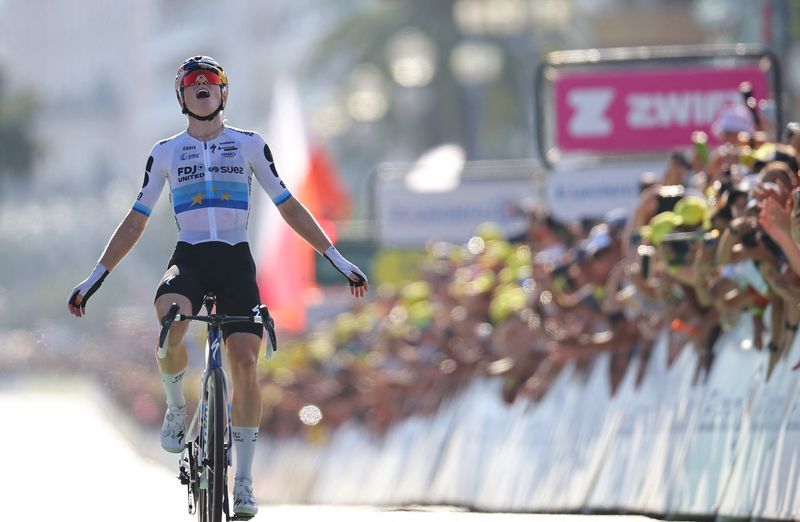
Demi Vollering of the Netherlands has seized control of the 2026 Tour de France Femmes, claiming the coveted yellow jersey following a commanding display on the race's penultimate stage. The FDJ United-Suez rider's victory on Saturday's gruelling 171.9-kilometre mountain stage from Sisteron to Nice has fundamentally reshaped the overall classification with just one day of racing remaining, injecting dramatic tension into what had been a relatively settled competition.
The stage itself proved consequential from its outset. Defending champion Pauline Ferrand-Prevot of Visma-Lease a Bike withdrew before racing began due to illness, immediately altering the complexion of the contest and removing one of the most accomplished competitors from contention on the race's closing stages. This development meant the focus shifted entirely to the remaining contenders battling for supremacy over the challenging Alpine terrain.
Vollering's tactical execution on the road proved decisive and well-timed. The Dutch cyclist launched her decisive attack on the steep Chemin de l'Arieta climb with six kilometres separating her from the finish line, a moment of acceleration that proved too demanding for her immediate rivals. Her surge cleared both the race leader Kasia Niewiadoma-Phinney and Italy's Elisa Longo Borghini, establishing a meaningful advantage that she subsequently protected through the technical descent into Nice. The victory represented a remarkable recovery from the previous day's setback, when Niewiadoma-Phinney had inflicted serious damage on Mont Ventoux, depositing Vollering one minute and 16 seconds down the classification.
Longo Borghini's strong finish secured the podium honours, as the UAE Team ADQ rider demonstrated her climbing credentials by edging Niewiadoma-Phinney in the final sprint. The Polish-Canadian competitor's relinquishment of the yellow jersey marked a significant psychological blow after she had controlled the race during its middle stages. However, her position remains precarious heading into Sunday's finale around Nice, situated just eight seconds behind the newly crowned leader.
Vollering's ascension to the lead marked her fifth occasion wearing the yellow jersey throughout this Tour de France Femmes edition, making her the fifth different rider to occupy the race leadership across the 2026 edition. This statistic underscores the competitive nature of modern women's professional cycling and the tightly bunched quality of the field competing at this elite level. Her philosophical response to the dramatic reversal of fortune demonstrated the mental resilience required at the sport's highest echelon, acknowledging that stage racing demands constant psychological recalibration and the ability to discard previous disappointments.
The tactical dispute that emerged in the aftermath of the stage added a controversial dimension to proceedings. Niewiadoma-Phinney levelled serious accusations against FDJ United-Suez's conduct during the Chemin de l'Arieta climb, alleging that teammate Celia Gery had deliberately blocked her against the barriers, forcing an interruption to her pedalling rhythm at a critical moment. Such positioning tactics, while operating within the technical rules of cycling, generated substantial debate within the professional peloton regarding the appropriate boundaries of competitive behaviour and fair play expectations. Niewiadoma-Phinney's frustration was palpable, with the rider expressing disappointment at what she characterized as unsportsmanlike conduct from rivals employing such methods.
The eight-second advantage that Vollering carries into Sunday's conclusion provides a buffer, yet the final stage around Nice remains unpredictable and theoretically capable of producing dramatic reversals. The topography and technical characteristics of the concluding route could favour attackers or defensive formations, while bonus seconds available at intermediate points and the finish line remain capable of reshaping the overall standings. Vollering's acknowledgment that anything remains possible on the race's final day reflected genuine uncertainty, even as she expressed satisfaction at launching the finale in the race leader's position.
For Southeast Asian cycling enthusiasts and Malaysian observers, this Tour de France Femmes contest exemplifies the increasing professionalization and competitiveness of women's professional cycling, dimensions that remain less visible in regional sporting consciousness compared to men's racing. The individual talents on display, the tactical sophistication deployed by professional teams, and the dramatic reversals occurring across successive stages mirror the complexity inherent in elite cycling competition. Vollering's trajectory from disappointment to leadership within consecutive days encapsulates the sport's unpredictable character.
The final stage scheduled for Sunday will determine whether Vollering can successfully defend her slender advantage or whether Niewiadoma-Phinney and other contenders can orchestrate a comeback. The race's conclusion remains genuinely competitive, with multiple permutations capable of producing alternative winners depending on circumstance, individual performance, and tactical execution. The dramatic stage eight outcome has established conditions for a compelling finale that will likely retain significant international sporting attention.

