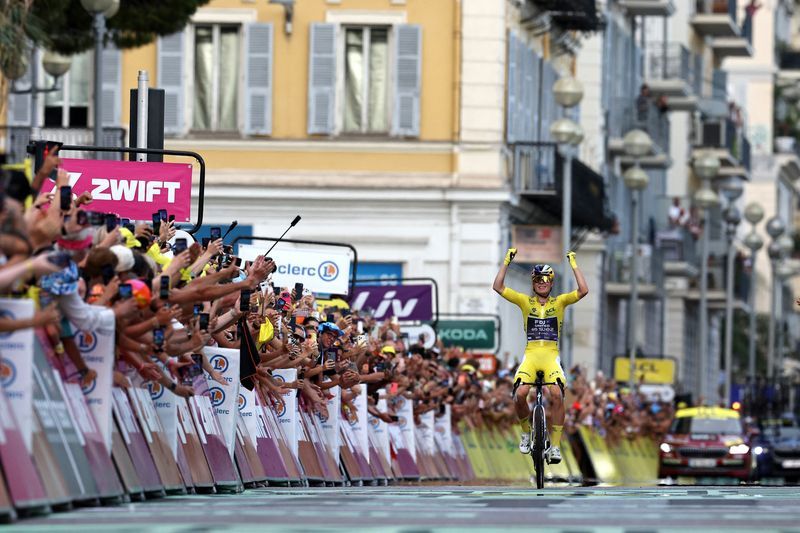
Demi Vollering has etched her name deeper into cycling history by clinching her second Tour de France Femmes title, the 29-year-old Dutch rider from FDJ-Suez delivering a masterclass display on the final stage near Nice on Sunday. Coming into the concluding 99.2-kilometre circuit, Vollering held a slender eight-second buffer over Poland's Katarzyna Niewiadoma-Phinney, but she erased any doubt about her superiority by unleashing a devastating attack on the Col d'Eze's ultimate climb to surge across the finish line in Nice with authority.
The victory represents another significant achievement for a cyclist widely acknowledged as among the most complete and accomplished of her generation. Beyond this second Tour triumph, Vollering's palmares showcase remarkable consistency across cycling's grand tours—she won the 2023 Tour de France Femmes, captured the 2026 Giro d'Italia Women, and secured back-to-back La Vuelta Femenina titles in 2024 and 2025. This layering of accomplishments demonstrates a rare ability to excel across diverse terrain and race formats, qualities that distinguish the sport's elite performers from their peers.
The psychological weight of winning in the yellow jersey appeared to loom large in Vollering's mind as she navigated the final stage. Speaking immediately after her victory, she acknowledged that carrying the leader's jersey to the finish line had never been accomplished by her previously, and this narrative tension seemingly fuelled her determination on the closing climb. Rather than managing her lead conservatively, Vollering chose to attack decisively, a tactical choice that reflected both confidence and an appetite for validation—cementing her dominance through an indisputable final performance.
Vollering's reflections on her achievement transcended the mechanics of racing, instead framing her victory as a collective accomplishment rooted in team camaraderie and shared purpose. She referenced Celia Gery's difficult night before the stage, suggesting the emotional and physical toll that grand tour cycling exacts across an entire support structure. By articulating gratitude toward the people behind her and emphasising the value of collective effort driven by passion, Vollering offered insight into the professional infrastructure that enables success at sport's highest level—a perspective that resonates across team-oriented disciplines.
The final general classification margin of 1 minute and 18 seconds over Niewiadoma-Phinney underscored Vollering's comprehensive mastery of the 2025 edition. This decisive advantage meant that despite Niewiadoma-Phinney's competitive performance throughout the three weeks of racing, Vollering had constructed an unassailable buffer through superior climbing, tactical acumen, and consistency across the race's varied stages. Italy's Elisa Longo Borghini secured the final podium position, rounding out the top three and adding another strong performance to her increasingly impressive grand tour record.
On the decisive final stage itself, Spain's Paula Blasi mounted the strongest challenge to Vollering's dominance, finishing second, 1 minute and 4 seconds adrift. Niewiadoma-Phinney crossed the line in third place on the stage, a result that reflected her inability to match Vollering's explosive acceleration on the Col d'Eze. This third-place finish on the final climb, though respectable, nonetheless crystallised the narrative arc of the race—Vollering had proved the stronger rider when the stakes reached their zenith.
Vollering's haul of three stage victories during this edition, combined with six stage wins across all her Tour de France Femmes participations, illustrates a rider capable of excelling in varied scenarios rather than relying solely on general classification strength. Her ability to win stages whilst protecting an overall lead represents a rare skill set, one that separates true champions from capable cyclists. The capacity to attack and finish stages while simultaneously managing general classification pressure demands both physical prowess and tactical sophistication.
This triumph arrives in a context where women's professional cycling continues its trajectory of expanding global prominence and investment. The Tour de France Femmes, resurrected in 2022 after a 33-year absence from the race calendar, has rapidly established itself as the sport's marquee event. Vollering's back-to-back dominance—combined with previous years' competition—has helped solidify the race's credibility and appeal to international audiences, contributing to the broader elevation of women's cycling's profile in the sporting calendar.
The contrast between Vollering's steady excellence across multiple disciplines and recent men's cycling achievements provides additional context for understanding contemporary grand tour racing. In July, Slovenia's Tadej Pogacar claimed a record-equalling fifth Tour de France title, securing an unprecedented third consecutive triumph in cycling's most prestigious event. While Pogacar's masculine dominance has captivated cycling media, Vollering's dual Tour victories across different seasons and her multi-grand-tour success arguably represent equally impressive consistency—demonstrating that elite cycling performance transcends gender categorisation.
Looking forward, Vollering's trajectory suggests she remains positioned to accumulate further accolades across the remaining years of her competitive career. At 29 years old, she sits comfortably within her professional prime, with potentially another half-decade of world-class competition ahead. Whether she can extend her Tour de France Femmes tally beyond two titles, or cement further grand tour victories across other events, will substantially influence how future generations regard her place within cycling's pantheon of greats. For Southeast Asian cycling enthusiasts and professional cyclists aspiring to international competitiveness, Vollering's methodical approach to building a comprehensive palmares—rather than chasing singular marquee victories—offers a instructive template for sustained excellence.

