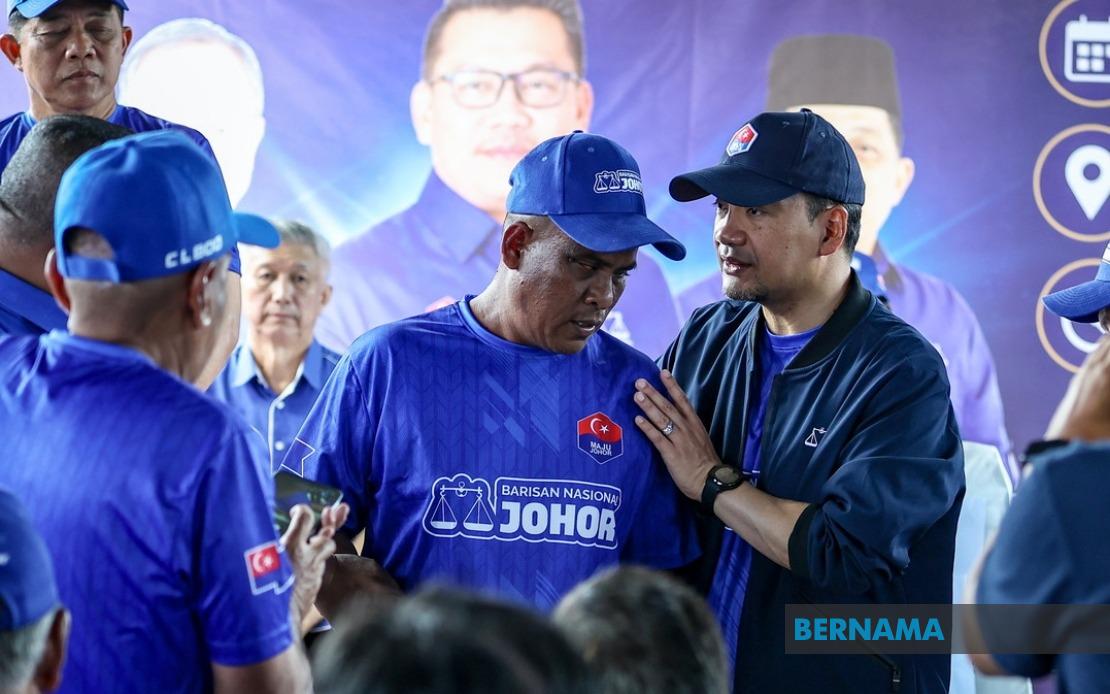
Mohd Hairol Leman has spent 46 years navigating a world of complete darkness, yet this fundamental physical limitation has never deterred him from exercising one of democracy's most cherished rights. The Kampung Sri Pantai resident is preparing to cast his sixth vote in the upcoming Johor State Election on July 11, a milestone that underscores the resilience of citizens determined to participate in shaping their state's political future regardless of personal circumstances.
Since casting his first ballot during the 12th General Election in 2008, Mohd Hairol has maintained an impeccable voting record across successive state and federal elections. His unwavering participation demonstrates a philosophical commitment to democracy that transcends the practical challenges many would consider insurmountable. For this visually impaired Malaysian, voting represents far more than a civic obligation—it embodies a sacred responsibility that no citizen should take for granted or abandon.
Born without sight, Mohd Hairol's journey through the electoral process has required the cooperation and goodwill of Election Commission officials who facilitate his participation at polling stations. Rather than viewing this assistance as a burden, he characterizes it as enabling infrastructure that allows him to exercise his fundamental rights as a Malaysian citizen. The availability of such support mechanisms reflects evolving recognition that democracy's accessibility cannot be predicated on physical ability.
The beneficiary of programmes administered by the Department of Social Welfare and the Johor State Islamic Religious Council's Baitulmal scheme, Mohd Hairol harbours deep gratitude for leaders whose policies have translated into tangible assistance for vulnerable communities. His motivation to vote stems partly from recognizing that electoral choices directly influence the calibre of governance and the welfare provisions available to marginalised segments of society. By participating in elections, he contributes to determining whether leaders will maintain commitment to supporting people like himself.
Mohd Hairol's enthusiasm for the upcoming contest reflects broader implications for Malaysia's democratic maturity. The 16th Johor State Election will see 172 candidates competing for 56 State Legislative Assembly seats, with polling scheduled for July 11 following early voting on July 7. This electoral exercise offers Malaysian voters across all demographics—including persons with disabilities—an opportunity to influence the direction of their state through legitimate democratic means.
The inclusive framework permitting visually impaired citizens to vote independently, with official assistance, represents practical acknowledgment that disability should not constitute grounds for disenfranchisement. Malaysia's electoral system, by accommodating voters like Mohd Hairol, sends an important message: that every adult citizen's voice merits equal weight regardless of physical circumstances. This approach strengthens democratic legitimacy by ensuring broader segments of the population can meaningfully participate in selecting representatives.
For persons with disabilities throughout Malaysia and Southeast Asia, Mohd Hairol's example carries particular resonance. His consistent voting pattern over sixteen years demonstrates that accessibility barriers, though real, need not extinguish civic engagement. Where institutional support exists—as embodied by the Election Commission's assistance protocols—individuals with significant impairments can exercise political agency on equal footing with able-bodied counterparts. This normalisation of inclusive electoral participation gradually shifts cultural perceptions regarding disability and citizenship.
Mohd Hairol's anticipated participation in July's election also reflects appreciative recognition of welfare provisions extended by successive administrations. His gratitude toward past leaders motivates continued engagement with the electoral process, recognizing that voting constitutes his mechanism for endorsing or withdrawing support for political actors. This transactional understanding of democratic responsibility—where electoral participation becomes a vehicle for expressing appreciation or demanding accountability—represents sophisticated citizenship.
The timing of his statement during the Barisan Nasional briefing session in Batu Pahat underscores how persons with disabilities increasingly feature in electoral discourse across Malaysia. Rather than remaining invisible beneficiaries of government programmes, individuals like Mohd Hairol actively articulate their perspectives on governance and leadership quality. Their presence in electoral conversations expands the policy conversation beyond conventional political demographics.
As Malaysia navigates evolving discussions around inclusive governance and universal participation, Mohd Hairol's unwavering commitment to voting despite navigating the world without sight offers a powerful counternarrative to assumptions that disability necessitates political disengagement. His expectation to cast his ballot on July 11 represents not extraordinary perseverance but rather the ordinary expression of democratic citizenship—a reminder that inclusive systems create possibilities for broader participation, ultimately enriching democratic processes through expanded representation and legitimacy.

