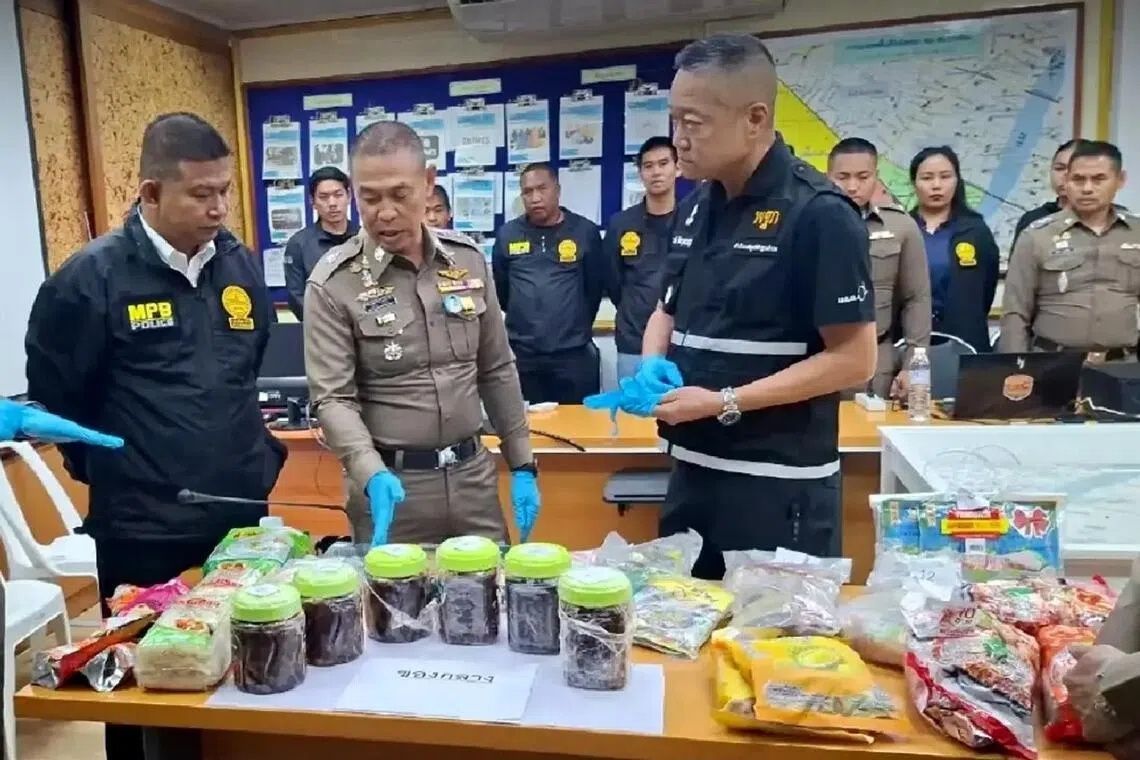
Bangkok's Metropolitan Police Bureau has exposed a sophisticated drug smuggling network operated by Vietnamese nationals that strategically used Thailand as a transit hub to move crystal methamphetamine into Japan. The operation, revealed on July 17 following interrogations connected to a suspect named Sompong, demonstrates the evolving complexity of Southeast Asian narcotics trafficking—particularly how criminal organisations exploit regional supply chains and unwitting couriers to move illegal substances across borders. The discovery underscores Thailand's continuing vulnerability as a transshipment corridor for drugs destined for East Asian markets, where methamphetamine commands premium prices.
According to police lieutenant-general Siam Boonsom and major general Chaiya Phetpanya of the Metropolitan Police Division 7, the case unravelled after an international courier became suspicious of shipment contents during early July. The courier, tasked with transporting jars purportedly containing tamarind paste to Tokyo, noticed the containers weighed substantially more than expected for their stated contents. Rather than proceeding with delivery, the courier alerted authorities, enabling investigators from Bang Yi Khan Police Station to intercept the shipment and examine its contents.
Upon opening the tamarind jars, police discovered six tightly wrapped foil packages nestled within the paste. Laboratory analysis confirmed the packages held more than two kilograms of crystal methamphetamine, colloquially known as ice on regional drug markets. The discovery revealed a deceptively simple yet effective concealment method—one that exploited the dense consistency of tamarind paste to obscure the contraband's presence during routine border inspections. This technique reflects how traffickers continuously adapt their methods in response to law enforcement capabilities, using common food items and legitimate export pathways to evade detection.
Detailed investigation traced the operation's architecture to a hierarchical structure centred on Vietnam. Intelligence suggested that a senior organiser based in Hanoi orchestrated the entire scheme remotely, directing subordinates stationed throughout Thailand. The network deliberately fragmented operational responsibilities across multiple jurisdictions and individuals to create distance between command authority and physical movement of narcotics. Anonymous Facebook accounts served as the primary communication medium, enabling organisers to recruit delivery riders through untraceable digital channels. These riders collected packages from safe houses occupied by Vietnamese nationals scattered across Bangkok and surrounding provinces.
The layered distribution system reflected sophisticated understanding of law enforcement investigative methods. Hired riders transported goods to separate Thai couriers, who then carried the shipments across international borders. By inserting Thai nationals into the supply chain's midpoint, organisers calculated they could obstruct any direct evidentiary links connecting Vietnamese operators to the final product reaching international markets. This compartmentalisation strategy—whereby no single individual possessed complete knowledge of the operation—represented standard practice among major trafficking networks seeking to insulate leadership from direct criminal liability.
Financial investigation proved instrumental in mapping the conspiracy's scope. Authorities discovered that operational expenses and courier payments flowed through a bank account registered to Sompong, the arrested Thai suspect. Vietnamese associates made repeated cash withdrawals between 20,000 and 50,000 baht, systematically extracting funds before returning to Vietnam. This pattern suggested deliberate risk management—spreading withdrawal activities across multiple individuals and limiting exposure duration within Thailand to minimize arrest probability. The financial trail, though fragmented, provided crucial evidence of ongoing coordination between Vietnam-based masterminds and in-country operatives.
Based on accumulated intelligence and documentary evidence, police concluded that at least four principal figures orchestrated various aspects of the trafficking operation. Arrest warrants have been issued for Sompong and three Vietnamese nationals suspected of withdrawing money, managing social media recruitment channels, or directing operational components. However, Sompong has publicly denied all allegations, and investigators are pursuing additional leads. Police also suspect Sompong's girlfriend may have possessed knowledge of the operation, though she was not initially named in warrant applications. Authorities continue examining whether she warranted formal charges or charges as an accessory.
This case exemplifies broader regional trafficking challenges that implicate Southeast Asian cooperation frameworks. Vietnam has emerged as a major methamphetamine production hub, leveraging precursor chemical access and established networks to manufacture product destined for lucrative East Asian markets. Thailand's geographic position—offering multiple border crossings, developed transportation infrastructure, and established corruption vulnerabilities—makes it an attractive transit jurisdiction. Japan represents a particularly valuable destination market, where methamphetamine consumption remains concentrated among specific demographic groups and commands markedly higher street prices than Southeast Asian markets, justifying the risks of international smuggling operations.
For Malaysian readers and policymakers, this bust carries instructive implications. While the operation specifically targeted the Japan route via Thailand, similar networks likely function using Malaysian territory and ports as alternative transit corridors. Malaysia's own position as a regional transport and logistics centre, combined with its multiple deep-water ports and air cargo facilities, creates comparable vulnerabilities. The case demonstrates how Vietnamese trafficking organisations exploit Southeast Asian infrastructure systematically, suggesting Malaysian authorities should heighten vigilance regarding concealment techniques using food products and other legitimate cargo categories. Enhanced cooperation with Thai counterparts and intelligence sharing regarding Vietnamese syndicate operations would strengthen regional interdiction capacity.
The case also highlights evolving recruitment methodologies targeting international couriers and logistics workers. The initial suspect's decision to verify suspicious cargo—potentially saving his own legal exposure—represents vigilance that authorities hope more transport workers will emulate across the region. However, the prevalence of economically vulnerable individuals willing to transport undeclared goods for modest compensation ensures that traffickers will continue securing personnel willing to shoulder smuggling risks. Addressing this vulnerability requires coordinated regional campaigns educating potential couriers about legal consequences and cultivating reporting mechanisms that protect informants from reprisals. As Southeast Asian nations continue intercepting larger individual shipments, intelligence suggests trafficking organisations are responding by increasing shipment frequency rather than reducing overall volumes—necessitating sustained, coordinated enforcement pressure across all regional transit hubs.

