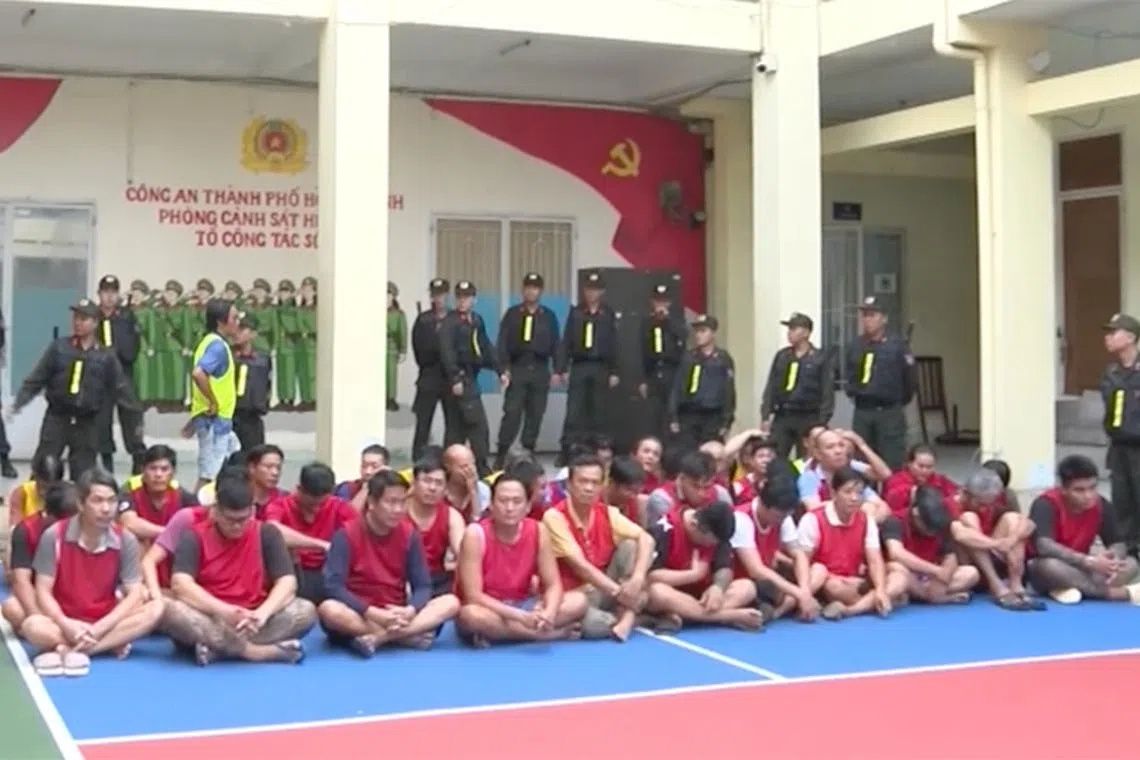
Vietnamese police have brought down two enormous underground gambling rings worth a combined US$133 million, arresting 85 individuals in a major enforcement operation announced on Tuesday. The dismantling of these exceptionally well-organised betting networks underscores the persistent challenge authorities face in controlling illegal gambling, particularly when major sporting events like the World Cup attract heavy wagering from punters across the region.
The raids, executed in late June, targeted criminal operations that demonstrated sophisticated hierarchical structures and disciplined control mechanisms designed to evade detection. According to a statement from Ho Chi Minh City police, the rings had processed an estimated US$133 million in illicit betting transactions since October 2025, suggesting these were not small-scale underground ventures but rather substantial criminal enterprises with multiple layers of organisation and substantial financial throughput.
Online gambling remains strictly prohibited throughout Vietnam under the communist government's regulatory framework, yet demand for betting services—particularly during international sporting competitions—has created fertile ground for organised criminal networks. These syndicates operate with increasing sophistication, leveraging digital platforms and layered account structures to obscure the flow of money and shield their operations from law enforcement scrutiny. The scale of activity documented in these two rings illustrates how lucrative such operations have become in a country of nearly 100 million people where legitimate gambling outlets are severely restricted.
The operational methodology employed by these criminal organisations reveals a well-developed cross-border dimension to the illegal gambling trade in Southeast Asia. Investigators discovered that ring leaders were receiving what they termed "master-level betting accounts" sourced from individuals operating in Cambodia, then subdividing these parent accounts into numerous subsidiary accounts for agents and individual gamblers to use online. This tiered system provides multiple layers of insulation between the ultimate organisers and the end users, making it considerably more difficult for authorities to trace illicit funds back to their source.
The broader enforcement picture demonstrates Vietnam's sustained commitment to disrupting underground gambling ahead of the 2026 World Cup tournament. Police data released by the public security ministry indicated that over the initial three-week period of the tournament, officers had dismantled 73 separate gambling operations nationwide and arrested 346 suspects involved in various forms of illegal wagering and football betting. These figures suggest the two major rings were part of a wider ecosystem of underground gambling activity flourishing during the World Cup period.
Colonel Bui Tuan Anh of Vietnam's public security ministry noted that the total transaction volumes flowing through the 73 operations exceeded hundreds of millions of dollars, translating to thousands of billions of Vietnamese dong. Such figures illustrate the massive scale of capital circulating through underground gambling networks in Vietnam, highlighting how these illegal operations represent not mere entertainment ventures but genuine threats to financial control and potential conduits for money laundering and organised crime.
For Malaysian observers and regional analysts, Vietnam's gambling enforcement campaign offers instructive lessons about the challenges Southeast Asian nations face in combating underground gaming networks. Malaysia, Thailand, and other regional countries maintain similarly strict prohibitions on online gambling, yet similar networks operate across the region's borders, often interconnected through transnational criminal syndicates that exploit porous digital boundaries. The Cambodia-sourced accounts identified in this case exemplify how organised gambling leverages neighbouring jurisdictions with different regulatory environments.
The decision to intensify enforcement during the World Cup reflects a broader recognition among Vietnamese authorities that major international sporting events create predictable surges in gambling demand. Rather than attempting to suppress demand altogether—an approach unlikely to succeed—law enforcement focuses resources during these high-stakes periods to dismantle the largest and most visible operations. This seasonal enforcement model, while not eliminating underground gambling entirely, attempts to disrupt the most organised and lucrative syndicates when their activity peaks.
The 2026 World Cup, hosted across Canada, Mexico, and the United States with the final scheduled for July 19, will likely trigger similar enforcement campaigns throughout Southeast Asia. For Vietnam and its neighbours, the tournament represents both an opportunity to demonstrate governance capacity through successful law enforcement operations and a challenge in managing the anticipated surge in illegal betting activity. The sophistication displayed by the two rings now dismantled suggests that future enforcement operations will need to target increasingly complex organisational structures and transnational financial arrangements.
Beyond the immediate enforcement success, the Vietnamese operation raises questions about the sustainability of prohibition-based approaches to gambling regulation in economically developing nations where demand for betting services persists despite legal restrictions. The continuous emergence of well-capitalised criminal operations suggests that interdiction alone may be insufficient without complementary policies addressing the underlying demand for gambling services and the economic incentives driving both operators and end users toward illegal platforms.

