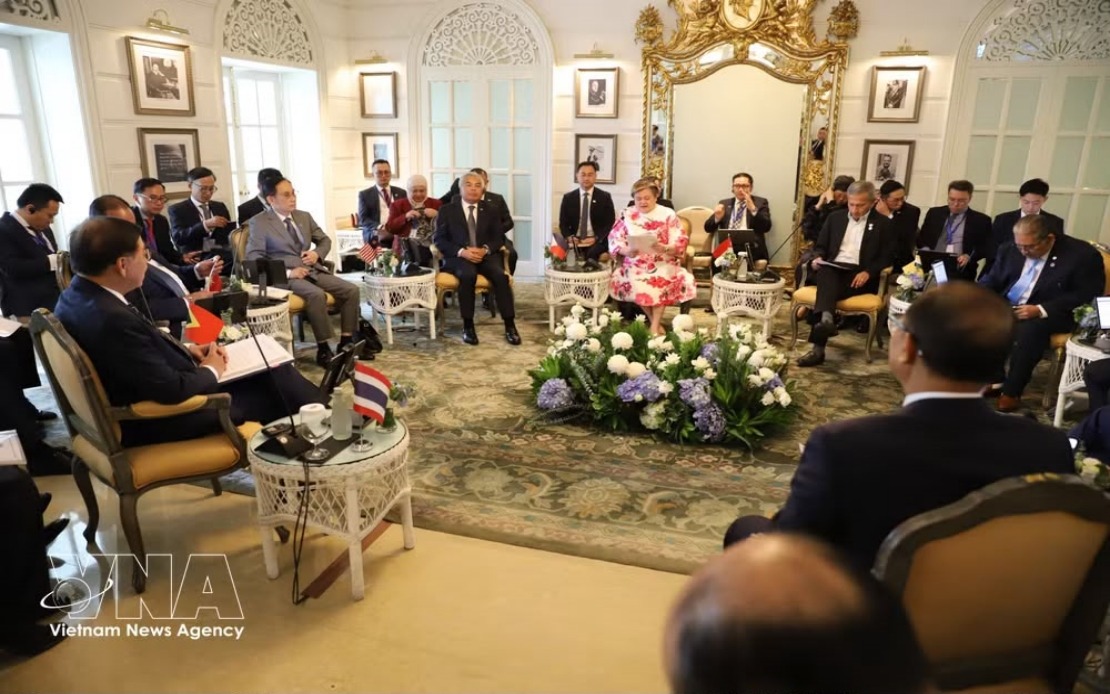
Vietnam has reaffirmed its commitment to supporting Myanmar through ASEAN's established diplomatic framework, signalling the bloc's continued engagement with the Myanmar administration despite years of political turbulence. Vietnamese Foreign Minister Le Hoai Trung made the declaration at a significant informal gathering of ASEAN foreign ministers and their Myanmar counterpart in Bangkok on July 12, underscoring Hanoi's position that Myanmar remains an integral member of the ten-nation association.
The meeting, convened under the Philippine chairmanship as Manila prepares to assume the rotating ASEAN leadership in 2026, represented the first in-person diplomatic engagement at ministerial level between ASEAN as a bloc and Myanmar's current administration since 2021, when the military seized power. This development holds particular importance for regional stability, as it demonstrates the association's determination to maintain channels of communication with Myanmar despite the military coup and subsequent internal conflicts that have destabilised the country.
Trung acknowledged the concrete steps taken by Myanmar's authorities in recent months to address fundamental governance challenges, pointing specifically to initiatives aimed at economic revitalisation, political stabilisation, and institutional strengthening. He noted with approval efforts to combat transnational organised crime networks, particularly the narcotics trafficking operations that plague the Myanmar-Laos-Thailand region and destabilise communities across Southeast Asia. The minister also referenced improvements in border security and control, a matter of regional concern given Myanmar's geographical position straddling sensitive corridors through which illicit goods flow northward and eastward.
The cornerstone of Vietnam's approach remains the Five-Point Consensus, ASEAN's diplomatic framework adopted in 2021 to guide the bloc's response to Myanmar's crisis. This framework emphasises dialogue, non-interference, and Myanmar-led solutions rather than external intervention, reflecting ASEAN's traditional commitment to national sovereignty and non-confrontational diplomacy. Trung stressed that while this consensus provides important guidelines, ASEAN must evolve its strategy by implementing more substantive and practical measures to facilitate tangible progress toward lasting peace and national reconciliation.
A key element of Vietnam's proposed approach centres on sustained engagement and regular dialogue with Myanmar's administration. Rather than adopting isolationist or punitive measures, Hanoi advocates for consistent, direct communication channels that allow ASEAN to remain informed about developments on the ground and provide constructive support. This philosophy reflects broader Southeast Asian sensitivities about external pressure, which many regional governments view as counterproductive to achieving indigenous solutions to Myanmar's complex challenges.
Vietnam has signalled its readiness to collaborate closely with the incoming Philippine ASEAN chair and other member states to address Myanmar's immediate economic needs. The country faces severe fiscal constraints and a collapsing currency following years of conflict and international sanctions, creating humanitarian pressures that could destabilise the entire subregion. Economic recovery efforts represent a pragmatic avenue through which ASEAN can provide meaningful assistance while respecting Myanmar's political autonomy and encouraging gradual institutional improvements.
The Bangkok meeting also received detailed briefings from Myanmar Foreign Minister Tin Maung Swe regarding recent policy initiatives, including a ambitious 100-day development plan designed to demonstrate governmental capacity for delivering services and addressing citizen welfare. These announcements signal Myanmar's administration is attempting to demonstrate competence in governance beyond military operations, a necessary precursor to eventual normalisation of international relations and potential sanctions relief that could accelerate economic recovery.
ASEAN foreign ministers engaged in frank discussions about coordinating their approach to Myanmar, moving beyond general statements of principle toward identifying specific mechanisms for effective support. The dialogue reflected growing recognition within the bloc that maintaining Myanmar's stability serves the collective interests of Southeast Asia, as prolonged instability risks generating refugee flows, cross-border security incidents, and economic disruptions affecting neighbouring countries including Thailand and Laos.
For Malaysia and other ASEAN members, this Vietnamese initiative carries implications for the association's future relevance and unity. ASEAN faces persistent questions about its ability to influence major geopolitical events in its own neighbourhood, with some critics arguing the bloc's consensus-based diplomacy has proven ineffectual in addressing Myanmar's crisis. Vietnam's call for deeper engagement and more concrete measures suggests an attempt to revitalise ASEAN's Myanmar policy with practical steps rather than symbolic gestures, potentially strengthening the bloc's credibility as a force for regional stability.
The meeting also reflected ASEAN's commitment to maintaining Myanmar within its institutional orbit rather than ceding influence to extra-regional powers. As China and India compete for influence in Myanmar, ASEAN's sustained engagement serves to preserve space for Southeast Asian voices in determining Myanmar's trajectory. Vietnam's proactive stance in championing Myanmar's cause within ASEAN helps counterbalance any perception that the bloc has abandoned the country or permitted external powers to dominate its affairs.
Longer-term peace and national reconciliation in Myanmar require addressing deeper grievances between the military administration and diverse ethnic groups, many of whom control substantial territory and maintain independent armed forces. ASEAN's approach, as articulated by Vietnam, emphasises facilitating dialogue among all relevant parties rather than attempting to impose solutions. This reflects the bloc's recognition that durable peace must emerge from negotiated settlements that address legitimate aspirations for autonomy and representation among Myanmar's diverse populations.
Vietnam's commitment also encompasses support for efforts to combat transnational crimes that extend beyond Myanmar's borders, creating externalities that affect broader Southeast Asian security. Drug trafficking networks operating in border regions generate violence and addiction problems throughout the subregion, while cybercrime syndicates based in Myanmar increasingly target businesses and financial institutions across Southeast Asia. By helping Myanmar strengthen its capacity to control these illicit activities, ASEAN advances its own security interests while supporting Myanmar's development.
As ASEAN moves forward under Philippine leadership in 2026, the momentum generated by this high-level engagement with Myanmar offers an opportunity to develop more substantive frameworks for regional cooperation. Vietnam's willingness to position itself as a champion for Myanmar's reintegration into the regional economic and political order could establish templates for how ASEAN addresses future crises involving member states, setting precedents for balancing principled diplomacy with pragmatic engagement.

