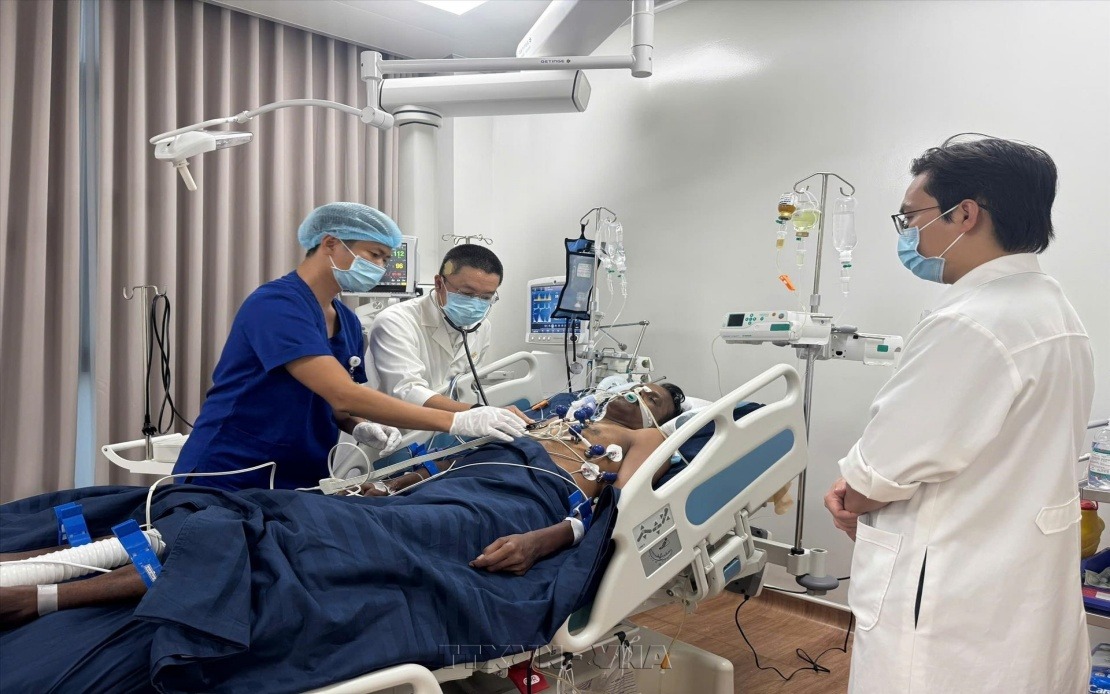
A tragic maritime incident in Vietnam's Mekong Delta has triggered a comprehensive emergency response, with authorities in the Phu Quoc Special Zone of An Giang Province mobilising all available resources to treat Indian tourists injured in a speedboat accident on July 11. The incident underscores the vulnerabilities of high-speed maritime transport in Southeast Asian tourist destinations and the regional medical infrastructure's capacity to respond to mass casualty events.
Upon receiving notification of the accident, Sun Group International Hospital declared a full emergency activation, initiating what is known in medical terminology as a "code red" protocol. The hospital's response was immediate and coordinated, with ambulances dispatched to the scene and specialised rescue teams deployed to assist those in distress. This swift mobilisation reflects established disaster management protocols that have become increasingly important as tourism expands across Vietnam's coastal regions.
The medical intervention proved decisive in several cases. Two critically injured patients who initially presented with life-threatening conditions underwent nearly two hours of continuous resuscitation efforts. Medical teams successfully stabilised both patients, who were subsequently transferred to the intensive care unit where they regained consciousness and maintained stable vital signs. This outcome demonstrates the importance of rapid advanced life support in trauma situations where every minute significantly impacts patient survival rates.
By early evening on July 11, the hospital had received 15 additional victims, all conscious and able to communicate. These patients underwent comprehensive medical evaluations including trauma screening and initial treatment protocols to prevent secondary complications. The triage system allowed medical staff to prioritise cases while ensuring all injured persons received appropriate care within the facility's capacity.
Dr. Nguyen Quang Thang, who directs Sun Group International Hospital, identified particular challenges faced during treatment. Two admitted patients developed severe respiratory failure, a serious complication that requires sophisticated ventilatory support. One patient's condition improved sufficiently for discharge to be considered, but the second remained hospitalised due to pre-existing medical conditions that complicated recovery. The hospital coordinated with Cho Ray Hospital in Ho Chi Minh City, Vietnam's largest medical centre, to ensure access to additional expertise and intensive care resources when needed.
Vietnam's approach to the incident extended beyond immediate medical response to encompassing financial and administrative support for victims and their families. Tran Minh Khoa, heading the People's Committee of the Phu Quoc Special Zone, announced that the speedboat operator agreed to provide financial compensation of 1,000 USD to each family that lost a member and 500 USD to each injured passenger. This commitment represents a significant immediate relief measure for affected families, many of whom may face unexpected expenses related to medical care and repatriation.
Government assistance supplemented private sector compensation. The local administration committed an additional 26 million Vietnamese dong, equivalent to approximately 1,000 USD, for each fatality. This dual-tier support system—combining operator liability with government financial assistance—reflects Vietnam's effort to provide comprehensive aid while investigations proceed. The financial measures also serve to demonstrate official concern and accountability to the international community, particularly to India, which has substantial tourism connections throughout Southeast Asia.
Authorities prioritised legal and administrative processes to ensure victims receive proper documentation and facilitate their movement. Civil registration procedures are being expedited to comply with Vietnamese law while enabling prompt repatriation of remains and recovery coordination for survivors. The involvement of diplomatic authorities indicates formal engagement with Indian consular services, reflecting the international dimensions of maritime accidents involving foreign nationals.
For Malaysian and Southeast Asian readers, this incident illustrates broader regional concerns about maritime safety standards in popular tourist zones. The Mekong Delta and coastal provinces attract hundreds of thousands of international visitors annually, particularly from South Asia and East Asia. While this incident demonstrates capable medical response infrastructure in major tourist areas, it also highlights the need for consistent safety standards across speedboat operators, maintenance protocols, and regulatory oversight that vary significantly between and within countries.
The accident raises questions about vessel operator licensing, safety equipment requirements, and passenger safety briefings—areas where enforcement consistency remains uneven across Southeast Asian maritime tourism. Vietnam has expanded its tourism sector aggressively, yet incidents such as this demonstrate that growth in visitor numbers sometimes outpaces improvements in safety infrastructure. Regional governments, including Malaysia which operates similar speedboat services in areas like Langkawi and the Andaman islands, may face pressure to review their own maritime safety frameworks.
The comprehensive response documented in this incident—from hospital activation through financial assistance to diplomatic coordination—represents best practice crisis management. However, the broader imperative for the region involves preventing such incidents through enhanced regulatory standards, operator training requirements, and vessel maintenance protocols. International cooperation on maritime safety standards could significantly reduce risks for the millions of tourists who undertake speedboat journeys across Southeast Asia annually.
As investigations proceed into the July 11 incident, findings may generate recommendations affecting maritime tourism across the region. The incident demonstrates that while emergency medical responses in major tourist destinations have reached sophisticated levels, prevention through improved operational safety standards remains equally critical. Both Vietnam and its neighbours must balance tourism expansion with passenger safety to maintain the industry's long-term viability and protect the lives of travellers exploring Southeast Asia's coastal attractions.

