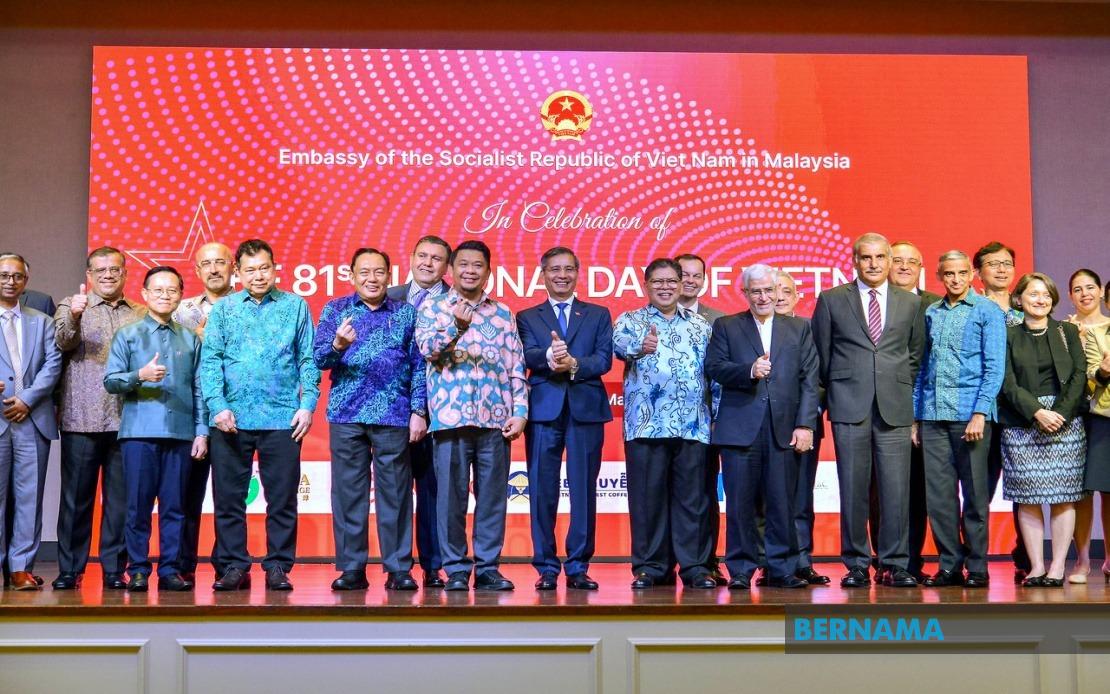
Relations between Vietnam and Malaysia are experiencing accelerated momentum under their newly elevated Comprehensive Strategic Partnership, marking a significant milestone in Southeast Asian diplomacy. Speaking at Vietnam's 81st National Day celebration in Kuala Lumpur on Thursday evening, Vietnam's Ambassador to Malaysia Dinh Ngoc Linh characterised Malaysia as a strategically important ally for Hanoi as geopolitical complexities deepen across the Indo-Pacific region. The elevation of ties to this comprehensive level reflects decades of gradual trust-building and signals both nations' commitment to navigating regional challenges through sustained cooperation.
The ambassador outlined substantial progress in bilateral engagement across multiple sectors during the past year. Trade and investment flows have expanded, while collaborations in agriculture, education, cultural exchange, and tourism have generated tangible economic and social benefits for both nations. These diversified partnerships demonstrate that Vietnam-Malaysia relations extend well beyond traditional diplomatic formalities into practical cooperation that touches the lives of ordinary citizens through educational scholarships, tourism flows, and commercial activities. Such multifaceted engagement creates resilient foundations for partnership that can withstand periodic political or diplomatic fluctuations.
Defence and security cooperation occupies particular importance in the bilateral framework, according to Dinh Ngoc Linh. Vietnam views strengthened military-to-military relations and intelligence sharing with Malaysia as essential mechanisms for building mutual confidence in an increasingly competitive regional security environment. This dimension of partnership addresses shared concerns about maritime security, counterterrorism, and the maintenance of rules-based regional order. For Malaysian policymakers, deepened defence cooperation with Vietnam provides additional strategic optionality as Kuala Lumpur balances relationships among major powers operating within Southeast Asian waters.
Parliamentary and legislative exchanges represent another crucial avenue through which both nations are consolidating ties. These people-to-people connections transcend formal government channels and create durable networks among elected representatives and civil society leaders. Such exchanges facilitate informal dialogue on shared challenges, from economic cooperation to climate change adaptation, while building personal relationships that can smooth diplomatic channels during periods of disagreement. The emphasis on parliamentary cooperation reflects both nations' recognition that sustained partnership requires investment in institutional linkages beyond executive-level engagement.
The ambassador articulated Vietnam's commitment to regional architecture during his remarks, emphasising that Hanoi remains focused on strengthening ASEAN unity, resilience, and centrality in addressing transnational challenges. This positioning carries significant implications for Malaysia, which has historically sought to maintain ASEAN cohesion while managing competing interests among member states and major external powers. Vietnam's articulation of support for a people-centred ASEAN community suggests convergence with Malaysian priorities on how regional cooperation should evolve, particularly regarding inclusive development and protection of smaller economies' interests.
Dinh Ngoc Linh's emphasis on collective problem-solving resonates with Malaysian concerns about navigating profound regional transformations. As technological disruption accelerates, climate impacts intensify, and geopolitical tensions rise, ASEAN members increasingly recognise that isolated national responses prove insufficient. The ambassador's call for Vietnam and Malaysia to seize opportunities together while addressing shared challenges reflects an understanding that regional stability depends upon sustained multilateral cooperation rather than unilateral posturing. For Malaysian observers, this positioning from a significant ASEAN power provides some reassurance that consensus-building remains viable despite structural pressures fragmenting the bloc.
The historical trajectory of Vietnam-Malaysia relations provides context for understanding the current strategic partnership. Since establishing diplomatic relations in 1973, both nations have navigated the Cold War's regional contestation, the rise of China as an economic superpower, and recurrent tensions in contested maritime zones. The November 2024 elevation to Comprehensive Strategic Partnership status represents culmination of this gradual trust-building process rather than an abrupt policy shift. This evolution reflects both governments' assessment that deeper integration serves their respective national interests better than hedging or competition.
Dinh Ngoc Linh's tenure as ambassador concludes shortly, representing a natural transition point in bilateral management. His remarks conveyed personal commitment to the relationship whilst projecting continuity regardless of ambassadorial rotation. Such emphasis on institutional persistence over individual personalities reassures partner nations that diplomatic relationships rest on structural national interests rather than depending upon particular personalities. For Malaysia's foreign ministry, this framing simplifies the ambassadorial transition process by emphasising that partnership dynamics should remain unaffected by personnel changes.
Deputy Foreign Minister Datuk Lukanisman Awang Sauni's presence at the National Day celebration underscores Malaysia's commitment to the partnership at senior ministerial level. Malaysian government attendance at such events carries diplomatic weight, signalling that Kuala Lumpur treats the Vietnam relationship as a priority within broader Southeast Asian engagements. The attendance of various heads of diplomatic missions further demonstrated the regional importance accorded to Vietnam-Malaysia relations, as other countries monitor developments in this significant bilateral dynamic.
The broader implications of deepened Vietnam-Malaysia cooperation extend across Southeast Asia and beyond. As both nations invest in strengthening institutional linkages, expanding trade integration, and enhancing security cooperation, they contribute to positive-sum regionalism that benefits other ASEAN members through demonstration effects and spillover benefits. However, this partnership also implicitly reflects both nations' responses to external pressures and great power competition within Southeast Asian waters. The emphasis on ASEAN unity and centrality suggests that Vietnam and Malaysia see enhanced bilateral cooperation as reinforcing rather than undermining regional multilateralism.
Looking forward, the Comprehensive Strategic Partnership provides a framework through which Vietnam and Malaysia can address emerging challenges spanning digital transformation, energy transition, pandemic preparedness, and climate adaptation. These transnational issues transcend traditional bilateral concerns and require sustained cooperation among multiple partners. The ambassador's confidence in future growth of bilateral friendship and his commitment to shared prosperity reflect optimism about Southeast Asia's capacity to manage change through institutionalised cooperation. For Malaysian observers tracking regional dynamics, Vietnam-Malaysia partnership trajectory offers one barometer of ASEAN's ability to maintain cohesion whilst deepening selective bilateral ties that serve member states' particular interests.

