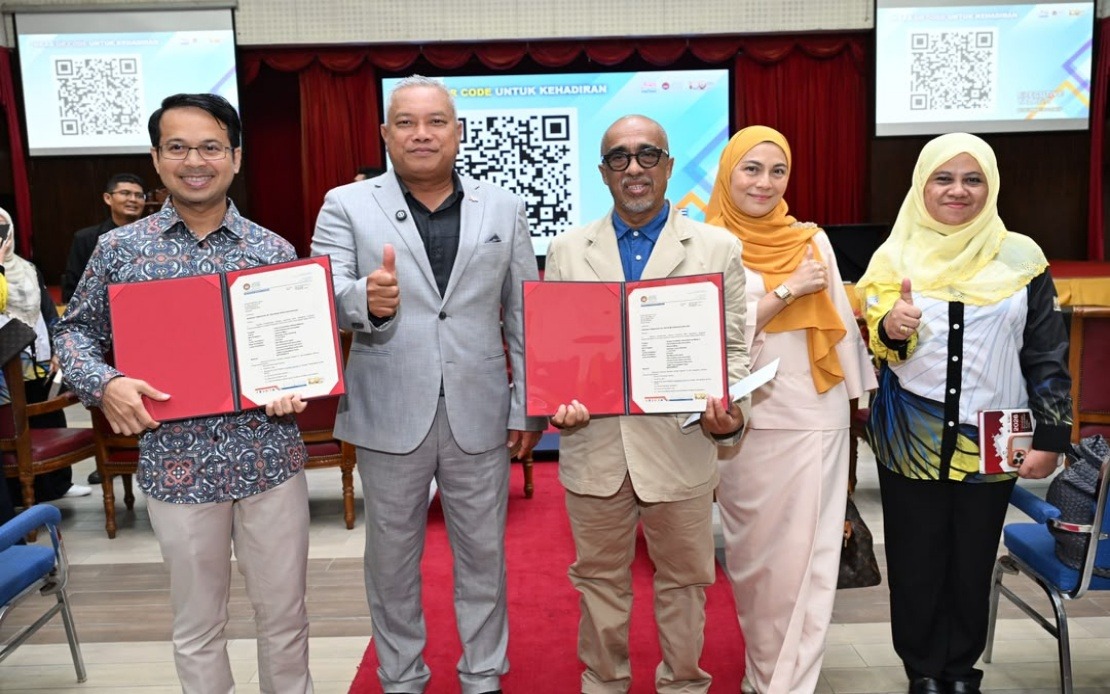
At 65 years old, celebrated actor and director Mohd Sabri Yunus has finally realised a dream postponed for more than four decades. The renowned cultural figure has received an offer to study for a Master of Education in Malay Literature at Universiti Pendidikan Sultan Idris (UPSI) in Tanjong Malim, Perak, joining the institution's inaugural cohort under an innovative admissions scheme that recognises professional experience as equivalent to formal educational prerequisites.
Alongside Sabri is television presenter Ahmad Fedtri Yahya, 45, who will pursue a Master of Education in Malay Language through the same channel. Both pioneers are accessing UPSI's Faculty of Languages and Communication programmes via the Accreditation of Prior Experiential Learning for Award of Qualifications, known as APEL.Q, a framework that allows accomplished professionals to enter tertiary study based on demonstrated competence rather than conventional academic credentials.
For Sabri, this moment represents the culmination of a decades-long desire to formalise his education. During his career at Dewan Bahasa dan Pustaka from 1982 onwards, initially as an illustrator, he attempted university entry twice but could not reconcile full-time study with employment obligations. "I actually attempted twice to become a university student after I joined DBP in 1982 as an illustrator, but it did not materialise because I could not leave my job," he explained during a public address at UPSI's Executive Talk 6.0 Cybersecurity programme. Despite this educational gap, Sabri maintained an intellectual curiosity throughout his extensive career in entertainment, consistently viewing interpersonal encounters as opportunities for knowledge acquisition.
The APEL.Q pathway reflects a growing recognition in Malaysian higher education that valuable learning occurs beyond conventional classroom settings. For individuals like Sabri and Fedtri, whose professional trajectories have spanned decades of public engagement, this mechanism validates expertise accumulated through practical application. Such alternative entry routes address a persistent challenge in tertiary education: talented individuals whose life circumstances—whether economic constraints, family obligations, or career demands—prevented traditional progression through secondary school to university.
Fedtri's motivation for pursuing postgraduate study centres on language preservation and its societal implications. He articulated a conviction that linguistic patterns reflect civilisational development and cultural sophistication. His concern about younger Malaysians' evolving communication practices, particularly the influence of social media and digital platforms on Malay language usage, drove his selection of Malay Language as his field of study. This focus aligns with broader anxieties about language degradation and cultural erosion in an increasingly globalised digital environment, issues that resonate particularly within Malaysia's education sector and cultural institutions.
Sabri's research intentions concentrate on pantun, the traditional Malay versification form, indicating that his postgraduate work will explore classical cultural expression. This focus suggests scholarly examination of a linguistic and literary heritage that has diminished in prominence among contemporary audiences. By pursuing formal research credentials in this domain, Sabri positioned himself to contribute substantively to academic discourse on Malay cultural preservation—a concern that transcends entertainment and carries implications for how Malaysia maintains and transmits its cultural capital.
UPSI's Vice-Chancellor Prof Datuk Dr Md Amin Md Taff emphasised the broader institutional and pedagogical significance of these enrolments. He noted that the presence of two culturally prominent figures within the campus community would facilitate knowledge exchange between faculty, existing students, and the newcomers. With approximately 25,000 UPSI students—predominantly future schoolteachers—the institution's capacity to expose educator-trainees to accomplished practitioners in arts and language could meaningfully influence how these future educators approach cultural and linguistic instruction in Malaysian schools.
The implications extend beyond individual achievement to systemic considerations about educational access and cultural transmission. Teacher-training institutions occupy critical positions in national development, as educators shape not merely academic competency but cultural consciousness in students. UPSI's embrace of the APEL.Q pathway for postgraduate enrolment suggests institutional confidence that career accomplishment, when combined with formal research training, produces educators and scholars equipped to address contemporary challenges—particularly those concerning language vitality and cultural continuity in digitally mediated societies.
The Malaysian context lends particular weight to this development. As regional and global cultural influences intensify, mechanisms for deepening engagement with heritage languages and traditional literary forms become increasingly valuable. Sabri and Fedtri's enrolment, while individually noteworthy, represents a small but symbolically significant investment in reversing potential erosion of Malay linguistic and literary traditions. Their presence on campus as mature-age students pursuing advanced qualifications also normalises the conception that learning occurs throughout life and that professional accomplishment warrants formal academic recognition.
The APEL.Q model itself merits examination as a policy innovation within Malaysia's higher education landscape. By creating structured pathways for experienced professionals to access postgraduate study, UPSI addresses the reality that many capable individuals never completed formal tertiary qualifications due to circumstances beyond their control. This approach potentially expands the pool of scholars and educators drawn from Malaysia's professional classes, enriching intellectual diversity within academic institutions while simultaneously ensuring that universities remain connected to practitioners working in fields they theoretically study.
As both Sabri and Fedtri commence their studies, their journey underscores education's transformative potential across the lifespan. For Sabri particularly, accessing university study after a 40-year interval represents not merely personal vindication but an assertion that intellectual development remains possible at any age, a message with resonance for Malaysian society increasingly concerned with lifelong learning and continuing professional development. Their presence on campus, moreover, offers UPSI's student body and faculty direct access to individuals whose careers embody cultural leadership—an advantage that extends far beyond classroom instruction into the realm of lived example and mentorship.

