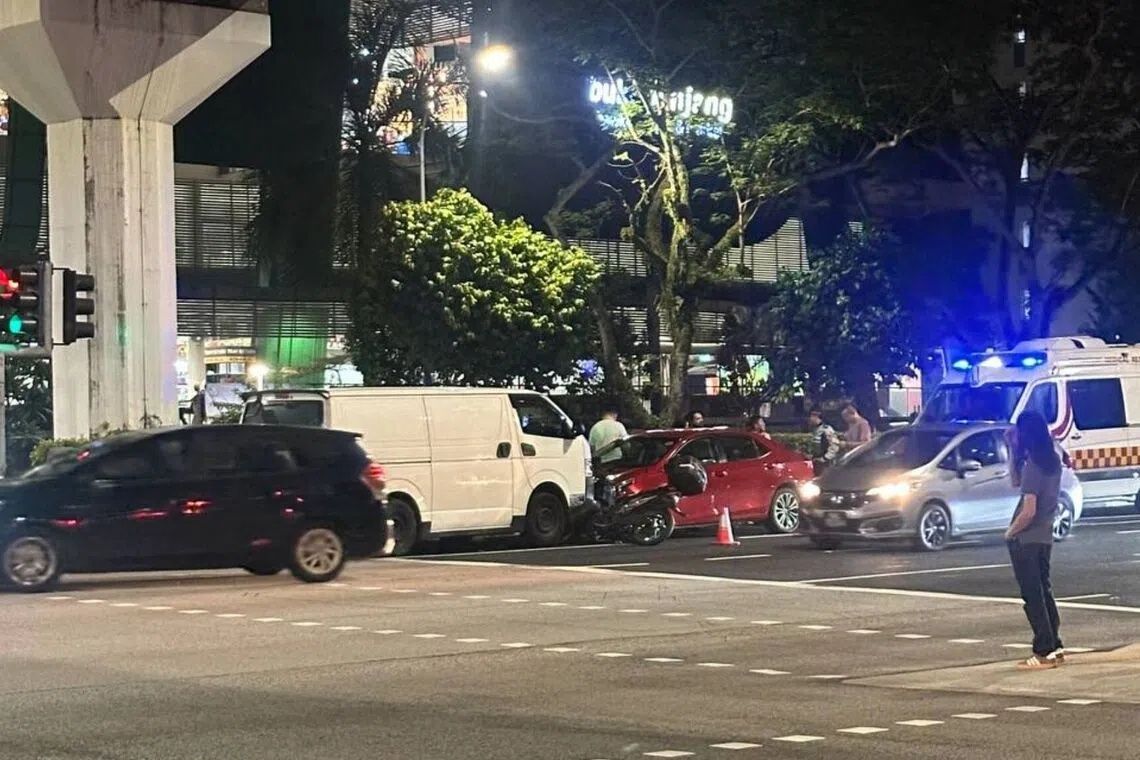
A 27-year-old van driver faces drug-related charges following a collision involving four vehicles on Bukit Panjang Road in Singapore on Friday night. The incident, which occurred at approximately 9pm, has raised fresh concerns about impaired driving in the densely populated residential area and prompted authorities to launch a formal investigation into both the crash circumstances and the substances recovered from the vehicle.
Singapore's Police Coast Guard and Civil Defence Force responded promptly after receiving reports of the accident at the intersection of Bukit Panjang Road and Bukit Panjang Ring Road. The multi-vehicle nature of the collision necessitated a rapid emergency response, though fortunately the impact resulted in only minor injuries. Two individuals sustained minor wounds but declined hospital treatment at the scene, a decision that investigators have documented as part of their ongoing case file.
The van, which appears to have been travelling against the flow of traffic based on eyewitness footage, collided head-on with a red sedan, leaving a motorcycle trapped between the two larger vehicles. A black sedan was also struck in the sequence of impacts, positioning itself several metres behind the red car. The unusual positioning of the vehicles at the collision site suggests a complex series of events that may have unfolded over several seconds, complicating the investigation into determining the exact sequence of vehicle movements and the primary cause of the accident.
Police investigations revealed a significant finding during their examination of the van: officers seized two vaporisers and three related pods from the vehicle. The discovery of these devices has introduced an additional dimension to the case, as authorities attempt to establish whether the use of vaping products or any substance-related impairment contributed to the accident. The presence of such devices is particularly noteworthy in Singapore's regulatory context, where vaping products are subject to strict controls and health authority oversight.
The recovery of vaping equipment has prompted authorities to refer the vaporiser-related findings to the Health Sciences Authority, Singapore's primary health regulator. This referral suggests that investigators are pursuing a comprehensive examination of the substances involved and their potential relationship to the driver's condition at the time of the accident. The Health Sciences Authority's involvement indicates that the matter may extend beyond simple traffic violations into questions of public health and substance control compliance.
The initial charge against the driver centres on allegations of driving under the influence of drugs, a serious traffic offence in Singapore with significant legal consequences. The distinction between vaping-related impairment and other drug-related driving offences remains under investigation, though the concurrent seizure of the vaporisers suggests authorities are examining multiple lines of inquiry. This approach reflects modern policing challenges in distinguishing between various forms of substance use and their documented effects on driving ability.
Bukit Panjang, located in the northwestern part of Singapore's residential landscape, experiences considerable traffic volume as a connector between major arterial roads. The Ring Road serves as a crucial thoroughfare for both local and through-traffic, making accidents in this location particularly significant for traffic flow and public safety. The Friday night timing of the incident coincides with peak evening traffic periods, potentially explaining why the collision involved multiple vehicles and why the incident was reported to authorities relatively quickly.
The incident underscores ongoing challenges relating to road safety and impaired driving enforcement across Singapore. While the city-state maintains strict driving regulations and comprehensive vehicle safety standards, cases involving substance-impaired driving continue to present significant public health risks. The involvement of vaping devices adds a contemporary dimension to these concerns, as regulators and law enforcement agencies work to understand and address emerging forms of substance use that may impair driving ability.
Investigations remain ongoing as authorities work to establish a comprehensive factual account of the accident. Police statements indicate that the multi-faceted nature of the case requires continued examination, particularly regarding the relationship between any substance use and the driving conduct that led to the collision. The referral of vaporiser-related evidence to the Health Sciences Authority suggests that authorities are pursuing a thorough investigation that extends beyond traditional traffic accident analysis.
For Malaysian readers monitoring regional road safety developments, this incident reflects broader Southeast Asian challenges in addressing emerging forms of substance use and their potential impact on driving safety. The case demonstrates how modern policing must evolve to address novel substances and delivery methods that may not be covered by traditional drug enforcement frameworks. As Singapore continues to refine its approach to substance-related traffic offences, regional jurisdictions including Malaysia may draw insights from the investigation's outcomes and the regulatory frameworks being employed to address vaping-related public health and safety concerns.
The accident serves as a timely reminder of the importance of stringent impaired driving enforcement and the need for comprehensive public awareness campaigns. The fact that two individuals sustained injuries, albeit minor, underscores the genuine risks posed by impaired driving even in metropolitan areas with advanced traffic management systems. As investigations proceed, the case may yield important information about substance use patterns and their prevalence among Singapore's driving population.

