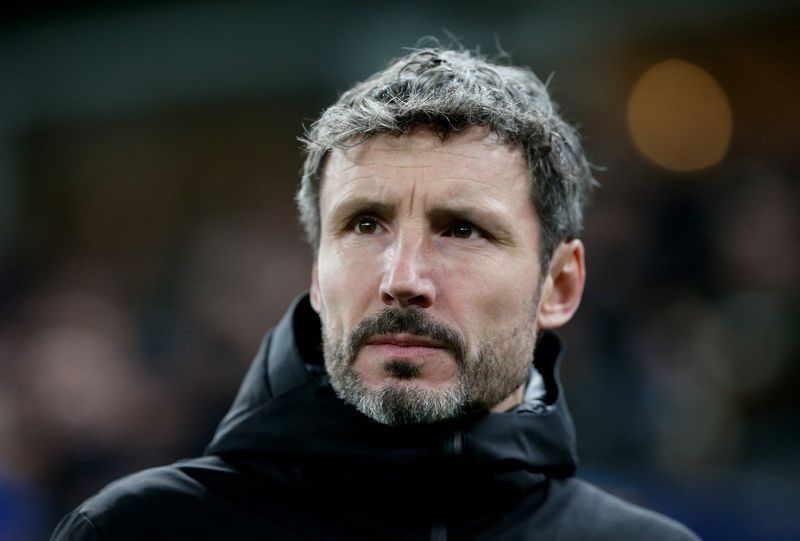
Mark van Bommel wasted no time committing fully to his new role as Belgium's head coach, making clear in his first press conference that even the prospect of leading his native Netherlands would not have swayed his decision. The 49-year-old former defender, who guided Barcelona, Bayern Munich and AC Milan during his playing career before representing the Dutch in their 2010 World Cup final run, has already signalled that national team coaching represents the pinnacle of his ambitions.
Spoken in Brussels on Friday, Van Bommel's unequivocal stance came as the Netherlands continued their search for a manager following the World Cup campaign. His appointment last month came swiftly after Belgium's failure to renew Rudi Garcia's contract, despite the squad reaching the quarter-finals in Qatar. The timing worked in the Belgian federation's favour, securing a coach of considerable pedigree and international experience without protracted negotiations. Van Bommel's quick acceptance underscored the appeal of this particular opportunity in the broader context of national team vacancies across Europe.
The new Belgium coach articulated a philosophy centred on the honour and prestige attached to leading a nation's footballers. In his assessment, the opportunity to work with a country's finest talent, combined with Belgium's established status as a genuine contender in major competitions, created an irresistible prospect. He acknowledged that truly elite national teams remain relatively scarce in global football, making the Belgium position particularly attractive despite occasional interest from clubs in recent years. This perspective reveals how international football has become increasingly competitive and selective, with only a limited number of genuinely prestigious positions available to ambitious coaches seeking the next rung on their career ladder.
Van Bommel's cautious approach to expectations, however, demonstrated the maturity of someone aware of the complexities involved in international football. While discussing his ambitions, he deliberately avoided the kind of triumphalist rhetoric that sometimes accompanies new national team appointments. His reference to how Dutch football culture traditionally celebrates bold predictions about winning the World Championship suggested a wariness about overcommitting to specific outcomes. Instead, he emphasised that numerous variables beyond coaching influence determine tournament success, a more grounded assessment than some predecessors might have offered.
The early calendar presents both opportunity and challenge for Van Bommel's tenure. His competitive debut will come against Italy in Rome on September 25 as part of the Nations League, followed by matches against Turkey and France during the autumn international window. These fixtures provide immediate benchmarks against which his tenure will be measured. The Nations League, once dismissed by some as secondary to World Cup and European Championship qualification, has emerged as a significant competition in recent years, offering genuine competitive intensity and the potential for silverware that can validate a coaching appointment.
One immediate personnel decision looming involves goalkeeper Thibaut Courtois, whose apparent desire for an international break following the World Cup created uncertainty about his availability. Van Bommel's comments revealed a measured approach to the situation, indicating he would not rush to judgment or attempt immediate pressure on the Real Madrid custodian. The coach's willingness to engage in proper conversation with Courtois, rather than issuing ultimatums, suggests recognition that experienced players deserve respectful treatment and that circumstances can change with time and reflection. The goalkeeper's eventual decision will significantly impact Belgium's defensive security during the early stages of this new era.
Van Bommel's profile as a defender-turned-coach adds a particular dimension to Belgium's reconstruction phase. His understanding of positional play and defensive organisation, gained through decades at elite clubs, should provide structural foundation for a squad that has underperformed relative to its talent level in recent tournament cycles. The appointment represents Belgium's attempt to restore competitive credibility after the disappointment of Qatar, where expectations ran high given the cohesion and experience within the squad.
The context of Belgian football at this juncture proves crucial for understanding Van Bommel's acceptance. The nation's "golden generation" narrative had sustained public and media interest for several years, but Qatar's early exit forced a reckoning about whether this squad could deliver major tournament success or whether gradual decline had already begun. A coach perceived as having world-class credentials and pragmatic outlook offered hope that tactical refinement rather than wholesale squad overhaul might yet unlock dormant potential.
Southeast Asian observers and Malaysian football enthusiasts should note that international coaching appointments at this level reflect a global market where only a handful of positions command genuine prestige and resources. Van Bommel's decisive choice illuminates how elite coaches view their options and what criteria determine their decision-making. Belgium's gamble on proven experience rather than an emerging tactical innovator represents one philosophical approach to international football management, with results over the coming months likely to shape debate about whether such appointments ultimately succeed or merely delay necessary generational transitions.

